Pneumatic Actuators, Hybrid Systems, and the Future of Industrial Motion
The Evolution of Industrial Actuation
As manufacturing continues to evolve with automation, AI, and Industry 4.0 technologies, one foundational category remains critical: actuation. From moving products along conveyor lines to enabling precision pressing operations, actuators are the backbone of motion in modern industry.
Among the most widely used solutions are pneumatic actuators—trusted for their simplicity, durability, and cost-effectiveness. At the same time, emerging hybrid actuation technologies are redefining what’s possible in terms of efficiency, control, and sustainability.
This article explores how pneumatic systems are used today, where hybrid solutions fit, and how manufacturers can make smarter actuation decisions.
Pneumatic Actuators: The Workhorses of Conveyor Automation
Conveyor systems—experiencing strong growth due to e-commerce and automation—depend heavily on pneumatic actuators to perform critical tasks. These systems ensure the safe, efficient, and accurate movement of goods throughout facilities.
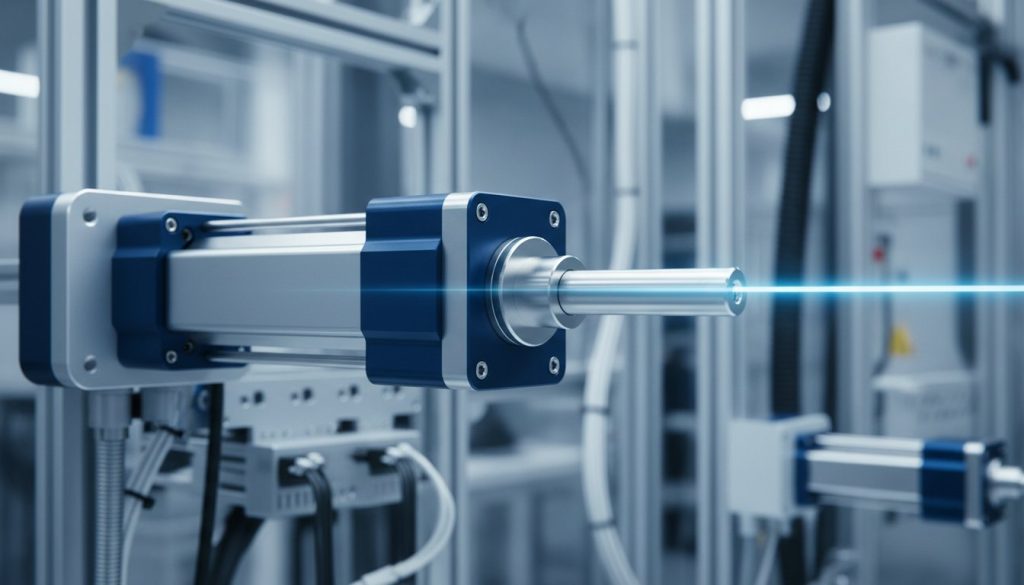
Pneumatic actuators convert compressed air into mechanical motion, enabling both linear and rotary movement. Their straightforward design—typically consisting of a cylinder, piston, and rod—makes them easy to install, operate, and maintain.
Common Conveyor Applications
Pneumatic actuators are essential in a wide range of conveyor functions, including:
- Sorting and diverting products
- Product stopping and positioning
- Packaging and inspection
- Pick-and-place operations
- Product spacing and indexing
These systems often work in tandem with sensors, vision systems, and control logic to enable intelligent, automated decision-making on the line.
Types of Pneumatic Actuators
Different applications require different actuator designs:
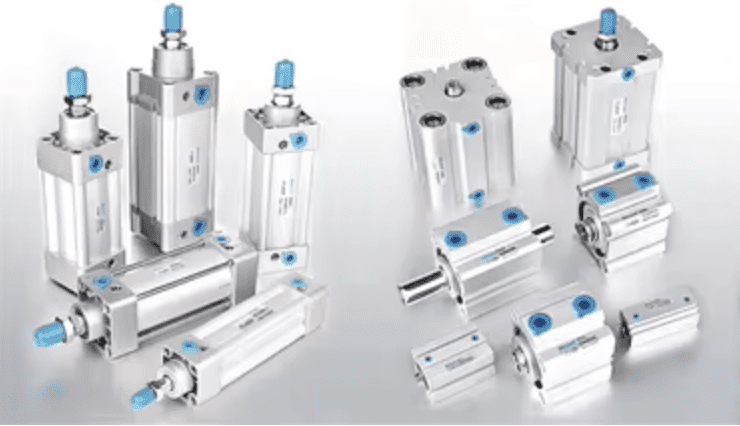
Air Cylinders
Provide linear motion for pushing, lifting, clamping, and positioning.
Rotary Vane Actuators
Deliver high-torque rotary motion for diverting, tucking, and gate control. Known for precision, repeatability, and long cycle life.
Grippers and Slides
Used for handling and transferring parts in automated systems.
Air Springs
Offer compact motion solutions and vibration isolation, especially in space-constrained environments.
One key advantage of pneumatic systems is their durability. They perform reliably in harsh conditions and require relatively low maintenance compared to more complex systems.
Real-World Impact: Improving Conveyor Performance
In high-speed conveyor environments, actuator selection directly impacts throughput and uptime.
For example, replacing multiple linear cylinders with a single rotary actuator can significantly:
- Increase operating speed
- Improve cycle life (often into the tens of millions)
- Reduce maintenance complexity
- Lower total system cost
These types of optimizations are increasingly important as manufacturers seek to maximize efficiency while minimizing downtime.
The Shift Toward Electrification—and Its Limits
As sustainability and energy efficiency become top priorities, many manufacturers are exploring electric actuation. Electric systems offer precise control and integration with digital platforms, but they are not always ideal.
Challenges with purely electric actuators include:
- Sensitivity to shock loads
- Wear on mechanical components (screws, belts, bearings)
- Limitations in high-force or high-duty-cycle applications
Similarly, traditional hydraulic systems—while powerful—come with drawbacks such as:
- Constant energy consumption
- Fluid leaks and maintenance issues
- Large system footprints
This creates a gap in the market—one that hybrid actuation is designed to fill.
Selecting the Right Actuation Technology
Choosing the right actuator is critical to system performance and long-term cost.
Key Considerations
- Force, speed, and stroke requirements
- Duty cycle and environmental conditions
- Energy consumption and efficiency goals
- Maintenance and uptime requirements
- Integration with control systems
Best Practices
- Avoid oversizing, which increases cost and energy use
- Design for uptime and minimal maintenance
- Evaluate total cost of ownership—not just upfront price
- Prioritize safety and ergonomics
- Plan for future scalability and digital integration
The Future of Actuation: Smarter, Cleaner, More Efficient
The next phase of industrial automation will demand solutions that are not only powerful and precise, but also energy-efficient, connected, and sustainable.
Pneumatic actuators will continue to play a vital role—especially in fast, repetitive, and cost-sensitive applications. At the same time, hybrid technologies are emerging as a powerful complement, enabling manufacturers to bridge the gap between traditional hydraulics and fully electric systems.
How VidoAir™ Supports Modern Automation
At VidoAir™, we understand that no single actuation solution fits every application. That’s why we focus on delivering high-performance pneumatic components—engineered for reliability, efficiency, and demanding industrial environments.
From advanced tubing solutions to components designed for harsh conditions, VidoAir helps manufacturers build systems that perform today and scale for tomorrow.
Final Thoughts
Actuation technology is evolving—but the goal remains the same: precise, reliable motion that drives productivity.
By understanding the strengths of pneumatic, electric, and hybrid systems, engineers and plant managers can make informed decisions that improve performance, reduce costs, and support long-term operational success.
If you’re evaluating your next system design, now is the time to rethink how motion is delivered—and where the biggest gains can be made.
VidoAir Pneumatics — Engineered Motion for Real‑World Machines.
In today’s fast-paced industrial landscape, where downtime costs millions and precision is non-negotiable, businesses are turning to advanced automation to maintain a competitive edge. At VidoAir™, we’re at the forefront of this transformation, specializing in pneumatic power solutions that redefine efficiency. Our systems aren’t just components—they’re intelligent, customizable integrations designed to sync flawlessly with your existing production lines, from high-speed conveyors to delicate assembly robots. The result? Streamlined workflows, slashed waste, and productivity gains that can add up to 20-30% in operational efficiency, depending on the application.
📞 Ready to Solve Your Motion Challenge?
If your application requires a custom pneumatic solution, our engineering team is ready to help.
Want help selecting the right pneumatic solution? Contact VidoAir to learn more about our industrial automation components.
Get a Free, No‑Obligation Engineering Evaluation
We’ll review your requirements, analyze your constraints, and recommend the optimal pneumatic solution — whether it’s a modified standard component or a fully custom design.
👉 Call us at 1‑502‑228‑8881 👉 Or submit your specs through our contact form.
VidoAir™ empowers you to outpace the competition.

COMPLETE PNEUMATIC SYSTEMS & PARTS
Check out our VidoAir™ website and download our pnematic parts catalog.
Supply Chain Solutions from VidoAir
Are you looking to future-proof your supply chain?
At VidoAir, (a division of Bright International), we specialize in helping U.S. manufacturers navigate supply chain complexities with strategic sourcing, digital transformation solutions, and compliance-driven procurement models.
Does your manufacturing company want to optimize your global supply chain strategy? Contact us today for a personalized consultation and discover how we can help you enhance efficiency, reduce costs, and ensure long-term supply chain stability.
