The Best Industrial Robots and Automation Technology from Automate 2026
Introduction
The future of industrial robots manufacturing was on full display at Automate 2026 in Chicago. As North America’s premier automation exhibition, the event brought together the latest innovations in industrial robotics, collaborative robots (cobots), artificial intelligence, machine vision, end-of-arm tooling (EOAT), motion control, and smart factory technologies.
Our team at VidoAir™ Pneumatics visited the show floor to capture some of the most exciting automation systems and robotic applications transforming modern manufacturing.
Watch our highlights video below and explore some of the technologies that are reshaping production facilities around the world.
What You’ll See in This Industrial Robots Video
This video features highlights from many of the industry’s leading automation companies showcasing:
- Industrial robot arms
- Collaborative robots (Cobots)
- AI-assisted automation
- Smart manufacturing solutions
- End-of-arm tooling (EOAT)
- Pneumatic grippers
- Vacuum handling systems
- Machine vision technology
- Motion control systems
- Factory automation equipment
- Automated material handling
- Precision assembly systems
These technologies continue to improve manufacturing by increasing productivity, improving quality, reducing downtime, and enhancing workplace safety.
Why Industrial Robots Automation Continues to Grow
Manufacturers across nearly every industry are investing in automation to remain competitive.
Key drivers include:
- Labor shortages
- Higher production demands
- Improved product quality
- Increased workplace safety
- Lower operating costs
- Flexible manufacturing
- Faster product changeovers
- Data-driven production monitoring
As robotics and AI become more accessible, even small and medium-sized manufacturers are implementing automation solutions that were once only available to large enterprises.
The Role of Pneumatics in Modern Industrial Robots Automation
While industrial robots often receive the most attention, pneumatic components remain essential to countless automated systems.
Many robotic workcells rely on:
- Pneumatic cylinders
- Solenoid valves
- Vacuum generators
- Air preparation equipment
- Polyurethane tubing
- Pneumatic fittings
- Pressure regulators
- Air manifolds
These components provide reliable, repeatable motion for gripping, clamping, sorting, positioning, and material handling applications.
At VidoAir™ Pneumatics, we specialize in providing dependable pneumatic components that integrate seamlessly into modern automation systems.
Industrial Robots Automation Is Shaping the Future
Automate 2026 demonstrated that robotics, artificial intelligence, vision systems, and pneumatic automation continue to evolve at an incredible pace.
Whether you’re upgrading an existing production line or designing an entirely new automated system, today’s technologies offer more flexibility, speed, and efficiency than ever before.
We look forward to seeing how these innovations continue transforming manufacturing over the coming years.
Industrial Robots and Manufacturing Automation Outlook
The biggest takeaway from Automate 2026 is that manufacturing is becoming more intelligent, connected, and flexible. Artificial intelligence, machine vision, collaborative robots, autonomous mobile robots, and even humanoid robots are converging to create production systems that can adapt quickly to changing customer demands. At the same time, proven technologies such as pneumatic actuators, valves, vacuum systems, and EOAT remain essential building blocks that enable reliable, cost-effective automation.
These trends also align well with VidoAir’s product offerings, allowing you to naturally connect industry developments with your pneumatic automation solutions without making the article feel overly promotional.

12 Key Industrial Robotics and Automation Trends in 2026 and into 2027
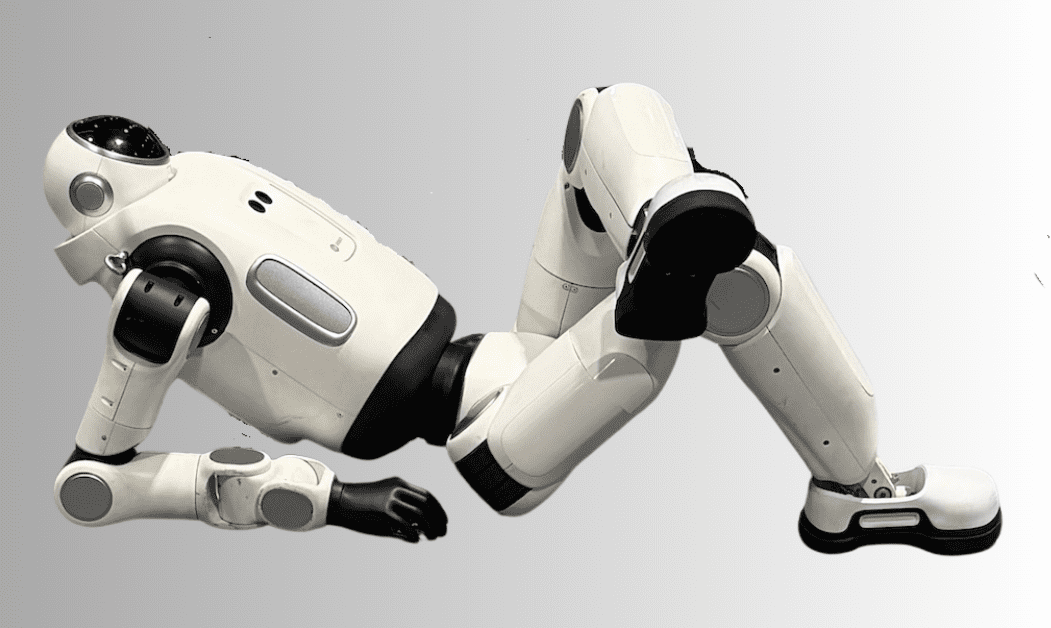
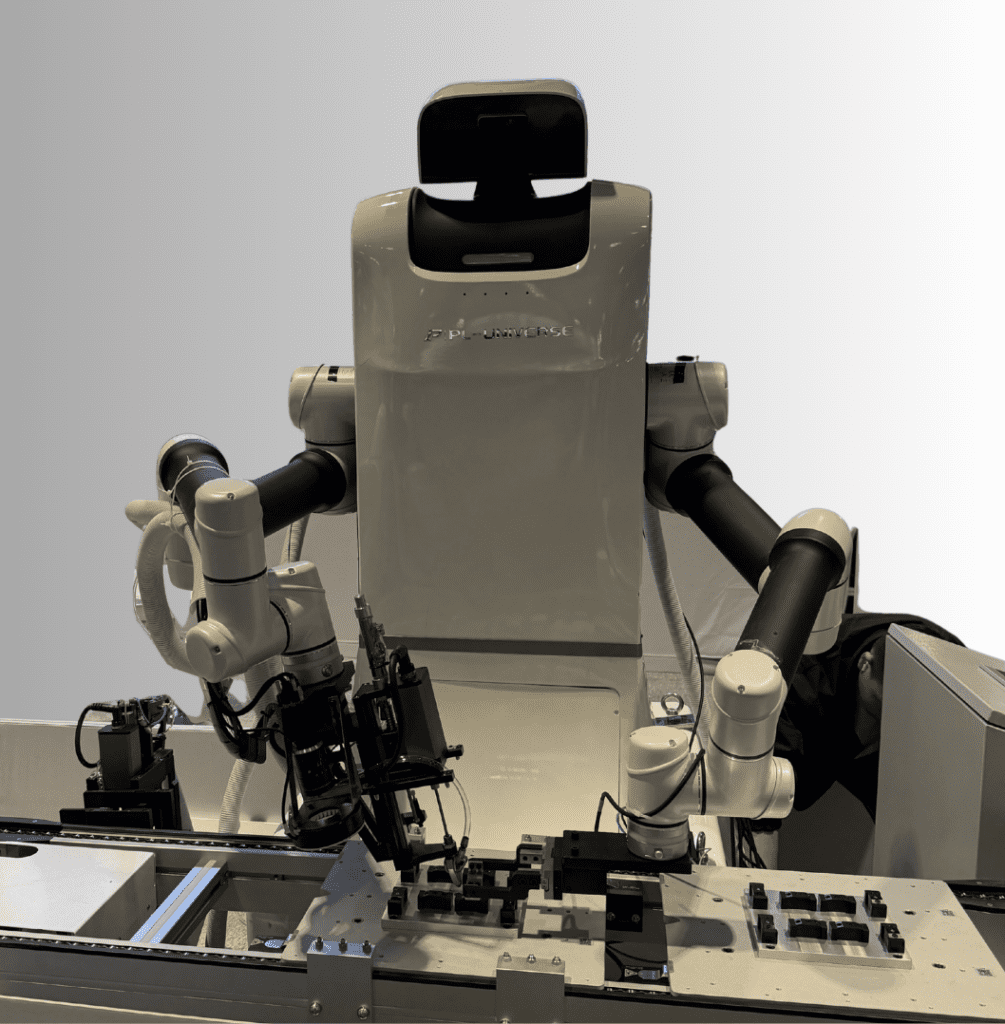
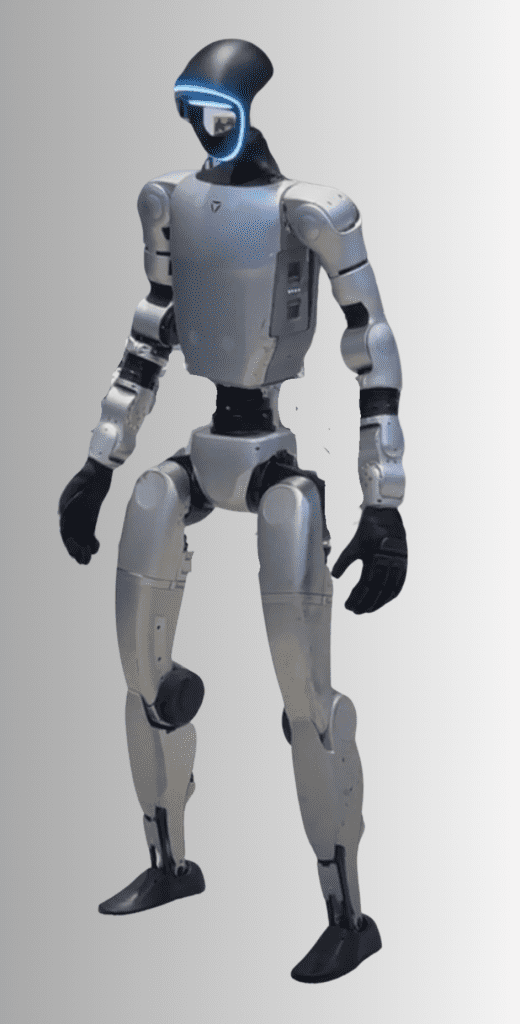
🤖 1. Humanoid Robots Are Moving from Demos to Pilot Programs
- Humanoid robots are beginning to perform repetitive tasks in warehouses, logistics centers, and manufacturing facilities.
- Early applications include material handling, machine tending, inspection, and transporting parts between workstations.
- While still in the early stages, rapid advances in AI and hardware are accelerating commercial adoption.
🤝 2. Collaborative Industrial Robots (Cobots) Continue Rapid Growth
- Cobots are increasingly working safely alongside human operators without extensive safety fencing.
- Their ease of programming and flexibility make them ideal for small and medium-sized manufacturers.
- Common applications include assembly, packaging, machine tending, palletizing, and quality inspection.
🧠 3. Artificial Intelligence Is Becoming Standard
- AI is enabling robots to adapt to changing conditions rather than following only fixed programming.
- Machine learning improves object recognition, quality inspection, predictive maintenance, and autonomous decision-making.
- AI-assisted programming is also reducing deployment time for new automation systems.
👁️ 4. Machine Vision Is Smarter Than Ever
- High-speed 3D vision systems allow robots to identify randomly oriented parts, inspect products, and guide precise movements.
- Vision-guided robotics reduces fixturing requirements while improving flexibility.
🏭 5. Flexible Manufacturing Is Replacing Fixed Automation
- Manufacturers increasingly need production lines that can quickly switch between products.
- Modular automation systems, quick-change tooling, and reprogrammable robots reduce downtime and support high-mix, low-volume production.
🦾 6. End-of-Arm Tooling (EOAT) Is Becoming More Specialized
- Advanced grippers combine pneumatic, electric, vacuum, and adaptive gripping technologies.
- EOAT is becoming application-specific to handle delicate, irregular, or mixed-material products more efficiently.
💨 7. Pneumatics Continue to Play a Critical Role
- Despite advances in electric actuators, pneumatic systems remain essential for gripping, clamping, positioning, sorting, and high-speed automation.
- Improvements in valve technology, lightweight tubing, and energy-efficient air management are helping reduce operating costs.
📦 8. Automated Material Handling Continues to Expand
- Manufacturers are integrating robots with autonomous mobile robots (AMRs), conveyors, and intelligent storage systems.
- These systems improve productivity while reducing manual transportation tasks inside facilities.
📊 9. Smart Factories Depend on Real-Time Data
- Connected sensors provide live production metrics, equipment health monitoring, and predictive maintenance alerts.
- Manufacturers use this data to improve Overall Equipment Effectiveness (OEE) and reduce unplanned downtime.
🌎 10. Automation Is Addressing Labor Shortages
- Rather than replacing skilled workers, automation increasingly fills difficult-to-staff positions and repetitive tasks.
- Companies are using robotics to improve safety while allowing employees to focus on higher-value work.
⚡ 11. Faster Deployment Is Becoming a Competitive Advantage
- Plug-and-play automation platforms, low-code programming, and simulation software are significantly reducing integration time.
- Manufacturers can deploy new robotic cells in weeks instead of months.
🔋 12. Sustainability Is Driving Automation Investments
- New automation systems are designed to consume less energy, reduce compressed air usage, minimize scrap, and improve production efficiency.
- Sustainability goals are becoming an important factor in automation purchasing decisions.
Learn More
Looking for industrial robots automation components?
Explore VidoAir’s complete selection of:
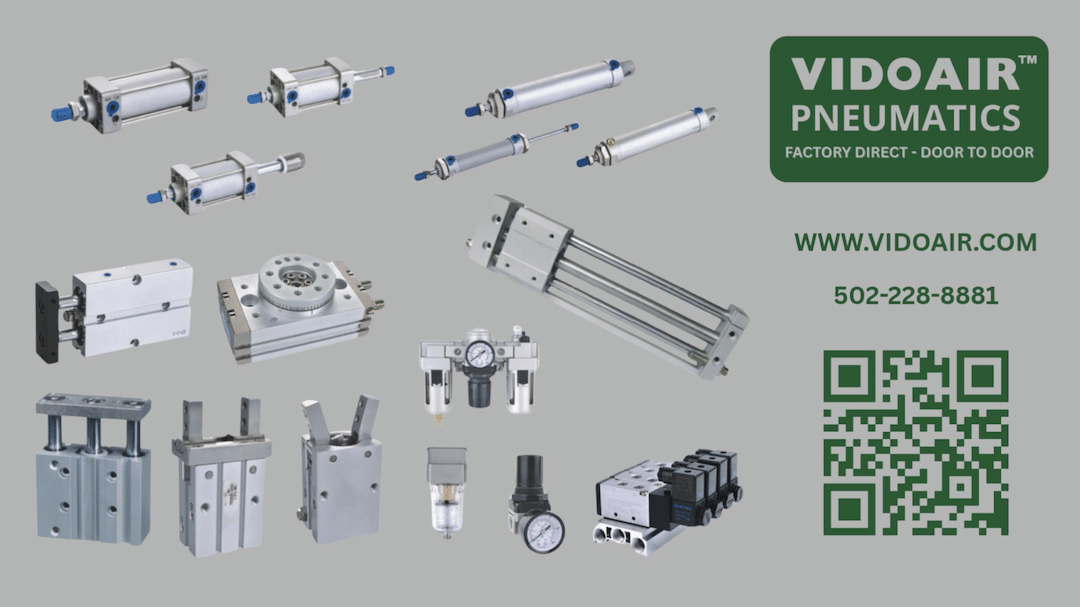
- Pneumatic Cylinders
- Solenoid Valves
- Air Preparation Units
- Pneumatic Fittings
- Polyurethane Tubing
- Vacuum Components
- Finger Grippers
- Electro-Pneumatic Controls
Contact the VidoAir™ Engineering Team to discuss your automation application.

Why Engineers Specify VidoAir™
- Dimensional consistency across product families
- High cycle life validated through real‑world testing
- Fast customization without long engineering lead times
- Application‑driven design support from pneumatic specialists
- Full system compatibility with VidoAir valves, air prep, fittings, and tubing
When you specify VidoAir™ pneumatic actuator cylinders you’re choosing components engineered to reduce downtime, simplify integration, and deliver predictable performance across millions of cycles.
We pride ourselves on delivering complete, high-quality pneumatic solutions tailored to your needs. All of our products are engineered for durability, efficiency, and ease of use, ensuring your operations run smoothly. Whether you’re upgrading an existing system or building a new one, VidoAir’s pneumatic componetns are designed to deliver top performance.
Best PracticesTo maximize the performance and lifespan of your pneumatic systems, regualr maintenance is critical. For more on maintaining pneumatic systems, visit Compressed Air Best Practices, a leading resource for compressed air system optimization.