
Compact Pneumatic Valve Island Solutions
Simplifying Multi-Valve Control Systems
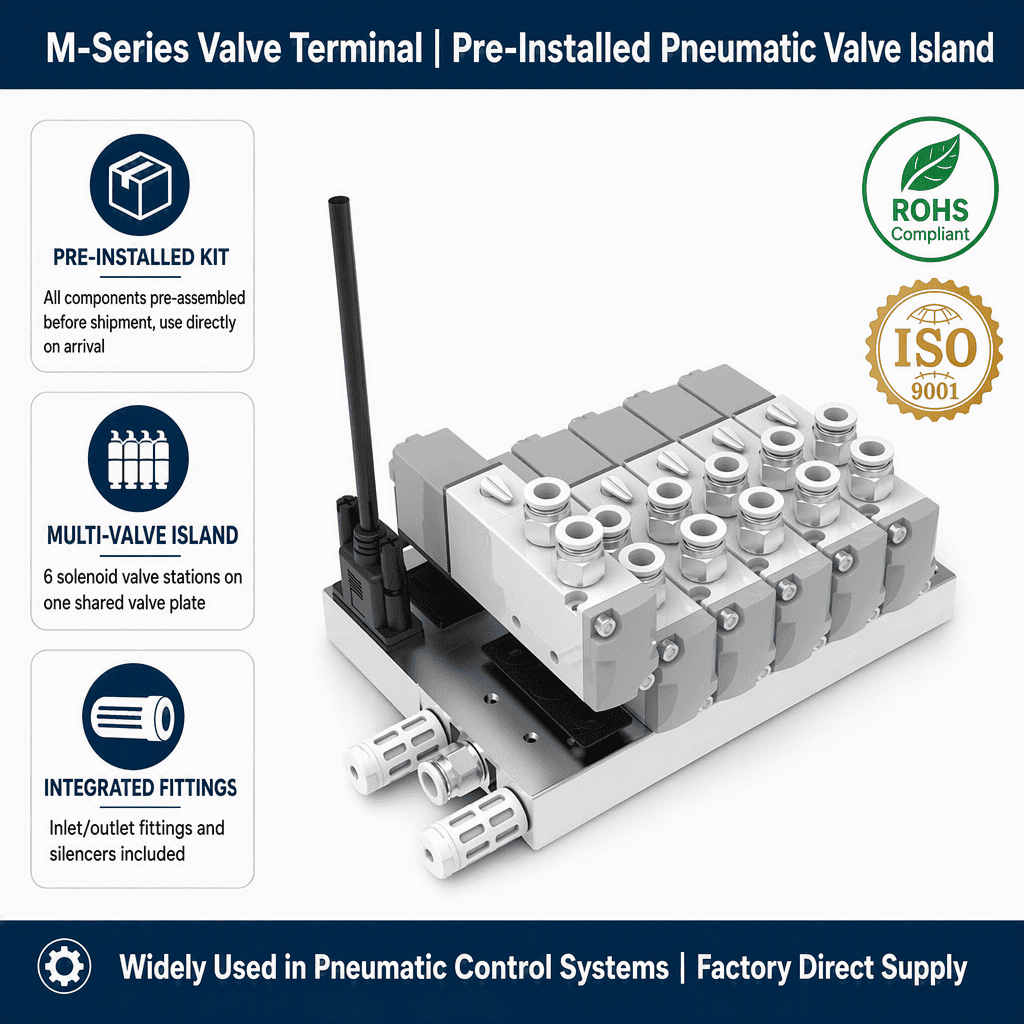
When a pneumatic system requires multiple solenoid valves, traditional point-to-point wiring can quickly become complicated. A pneumatic valve island, also called a valve terminal or valve manifold, provides a more organized approach by bringing multiple valves together on a common valve plate and simplifying the connection between the valves and the control system.
VidoAir’s M-Series valve terminal solutions are designed to provide a compact, efficient way to manage multiple pneumatic control signals while reducing wiring complexity and installation time.
What Is a Pneumatic Valve Island?
A pneumatic valve island combines multiple pneumatic solenoid valves into a single, organized assembly.
Instead of installing and wiring every valve individually, multiple valves are mounted together on a shared valve plate. The assembly can then connect to a PLC or other control system through a common interface.
This approach can provide:
- Cleaner pneumatic installations
- Reduced wiring
- Faster installation
- More compact equipment layouts
- Easier system expansion
- Simplified maintenance
For machine builders and automation engineers, valve islands can be particularly useful when several pneumatic functions need to be controlled from one location.
M-Series Multi-Pin Valve Terminal
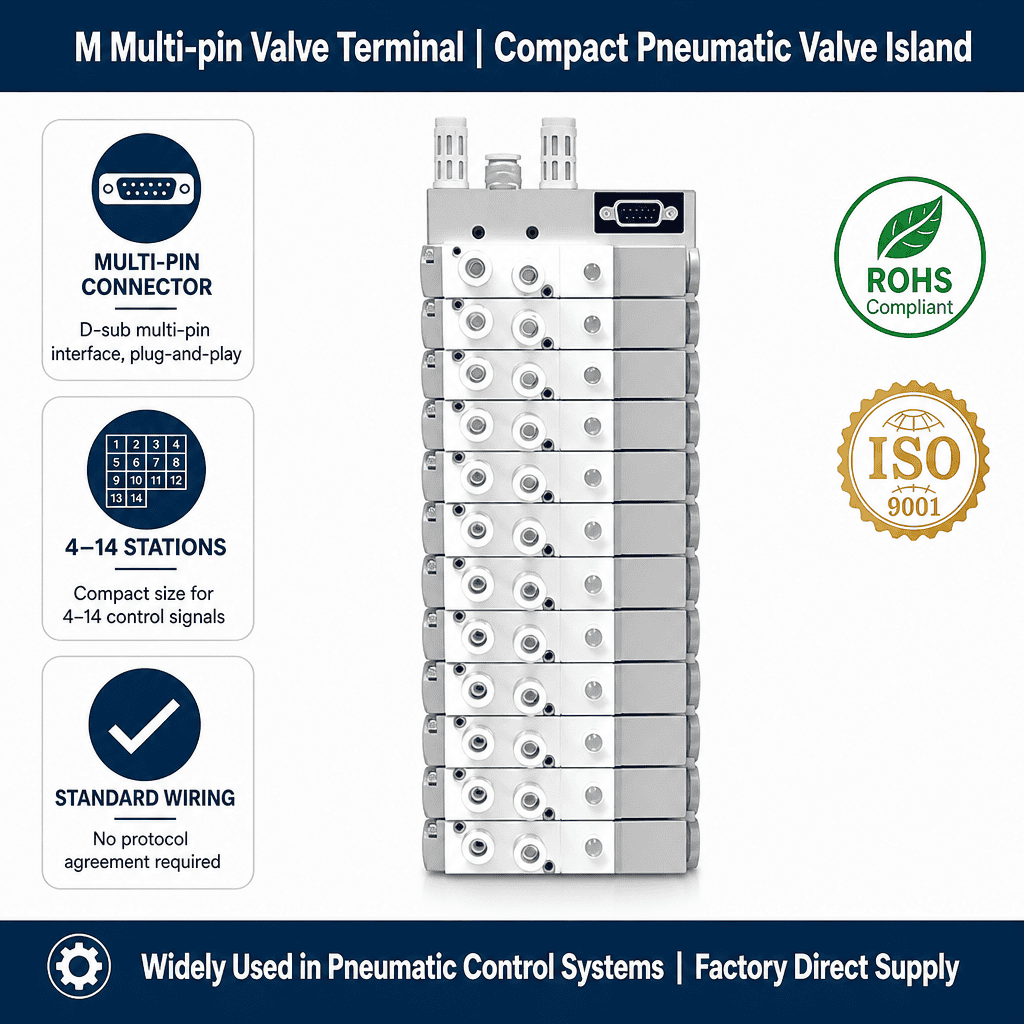
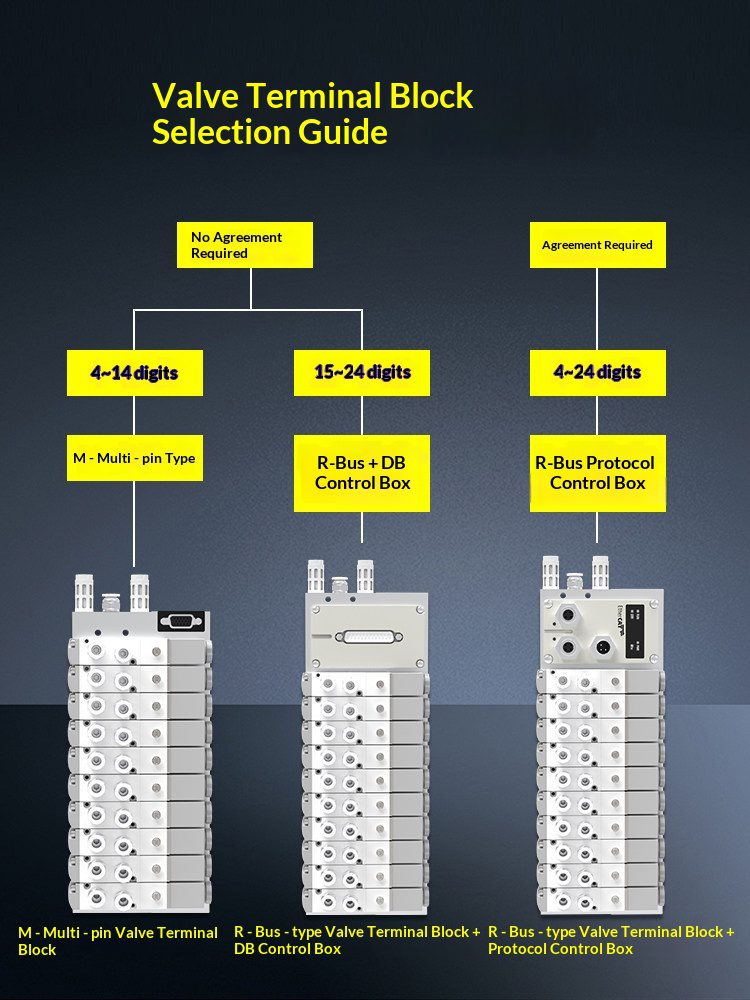
The M-Series multi-pin pneumatic valve island terminal is designed for applications requiring 4 to 14 control signals.
It uses a D-sub multi-pin connection, providing a straightforward interface between the valve terminal and the machine control system.
One of the advantages of the multi-pin design is its simplicity. No special communication protocol is required. The control signals are connected through the multi-pin interface, making the system a practical choice for conventional pneumatic automation applications.
Key Features
- 4–14 valve stations
- D-sub multi-pin interface
- Plug-and-play connection
- Compact valve island configuration
- Standard wiring
- No protocol agreement required
This makes the M-Series a good fit for machinery where simplicity, compactness and straightforward electrical integration are priorities.
Advantages of Using a Pneumatic Valve Island
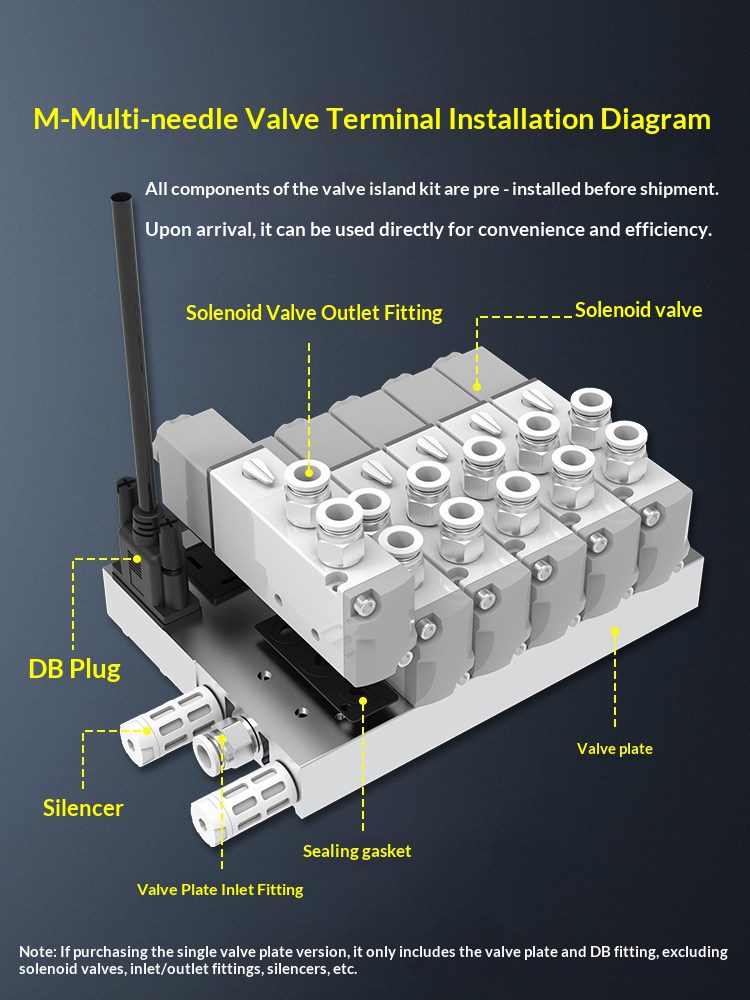
Another advantage of the M-Series system is the availability of pre-installed valve island kits.
Rather than receiving individual components that must be assembled in the field, the valve island can be supplied as a pre-assembled unit.
The components can include:
- Solenoid valves
- Valve plate
- Inlet fitting
- Outlet fittings
- Sealing gaskets
- Silencers
The components are installed before shipment so that the assembly can be put into service with minimal additional installation work.
For OEMs and machine builders, this can help reduce assembly time and eliminate some of the potential errors associated with assembling individual pneumatic components.
R-Bus Valve Terminals for Larger Systems
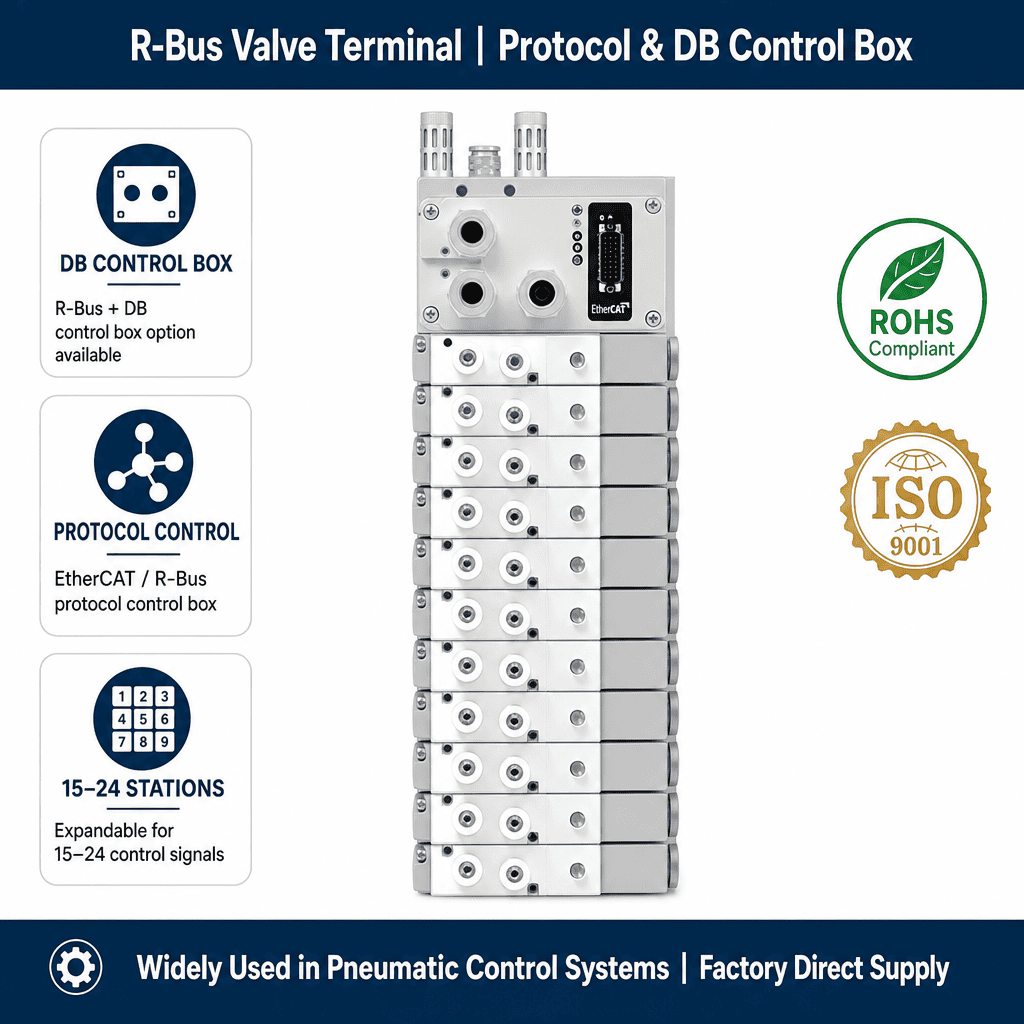
For applications requiring more control signals or networked communication, the R-Bus valve pneumatic valve island terminal configuration provides another option.
The R-Bus system is designed for 15–24 control signals and can be combined with a DB control box and protocol-based control.
Depending on the control architecture, protocol options can include systems such as EtherCAT and R-Bus.
This makes the R-Bus configuration particularly useful when the pneumatic system needs to integrate into a larger automated machine or factory control network.
R-Bus Advantages
- 15–24 valve stations
- Protocol-based control
- R-Bus communication
- EtherCAT option
- DB control box configuration
- Expandable multi-valve architecture
Rather than relying solely on individual wiring connections, a networked valve terminal can help integrate pneumatic control more efficiently into modern automated equipment.
Choosing the Right Valve Terminal
The best configuration depends primarily on the number of valves and the electrical control architecture of the machine.
| Application | Recommended Configuration |
|---|---|
| 4–14 control signals | M-Series Multi-Pin |
| Simple conventional wiring | Multi-pin configuration |
| Plug-and-play installation | Pre-installed valve island |
| 15–24 control signals | R-Bus configuration |
| Networked machine control | R-Bus + DB control box |
| EtherCAT-based automation | Protocol control box configuration |
The important consideration is not simply the number of valves. The valve terminal should also match the machine’s PLC, communication protocol, wiring architecture and available installation space.
Why Use a Valve Island?
For many pneumatic automation applications, consolidating valves into a single assembly offers practical benefits beyond simply saving space.
1. Reduced Wiring Complexity
Multiple individual valves can require a substantial amount of wiring. A common interface can significantly simplify the electrical connection between the machine controller and the pneumatic valves.
2. Faster Installation
A pre-assembled valve island reduces the amount of component-by-component assembly required during machine construction.
3. Cleaner Machine Design
Grouping valves together creates a more organized pneumatic system and can make tubing and electrical connections easier to manage.
4. Easier Maintenance
With multiple valves organized into a common assembly, technicians can more easily identify and service the pneumatic control components.
5. Flexible Automation
Different valve terminal configurations allow the same basic pneumatic concept to be adapted to conventional multi-pin control or more advanced networked automation architectures.
Applications
Compact pneumatic valve terminals are widely applicable wherever multiple pneumatic functions need to be controlled from a centralized assembly.
Typical applications include:
- Factory automation
- Packaging machinery
- Assembly equipment
- Material handling systems
- Pick-and-place machinery
- Pneumatic grippers
- Vacuum handling equipment
- Automated production lines
- OEM machinery
- Industrial equipment
They are especially useful in machines that combine multiple cylinders, grippers, vacuum devices or other pneumatic actuators.
.
A More Efficient Approach to Pneumatic Control
As pneumatic systems become more integrated with modern automation, the valve terminal has become an important link between the machine’s electrical control system and its pneumatic functions.
For smaller systems, a 4–14 station multi-pin valve terminal can provide a straightforward and economical solution. For larger or networked systems, an R-Bus configuration with protocol control can provide greater connectivity and expandability.
And when installation time matters, a pre-installed valve island can take much of the assembly work out of the process before the equipment even arrives.
Looking for the Right Pneumatic Valve Terminal?
VidoAir supplies pneumatic automation components and valve terminal solutions for OEMs, machine builders and industrial users.
Whether you need a compact multi-pin valve island, a pre-installed multi-valve assembly, or a networked R-Bus configuration, the right combination of valves, fittings, control interface and accessories can make your pneumatic system easier to build, install and maintain.
Contact VidoAir to discuss your application and valve terminal requirements.
.
CHECK OUT OUR FULL LINE OF SOLENOID VALVES
READY TO AUTOMATE?
Vidoair’s application engineers are ready to help you select the right pneumatic and vacuum solutions for your next robotic integration project.