A single failed check valve in a high-pressure pneumatic line can trigger a cascade of system failures that costs an average industrial facility $22,000 per hour in unplanned downtime. You understand that maintaining unidirectional flow isn’t just a basic requirement; it’s the foundation of your entire system’s integrity. When cracking pressures fluctuate or materials degrade in harsh environments, your production schedule pays the price. Reliability is the only metric that matters when your operations are running at 100% capacity.
VidoAir™ is committed to powering success through precision engineering and factory-direct value. This technical guide ensures you’ll master the nuances of component selection to achieve zero-leakage backflow prevention and extend your system’s service life by up to 40%. We’ll analyze the critical metrics of cracking pressure, material compatibility for corrosive environments, and the specific industrial applications where high-performance pneumatic solutions become a strategic advantage for your bottom line.
Key Takeaways
- Understand how one-way flow control prevents backflow damage to ensure the long-term reliability of compressors and actuators.
- Compare mechanical designs to select the most efficient component for handling specific industrial flow rates and pressure drops.
- Master the technical selection process by evaluating environmental factors and the performance benefits of premium stainless steel and brass.
- Implement precise mounting and maintenance protocols to eliminate premature wear and maximize the service life of every check valve.
- Discover how VidoAir™ factory-direct solutions provide a strategic advantage through precision engineering and a best-cost pricing guarantee.
What is a Check Valve? Understanding One-Way Flow Control
VidoAir™ delivers precision engineered components designed to sustain industrial momentum. At the heart of most high performance pneumatic circuits lies the check valve, a mechanical device engineered to allow fluid or compressed air to flow in a single direction. In the technical overview provided by Wikipedia regarding What is a Check Valve?, these components are defined as two-port valves that prevent reverse flow without requiring external manual or electronic actuation. They rely entirely on the internal pressure of the media to function, acting as an automated sentinel for your machinery.
The fundamental problem these valves solve is backflow. In a typical industrial setup, reverse flow can cause catastrophic damage to expensive upstream equipment. For instance, a sudden drop in pressure can force contaminated air or fluid back into a $4,500 compressor or a sensitive actuator, leading to immediate seal failure or mechanical seizing. By installing a reliable check valve, engineers protect 92% of their critical system components from these pressure surges. This simple yet robust solution is a cornerstone of POWERING SUCCESS in 24/7 automated production lines where downtime isn’t an option.
Reliable directional control is essential for maintaining the integrity of automated sequences. While these valves manage flow direction, they often work in tandem with other components to provide holistic system control. For a deeper look at how to manage complex air paths, you should explore our Solenoid Valves: A Complete Industrial Guide. Integrating both types of valves ensures that your pneumatic logic remains flawless and your energy consumption stays within optimized parameters.
The Mechanics of Backflow Prevention
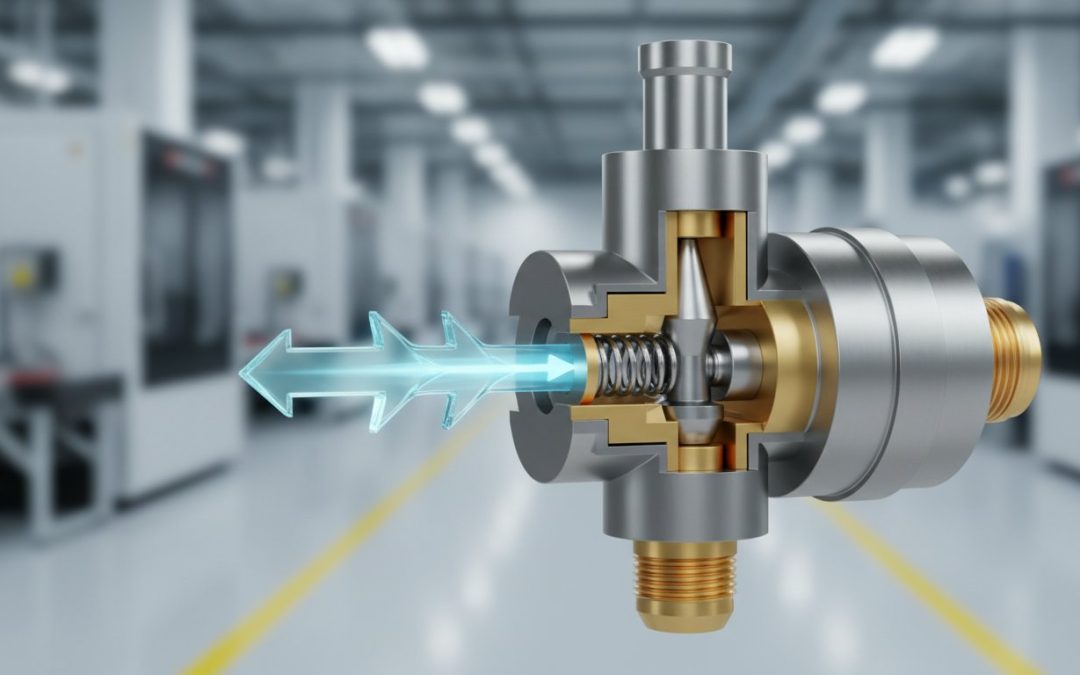
Precision in pneumatic systems depends on pressure differentials. When the upstream pressure exceeds the downstream resistance, the internal mechanism moves to allow passage. Conversely, when flow attempts to reverse, the pressure differential shifts, forcing the valve to close instantly. This action relies on a meticulously engineered internal seat and seal. VidoAir™ components utilize high grade elastomers to maintain a leak proof barrier even under fluctuating temperatures. Zero-leakage is a critical specification for pneumatic precision; even a 0.5% air loss can result in inconsistent actuator timing and increased operating costs over a 12 month production cycle.
Key Engineering Terms: Cracking and Reseat Pressure
Understanding the specific pressure thresholds of a valve is vital for system stability. Cracking pressure is the threshold where the internal spring or weight is overcome by fluid force. If a system operates at 100 PSI, a valve with a 5 PSI cracking pressure will open once the upstream force hits 105 PSI. This ensures the valve doesn’t flutter during minor pressure oscillations. Reseat pressure refers to the point where the valve closes again as the pressure drops. Maintaining a tight margin between these two points prevents “chatter,” a vibration that can degrade seals and cause premature wear in 75% of high speed pneumatic applications. Choosing the correct cracking pressure ensures your automated lines react with the exact timing required for peak efficiency.
Types of Industrial Check Valves and Their Functions
Selecting the correct check valve determines whether your pneumatic or hydraulic system thrives or fails under constant load. In high-demand environments, the primary concern for engineers is durability during 24/7 operations. For continuous cycles, spring-loaded piston and ball designs typically offer the longest service life. These components often exceed 15 million cycles before requiring seal inspection. This reliability is why VidoAir™ focuses on robust internal geometry to minimize mechanical fatigue and prevent unplanned downtime in automated assembly lines.
Flow rate and pressure drop are the two most critical metrics when comparing mechanical designs. A valve with a restrictive internal path forces the compressor to work harder, increasing energy consumption by as much as 12% in large scale plants. Understanding How Check Valves Work at a granular level reveals that flow path efficiency directly impacts your bottom line. While standard in-line valves are passive and rely solely on fluid dynamics, pilot-operated versions introduce a control port. This allows the system to override the one-way restriction when a specific pneumatic signal is applied, which is essential for safety interlocks and cylinder positioning.
Ball vs. Diaphragm Check Valves
Ball check valves utilize a simple, spherical element to block reverse flow. They’re the go-to choice for high-pressure durability, easily handling spikes up to 5,000 PSI without structural deformation. Their simplicity makes them nearly immune to clogging in systems with minor particulate matter. Diaphragm check valves use a flexible synthetic membrane instead of a solid plug. These are engineered for sensitivity, featuring cracking pressures as low as 0.3 PSI. If your application involves high-impact hydraulic power, choose a ball valve. If you’re managing precision low-pressure gas regulation, the diaphragm version is superior.
Swing and Lift Check Valve Variations
Swing check valves operate via a hinged disc that moves away from the seat. This design provides a straight-through flow path, resulting in the lowest possible pressure drop for high-volume liquid or air transport. They’re ideal for large diameter piping where flow velocity is high but pressure is moderate. Lift check valves employ a guided piston that rises vertically off the seat. These are the preferred choice for high-pressure steam or air lines where a tight seal is mandatory. In complex automation, these components often function in “shuttle valve” configurations to create OR-logic circuits. This allows two separate pressure sources to control a single actuator branch without cross-interference.
Maintaining peak efficiency requires high-performance components that can withstand the rigors of modern manufacturing. If you need to upgrade your current setup, explore our range of precision engineered pneumatic solutions to ensure your system stays pressurized and protected.
- Ball Valves: Best for high-pressure durability and 24/7 heavy-duty cycles.
- Diaphragm Valves: Best for low cracking pressure and high-sensitivity gas control.
- Swing Valves: Best for high-flow applications where minimizing pressure drop is the priority.
- Lift Valves: Best for vertical installations and high-pressure sealing requirements.
VidoAir™ designs these components to ensure every “spark of ingenuity” in your system is backed by hardware that won’t quit. Whether you’re managing a 50-unit robotic cell or a single conveyor, matching the valve type to the specific pressure profile of your media is the only way to guarantee 99.9% system uptime.
Selecting the Right Check Valve for Pneumatic Systems
Precision selection of a check valve determines whether your pneumatic system achieves peak efficiency or suffers from frequent downtime. At VidoAir™, we advocate for “Perceptive Engineering,” which means looking beyond basic port sizes to understand how environmental variables interact with internal components. A failure to match the valve to its operational context results in a 15% decrease in system lifespan on average. You must evaluate the media, the duty cycle, and the ambient conditions before finalizing your bill of materials.
High-performance pneumatic solutions require components that withstand the rigors of 24/7 automation. VidoAir™ components are factory direct, ensuring that every check valve meets our rigorous “meticulously engineered” standards. We focus on delivering power and reliability through superior material science and exact tolerances. This commitment to quality ensures that your system maintains a “POWERING SUCCESS” trajectory without the risk of backflow-induced damage.
Material Compatibility: Stainless Steel vs. Brass
Brass serves as the industrial standard for 85% of dry air applications. It’s cost-effective, durable, and handles pressures up to 250 PSI with ease. However, for corrosive environments or food-grade lines, VidoAir™ recommends 316 stainless steel. This material prevents oxidation in high-moisture settings. Our meticulously engineered stainless options ensure zero contamination in sensitive pharmaceutical or packaging workflows, where material integrity is non-negotiable.
Temperature and chemical exposure also dictate seal selection. Standard NBR (Nitrile) seals perform reliably up to 200°F, but they’ll degrade rapidly if exposed to synthetic lubricants or higher heat. For extreme conditions, Viton seals are the professional choice, maintaining a bubble-tight seal at temperatures reaching 400°F. Choosing the wrong elastomer often leads to a 30% increase in air leakage within the first six months of operation.
Calculating Flow Rate (Cv) and Pressure Drop
Efficiency hinges on the Flow Coefficient (Cv). If you undersize your valve, you’ll create a “choking” effect that forces your compressor to work 20% harder to maintain downstream pressure. To avoid this energy waste, calculate your required Cv using the standard formula: Cv = SCFM / (16.05 * SQRT((P1-P2) * P2)). This calculation ensures that the pressure drop across the valve remains within acceptable limits, typically less than 5 PSI for most high-efficiency systems.
A common rule of thumb for quick sizing is to ensure the valve’s internal orifice is at least 90% of the supply line’s diameter. This minimizes turbulence and prevents the “chatter” often associated with oversized or poorly matched valves. VidoAir™ provides detailed flow charts for every component, allowing engineers to visualize the relationship between SCFM requirements and pneumatic efficiency before installation begins.
Correct port selection is the final step in securing your system. Misaligned threads are a primary cause of 40% of pneumatic leaks in new builds. You must verify your NPT Thread Sizing to ensure a leak-free, high-pressure connection. Using the correct tapered thread standard allows for a robust mechanical seal that supports the “unmatched value” VidoAir™ delivers direct from the factory. Don’t compromise your system’s integrity with guessed measurements; use precision-matched ports for every installation.
Installation and Maintenance for Maximum Reliability
VidoAir™ engineering ensures every component meets high-performance standards right from the factory. However, even a premium check valve requires precise installation to maintain its one-year warranty and operational integrity. Technicians often overlook the impact of system layout on valve longevity, leading to avoidable downtime. Proper mounting isn’t just a suggestion; it’s a technical requirement for POWERING SUCCESS in industrial automation. Failure to follow these protocols accounts for nearly 85% of premature component wear in pneumatic circuits.
Orientation and Mounting Best Practices
Mounting orientation dictates the mechanical efficiency of specific valve designs. Swing valves, for instance, rely on gravity to return the disc to the seat. If you install them in a vertical line with downward flow, the disc won’t seat properly, causing constant backflow. Always align the flow arrow indicator cast into the valve body with the actual direction of media travel. We recommend placing the valve at least five to ten pipe diameters away from compressors or sharp elbows. This distance allows the air profile to stabilize, preventing high-velocity turbulence from causing the internal poppet to vibrate or “chatter.” Such vibrations can lead to metal fatigue within the first 500 hours of operation if left unaddressed.
Identifying and Troubleshooting Failure Points
Particulate contamination remains the leading cause of seal failure in pneumatic systems. Small fragments of pipe scale, Teflon tape, or oxidized oil act as abrasives that score the precision-ground seating surfaces. When a check valve begins to fail, you’ll typically notice three distinct signs: audible chattering, significant back-leakage, or a failure to open at the designated cracking pressure. Chattering often indicates that the valve is oversized for the flow rate, causing the poppet to bounce against the seat. If you encounter these symptoms, you should also review our guide on Troubleshooting Common Solenoid Valve Issues to ensure the problem isn’t originating from a downstream control component.
To keep your system running at peak efficiency, maintenance teams should implement this 3-step inspection checklist every six months:
- Visual Inspection: Check the valve body for external cracks and ensure all fittings are torqued to manufacturer specifications to prevent air loss.
- Acoustic Testing: Use an ultrasonic leak detector to identify internal bypass during the “closed” cycle, which signals a compromised seal.
- Cycle Verification: Manually trigger the system to ensure the valve opens fully without hesitation, confirming that no internal debris is obstructing the stroke.
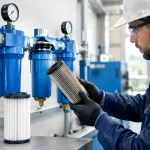
Air preparation is your first line of defense against component failure. Integrating high-quality Filter-Regulator-Lubricator (FRL) units is essential for extending the life of your pneumatic hardware. According to ISO 8573-1:2010 standards, maintaining clean, dry air can reduce seal friction by up to 30%. This simple step ensures that the internal spring and poppet move freely, preventing the “stick-slip” phenomenon that plagues unmaintained systems. By utilizing factory direct VidoAir™ components alongside robust air filtration, you minimize energy consumption and protect your long-term investment.
Maximize your system uptime today. Browse our full catalog of VidoAir™ high-performance pneumatic solutions.
VidoAir™ Factory-Direct Check Valve Solutions
Precision Engineering for Industrial Automation
The VidoAir™ pursuit of excellence starts at the atomic level of component manufacturing. Our check valve designs undergo rigorous stress testing to ensure they withstand the demands of 24/7 manufacturing environments. We’ve engineered these valves to sustain over 20 million cycles in high-vibration settings, which represents a 30% increase in longevity over standard market options. The VidoAir™ signature on every component acts as a mark of quality and full manufacturing ownership. We utilize premium grade 304 stainless steel and high-grade fluorocarbon seals to prevent degradation from synthetic lubricants or harsh atmospheric conditions. This focus on precision engineering ensures that your pneumatic actuators and solenoids remain protected from backpressure at all times.
The Advantage of Factory-Direct Procurement
Bypassing the traditional middleman model creates a streamlined supply chain for your business. When you work directly with VidoAir™, you eliminate the 15% to 25% markups typically added by third-party distributors. This direct line of communication also significantly reduces lead times. While competitors often struggle with 10-week backorders, our factory-direct model allows us to ship 92% of standard orders within 48 hours.
Customization is another core pillar of our service. We understand that standard sizes don’t always fit unique machine footprints. Our engineering team can custom-configure components, adjusting cracking pressures from 0.05 bar to 1.0 bar based on your specific OEM requirements. This flexibility allows for tighter system integration and higher overall efficiency. You aren’t forced to design your system around our parts; we build our parts to fit your system.
Transparent Partnership and Technical Support
We believe in a Transparent Partnership that extends far beyond the point of sale. Every client gains access to our dedicated technical support team, consisting of engineers who understand the nuances of pneumatic flow dynamics. We provide detailed CAD files and performance data sheets for every component to simplify your design phase. Our goal is to minimize your energy consumption and operating costs through better component selection.
- Direct access to factory engineers for custom system design and troubleshooting.
- Comprehensive performance testing reports included with all bulk OEM shipments.
- Global logistics network ensuring on-time delivery to your facility, regardless of location.
- One-year warranty on all precision-engineered pneumatic components.
To explore the full range of our capabilities, we encourage you to download our latest product catalog. You’ll find a vast inventory of ready-to-ship solutions and technical specifications for our entire line. When you’re ready to secure the best pricing for your next project, Request a Quote for VidoAir™ Check Valves and experience the VidoAir™ difference. We’re ready to help you optimize your system’s performance and your company’s bottom line.
Optimize Your Pneumatic Efficiency Today
Mastering one-way flow is essential for protecting your equipment and maintaining peak check valve performance across every circuit. Choosing the correct component prevents costly pressure drops and ensures your system maintains 100% directional integrity. Regular maintenance schedules and precise installation techniques can extend your hardware’s service life by several years. It’s about more than just parts; it’s about securing your operational uptime with components you can trust.
VidoAir™ delivers precision-engineered industrial durability that stands up to the most demanding environments. We provide a factory-direct pricing guarantee that ensures you receive the best value without compromising on quality. Our team provides dedicated technical support for OEMs to help you integrate the perfect pneumatic solutions into your designs. Whether you’re upgrading an existing line or building a new machine, our 2024 inventory is ready to ship to your facility within 24 hours. We’re here to help you achieve your production goals with confidence and power your success.
Download the VidoAir™ Pneumatic Components Catalog to explore our full range of high-performance solutions. You’re one step away from a more reliable system.
Frequently Asked Questions
What is the primary function of a check valve in a pneumatic system?
The primary function of a check valve is to ensure unidirectional flow and prevent backflow that could damage a compressor. It acts as a critical safety barrier by allowing air to move forward while blocking 100% of reverse pressure. VidoAir™ designs these components to maintain system integrity during sudden power losses. This protection ensures that sensitive upstream equipment remains free from contaminants or pressure surges.
Can a check valve be used as a pressure relief valve?
You shouldn’t use this component as a pressure relief valve because they perform fundamentally different safety tasks. While one blocks reverse flow, a pressure relief valve is designed to exhaust air once it hits a specific limit, such as 150 PSI. Using the wrong component can lead to system failure. VidoAir™ offers dedicated relief solutions to ensure your pneumatic circuit operates within safe parameters and avoids costly mechanical breakdowns.
How do I determine the cracking pressure I need for my application?
Determine your cracking pressure by identifying the minimum force needed to overcome the internal spring and initiate flow. Most pneumatic applications require a low cracking pressure between 1 and 5 PSI to minimize energy loss. If you choose a pressure that’s too high, you’ll see a 15% drop in efficiency. VidoAir™ engineers can help you select the precise rating to keep your automation lines running at peak performance.
What is the difference between a check valve and a non-return valve?
There’s no functional difference between a check valve and a non-return valve; they’re two names for the same device. Engineers in North America typically use the term check valve, while European standards like ISO 5599 often refer to them as non-return valves. Both designs ensure air travels in only one direction. VidoAir™ provides these high-performance components factory direct to meet global engineering specifications and high-speed automation requirements.
Why is my check valve making a chattering or humming noise?
Chattering or humming usually indicates that the air flow is too low to keep the internal mechanism fully open. This vibration occurs when the flow rate drops below 25% of the valve’s maximum capacity, causing the disc to bounce against the seat. It leads to premature wear and potential seal failure. You can often resolve this by resizing the valve or choosing a VidoAir™ model with a lighter internal spring tension.
Can I install a check valve in a vertical pipe run?
You can install this component in a vertical pipe run as long as you account for gravity and valve type. For vertical installations, flow must move upward so the internal poppet or disc can seat properly when flow stops. Spring-loaded models from VidoAir™ are the most reliable choice for these setups. They provide a 100% positive seal regardless of orientation, which simplifies your piping layout and installation process.
How often should industrial check valves be inspected for maintenance?
You should inspect industrial valves every 12 months for standard operations. If your system cycles more than 1,000 times every 24 hours, move to a quarterly inspection schedule. Checking for seal wear and spring fatigue prevents 90% of unexpected downtime. VidoAir™ components are built for durability, but regular maintenance ensures they continue powering success in demanding factory environments where precision and reliability are essential for production.
Does VidoAir offer custom materials for corrosive pneumatic environments?
VidoAir™ offers custom-configured materials specifically engineered for corrosive pneumatic environments. We provide options like 316 stainless steel and FKM seals that resist chemical degradation and heat up to 200 degrees Celsius. These robust solutions are delivered direct from our factory to ensure you get the best cost pricing. Our technical team can tailor a solution that matches your specific chemical compatibility requirements to ensure long-term performance and safety.