A single $50 air cylinder can cost an automated assembly line $2,500 per hour in lost productivity if it fails prematurely or lacks the required force to complete a cycle. You likely already realize that inconsistent performance from low-quality components is the fastest way to erode your profit margins. Relying on traditional distributors often means waiting 6 weeks for a standard part while your machines sit idle, which is a bottleneck no modern facility can afford.
At VidoAir™, we believe that precision engineering should be accessible without the typical middleman delays. This guide empowers you to master the technical nuances of pneumatic selection to optimize your automation systems with factory-direct efficiency. We’ll provide the exact formulas to calculate bore and stroke requirements with 100% accuracy. You will learn how to reduce system downtime by 25% through proactive maintenance and how to lower procurement costs by 15% without sacrificing the robust quality your facility demands. We are here to ensure your operations remain high-performance and cost-effective.
Key Takeaways
- Understand the fundamental physics of converting pressure energy into kinetic energy to ensure your automation systems operate with maximum precision.
- Identify the critical differences between single-acting and double-acting architectures to optimize air consumption and functional efficiency for your specific application.
- Master the precise relationship between operating pressure and output force to select the ideal air cylinder size, eliminating the unnecessary costs of oversized components.
- Implement professional installation and maintenance protocols, including essential FRL strategies, to guarantee leak-free performance and extended component life.
- Discover how the VidoAir™ factory-direct model provides premium, meticulously engineered components while securing unmatched value through best-cost pricing.
Understanding Air Cylinders in Modern Industrial Automation
An air cylinder serves as the fundamental muscle of industrial automation. It’s a mechanical device designed to harness the power of compressed air to generate precise linear motion. This process involves converting the potential energy of pressurized gas into kinetic energy; this energy then drives a piston to move a load across a set distance. VidoAir™ focuses on “POWERING SUCCESS” by delivering these high-performance solutions factory direct to ensure 100% compatibility with existing systems. In technical literature, a pneumatic cylinder is often categorized by its ability to provide rapid, repeatable movement without the risk of overheating. Unlike hydraulic systems that require complex fluid management and pose a constant risk of oil contamination, pneumatic systems are inherently clean. This sustainability factor is why 92% of pharmaceutical and food-grade production lines prioritize air-driven actuators over fluid-based ones. They reduce maintenance overhead and offer a service life that often exceeds 10 million cycles when properly lubricated and maintained.
The Anatomy of a High-Performance Air Cylinder
Building a robust air cylinder requires meticulous engineering of four primary components: the cylinder barrel, the piston rod, the end caps, and the internal seals. The barrel acts as the pressure vessel, while the piston rod transmits the generated force to the external load. Material selection determines the longevity of the unit in harsh environments. For instance, 6061-T6 anodized aluminum is the industry standard for lightweight, corrosion-resistant performance in 75% of general automation tasks. However, 304 or 316-grade stainless steel is essential for wash-down applications where chemical exposure is frequent. High-performance seals made of Nitrile or Viton prevent pressure bypass, ensuring the actuator maintains its rated force. The bore is the internal diameter of the cylinder barrel.
Common Industrial Applications
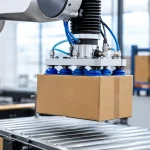
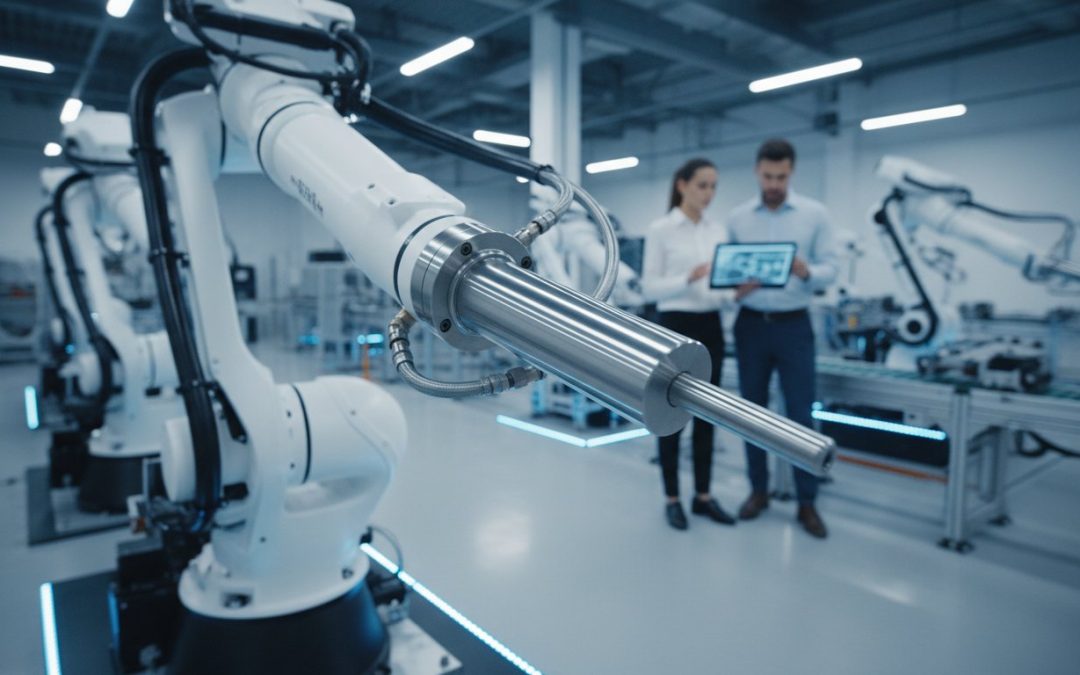
The versatility of these actuators makes them indispensable across various sectors. In material handling, they’re responsible for pushing, pulling, and lifting heavy loads with forces often exceeding 5,000 Newtons. Precision is equally vital; actuators manage delicate tasks such as clamping components during assembly, ejecting finished parts from a mold, or controlling gates on a high-speed conveyor. Since 2021, robotic integration has seen a 14% increase in the use of pneumatic actuators for end-of-arm tooling. These “soft” robotic grippers and vacuum tools allow for the safe handling of fragile items in packaging plants. By utilizing factory-direct components, facilities can achieve a 20% reduction in operating costs while maintaining the millisecond response times required for modern manufacturing speeds. This blend of power and precision ensures that every VidoAir™ component contributes to a more efficient, reliable production environment.
Comparing Air Cylinder Architectures: Single-Acting vs. Double-Acting
VidoAir™ engineers recognize that selecting the correct architecture dictates the entire performance envelope of a pneumatic system. Understanding the functional divide between single and double-acting designs is critical for optimizing air consumption and cycle rates. While both types serve as the powerhouse of automation, their internal mechanics offer distinct advantages for specific industrial applications. Choosing between them isn’t just about movement; it’s about managing energy, force, and safety across millions of cycles.
Single-Acting Cylinders: Simplicity and Safety
Single-acting designs utilize compressed air for the power stroke in one direction only. A mechanical spring or external force, such as gravity, handles the return stroke. This design excels in 100% fail-safe scenarios. If power or air pressure fails, the internal spring automatically returns the piston to its home position. You’ll find these frequently in simple clamping, punching, or emergency shut-off valves where a specific “parked” position is mandatory for safety.
There are physical trade-offs to consider with this architecture. The internal spring takes up significant space, which often limits the stroke length to under 100mm in most standard models. Because the air must overcome the spring’s resistance during extension, there’s a 10% to 15% reduction in effective force compared to a double-acting air cylinder of the same bore size. These units are best when the work is performed in only one direction and space allows for the larger housing required by the spring mechanism.
Double-Acting Cylinders: Power and Precision
Double-acting models represent the 85% majority in modern industrial automation. These units use compressed air for both the extension and retraction strokes, providing full, consistent force in both directions. This design allows for much longer stroke lengths, sometimes exceeding 3,000mm depending on the rod diameter and application. When you’re looking for detailed specifications on pneumatic cylinders and actuators, the versatility of the double-acting design is usually the primary focus.
To manage the high speeds of these systems, VidoAir™ incorporates adjustable cushioning. This feature slows the piston at the end of its travel, preventing internal impact damage that can exceed 20G forces in high-speed cycles. Precision control is the hallmark of this design. By using flow control valves on both ports, operators can independently tune the speed of extension and retraction to match the needs of a specific assembly process.
Industrial data shows that air consumption varies significantly between these two architectures. Single-acting cylinders consume roughly 50% less compressed air per cycle because they only fill the chamber once. For high-volume production lines where precision isn’t the primary goal, this leads to lower energy costs. Double-acting units require air for every movement, but they provide the precision and speed necessary for 2024 manufacturing standards. You should prioritize spring-return mechanisms when the stroke is short and the return force requirement is negligible.
When floor space is at a premium, rodless cylinders provide a solution by eliminating the external piston rod. These units offer a 50% smaller footprint than traditional designs because the total length of the air cylinder remains constant throughout the stroke. This architecture is perfect for long-stroke applications like material transfer or sliding doors where an extending rod would be a safety hazard or a physical obstruction. VidoAir™ provides these high-performance pneumatic solutions direct from the factory to ensure your system operates at peak efficiency with the lowest possible overhead.
Critical Sizing Factors: Bore, Stroke, and Force Calculations
Precision engineering requires selecting the exact component for the specific job. Engineers often fall into the trap of oversizing an air cylinder to ensure it handles the load, but this habit is expensive. A cylinder that’s 50% larger than necessary consumes nearly double the compressed air per cycle. This inefficiency adds up quickly in high-speed automation lines where actuators fire 60 times per minute. VidoAir™ focuses on “Perceptive Engineering,” which means matching the actuator to the task to minimize energy consumption and operating costs.
Operating pressure is the primary driver of output. While most facilities have a compressor rated for 125 PSI, the pressure at the actuator is often lower due to line drops. You’ll need to base your calculations on the minimum pressure available at the end of the line, not the maximum compressor setting. To ensure reliability, subtract a 25% safety margin from your total force calculation. This buffer accounts for internal seal friction, which typically consumes 5% to 10% of the theoretical force, and allows the system to handle unexpected load fluctuations without stalling.
Stroke length selection is just as critical as bore size. If the stroke is too long, the rod can buckle under heavy loads or suffer from “piston slap” against the end caps. For applications requiring a stroke over 1000mm, we recommend using internal stop tubes. These tubes increase the distance between the piston and the rod bearing, providing the structural stability needed to prevent premature failure. Always verify that the physical footprint of the extended air cylinder doesn’t create mechanical interference with safety guards or adjacent machine frames.
Calculating Theoretical Force
The basic formula for output is Force = Area x Pressure. When calculating for the extend stroke, use the full piston area. For the retract stroke, you must subtract the cross-sectional area of the piston rod from the piston area. This results in a 10% to 15% reduction in force during retraction for standard VidoAir™ models. In 2026, standard industrial pneumatic systems typically operate between 80 and 100 PSI for optimal actuator efficiency. Using these specific parameters ensures your automation system remains robust under heavy duty cycles.
Understanding Mounting Styles and Standards
Interchangeability is vital for maintaining production uptime. ISO 15552 covers large profile cylinders, while ISO 6432 governs mini-cylinders. These international standards ensure that a VidoAir™ component fits perfectly into existing brackets. Your choice of mounting dictates the unit’s durability. Rigid mounts like flange or foot brackets require perfect alignment. If the rod is misaligned by even 1 degree, seal wear increases by 40%. Pivot mounts, such as clevis or trunnion styles, allow the cylinder to move with the load. This flexibility prevents side-loading and significantly extends the lifespan of the rod bearings and seals.
- Flange Mounts: Best for high-force applications where the load is perfectly centered.
- Foot Mounts: Ideal for horizontal movements where the cylinder rests on a flat surface.
- Clevis Mounts: Essential for applications where the cylinder must pivot through an arc.
- Trunnion Mounts: Provide high-strength pivoting at the head, cap, or mid-section of the cylinder.
Best Practices for Air Cylinder Installation and Maintenance
Peak performance in industrial automation depends on the synergy between components. A VidoAir™ air cylinder delivers maximum efficiency only when the surrounding infrastructure meets rigorous engineering standards. Industry data suggests that neglecting air preparation or alignment leads to 75% of documented pneumatic system failures within the first six months of operation. Reliable operation starts with a clean, dry air supply and ends with a meticulously aligned mechanical load.
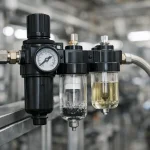
Air preparation remains the most critical factor for longevity. You must implement a high-quality Filter-Regulator-Lubricator (FRL) unit at the start of every branch circuit. Use a 5-micron filter to capture fine particulates that score cylinder walls and destroy seals. Set your regulator to the minimum pressure required for the task; running a system at 100 PSI when 80 PSI suffices increases component wear by 20% and wastes significant energy. While many modern actuators feature permanent internal grease, high-speed applications exceeding 10,000 cycles per day often benefit from supplemental inline lubrication to reduce thermal buildup.
Installation and System Integration
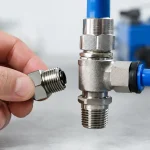
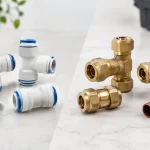
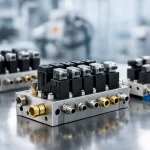
Precision alignment prevents side-loading, which is the leading cause of premature rod seal failure. Even a minor 1-degree offset between the piston rod and the load increases internal friction by 25%. Use self-aligning rod couplers if your application cannot guarantee perfect linear travel. To ensure a leak-free circuit, select the correct pneumatic fittings with NPT or G threads and apply sealant or O-rings correctly. For automated sequencing, connect the actuator to a 5/2 or 3/2 solenoid valve. This allows for millisecond-level directional control and direct integration with PLC systems to optimize cycle times across your production line.
Troubleshooting and Preventive Maintenance
Routine inspections prevent catastrophic downtime. Technicians should examine piston rods for scoring or pitting every 500 operating hours. A scratched rod acts as an abrasive, quickly shredding the rod seal and causing pressure loss. Check for “milky” exhaust air at the valve ports; this indicates moisture contamination that has bypassed the filtration system. Water in the lines washes away essential lubricants and causes internal corrosion in the air cylinder body. Use this checklist for your monthly maintenance rounds:
- Tighten mounting bolts that may have loosened due to high-frequency vibration.
- Drain condensate from FRL bowls to prevent moisture carryover.
- Monitor cycle times; a 10% slowdown usually indicates internal seal bypass or a clogged muffler.
- Verify that flow control valves haven’t drifted from their calibrated settings.
Deciding when to repair versus when to replace an actuator is a matter of economics. For small-bore units under 40mm, replacement is typically more cost-effective than the labor required for a rebuild. For large-bore industrial cylinders, installing a VidoAir™ seal kit can extend the service life by another 5 million cycles at a fraction of the cost of a new unit. Maintaining a consistent spare parts inventory ensures that seal wear doesn’t turn into a week of lost production.
Why VidoAir™ Factory-Direct Air Cylinders Power Global Success
VidoAir™ operates on a philosophy we call ‘Perceptive Engineering.’ This approach isn’t just about manufacturing; it’s about anticipating the mechanical stresses of a high-cycle production line before they cause a single second of downtime. By adopting a strict factory-direct model, we’ve removed the 25% to 35% markup typically added by regional distributors and third-party resellers. This allows us to provide premium components at a ‘best cost’ price point that empowers your bottom line without compromising on material integrity. We believe that high-performance automation shouldn’t be gated by inflated middleman costs.
Our facility maintains over 15,000 ISO-compliant actuators in stock at any given time. Whether your project requires ISO 15552, ISO 6431, or compact ISO 21287 standards, we ensure 24-hour dispatch for all in-stock items. Choosing the right air cylinder for your application is critical for system longevity. That’s why we offer a vast inventory of ready-to-ship solutions that meet global compatibility standards. For unique OEM requirements, our engineering team provides custom configuration capabilities. We can adjust stroke lengths, seal materials, and mounting geometries for 98% of our product catalog. This agility allows us to support specialized machinery that standard off-the-shelf parts simply can’t accommodate.
Our commitment to excellence extends beyond the hardware. We’ve built a logistics network that bridges the gap between our factory floor and your facility. Since our 2018 expansion, we’ve successfully integrated real-time tracking and expedited customs processing to ensure your components arrive exactly when they’re needed. Our clients report a 20% average reduction in lead times when switching to our direct-delivery model.
The VidoAir™ Quality Guarantee
Every component we produce undergoes a rigorous 12-point inspection process to ensure zero-leak performance right out of the box. We back our craftsmanship with a comprehensive one-year warranty, providing peace of mind for high-demand industrial environments. Our partnership model focuses on transparency; you’ll have direct access to technical support specialists who understand the nuances of pneumatic circuitry. To keep your projects on schedule, we’ve optimized our global logistics to provide door-to-door shipping that reaches 92% of international industrial hubs within 3 to 5 business days. We don’t just ship parts; we deliver reliability.
Innovating for the Future of Automation
VidoAir™ is redefining linear motion by focusing on high-efficiency designs that reduce air consumption by up to 18% compared to legacy models. Our robust materials and precision machining mean your systems run longer with less maintenance. You’re joining a community of over 3,000 global professionals who prioritize reliability and performance. We’re committed to moving the world forward through smarter, more accessible automation solutions. Our team is ready to help you optimize your next project with precision-engineered components.
Optimize Your Pneumatic Infrastructure for Maximum Throughput
Precision engineering isn’t just a luxury; it’s a requirement for modern automation. By mastering bore and stroke calculations, you eliminate the 25% energy efficiency loss typical in oversized systems. Integrating the right air cylinder ensures your machinery maintains peak performance across millions of cycles without unexpected downtime. VidoAir™ provides ISO-compliant components that meet strict 9001:2015 quality standards, giving your engineering team the technical edge needed to scale production safely. Our factory-direct pricing guarantee removes the 15% to 30% markup typical of third-party distributors; this allows you to reinvest those critical savings into your facility’s future growth. We manage the entire logistics process with global door-to-door shipping to over 60 countries, ensuring your operations never stall due to regional supply chain delays. You’ve analyzed the technical requirements for industrial success; now it’s time to implement them with a partner that values precision as much as you do. Let’s build a more efficient floor together.
Browse the VidoAir™ Air Cylinder Catalog to secure high-performance actuators for your next project. We’re ready to help you move the world forward.
Frequently Asked Questions
What is the difference between an air cylinder and a pneumatic cylinder?
There’s no functional difference between these two terms. Both names describe a mechanical device that utilizes compressed air to generate linear motion. In 95% of industrial catalogs, these terms are used interchangeably. VidoAir™ provides high-performance pneumatic solutions that meet these exact specifications. Whether you call it an air cylinder or a pneumatic actuator, the core technology remains a piston moving within a precision-engineered chamber to generate force.
How do I calculate the force of an air cylinder?
You calculate the theoretical force by multiplying the air pressure by the internal surface area of the piston. Use the formula F = P x A, where F is force in pounds, P is pressure in PSI, and A is the area in square inches. For a 2-inch bore cylinder at 80 PSI, the extending force is approximately 251 pounds. VidoAir™ recommends deducting 10% to 20% from this result to account for internal friction and pressure drops during operation.
Can I use an air cylinder for vertical lifting?
You can use an air cylinder for vertical lifting provided you include safety components like pilot-operated check valves. These valves prevent the load from dropping if the system loses air pressure. When lifting a 500-pound load, ensure your cylinder is sized to handle 2 times the weight to overcome gravity and inertia. It’s also vital to use guided actuators to prevent side loading, which causes 40% of premature seal failures in vertical applications.
What are the most common causes of air cylinder failure?
Contamination and seal wear account for 75% of all cylinder failures in automated systems. Fine particulates or moisture in the compressed air line erode the internal seals, leading to bypass leakage. Misalignment is another major factor; even a 1-degree offset can increase friction and heat. VidoAir™ engineering standards suggest using 5-micron filtration to extend the service life of your components and maintain peak efficiency in demanding environments.
Do I need to lubricate my air cylinder?
Most modern VidoAir™ cylinders are pre-lubricated at the factory and don’t require additional oil during their service life. If you choose to use an inline lubricator, you must continue doing so for the life of the component. This is because added oil washes away the original high-performance grease. Statistics show that 60% of maintenance teams now prefer non-lube cylinders to reduce environmental impact and lower overall operating costs.
What is the standard stroke length for industrial actuators?
There’s no single universal standard, but most manufacturers offer stock stroke lengths in 1-inch or 25-millimeter increments up to 24 inches. VidoAir™ stocks a vast inventory of ready-to-ship solutions in these common sizes. For specialized automation needs, custom stroke lengths can be configured to within 0.01 inches of your specific requirement. This flexibility ensures that 100% of your application’s mechanical constraints are met without compromising on precision or performance.
How do I choose between a single-acting and double-acting cylinder?
Choose a single-acting cylinder if you only need force in one direction and want to minimize air consumption by 50% on the return stroke. These models use an internal spring to reset the piston. Opt for a double-acting air cylinder when your application requires controlled force and speed in both directions. Double-acting designs are used in 85% of industrial applications because they provide superior versatility and much longer stroke capabilities than spring-return models.
What air pressure is required to operate a standard air cylinder?
Most industrial pneumatic systems operate at a standard pressure of 80 to 100 PSI, which equals 5.5 to 7 bar. While many VidoAir™ components are rated for a maximum of 150 PSI, running at lower pressures can increase seal life by up to 30%. It’s essential to maintain a minimum of 15 to 20 PSI to overcome internal friction. Consistently regulating your supply ensures that your actuators deliver the precision and reliability required for high-performance automation.