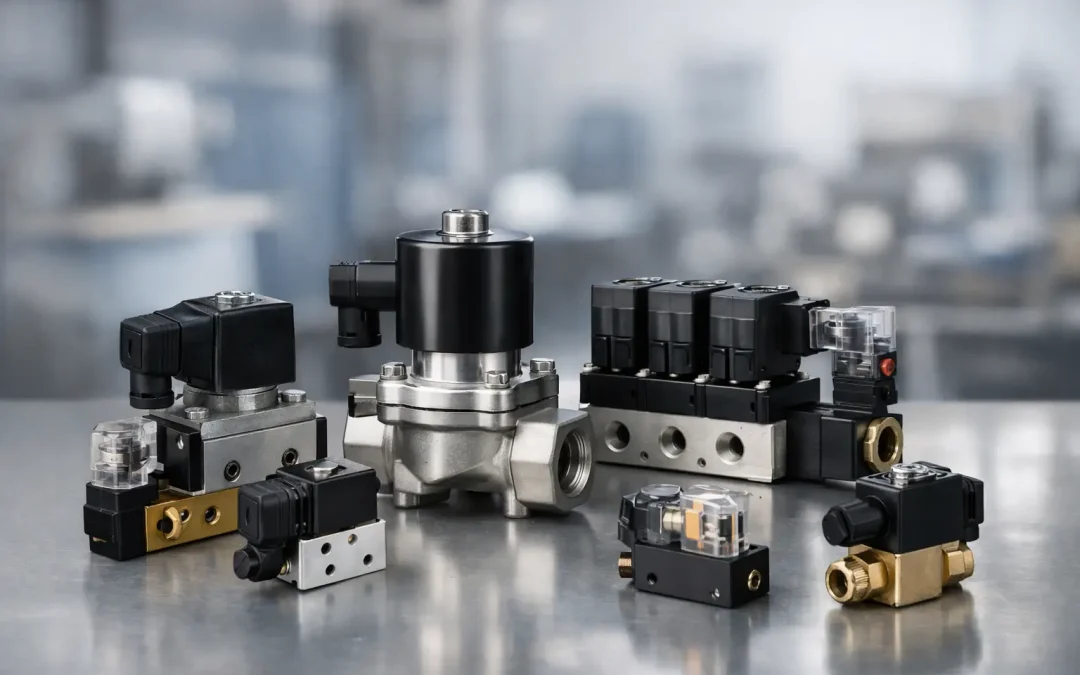
A valve that sticks once per shift is not a small problem. It becomes scrap, downtime, blown cycle times, and a maintenance call that should not have happened. When engineers and technicians look for the best pneumatic solenoid valves, they are usually not chasing a catalog superlative. They are trying to prevent one weak link from degrading an otherwise solid machine.
The right valve is application-specific, but the buying logic is consistent. Fast actuation matters if your machine depends on repeatable cycle timing. Coil reliability matters if the valve will sit energized for long periods in a hot enclosure. Flow capacity matters if cylinder speed is non-negotiable. And if contamination, washdown, vibration, or wide pressure swings are part of the job, the best-looking price on paper can become the most expensive part in the cabinet.
What actually separates the best pneumatic solenoid valves
In industrial automation, the best valve is rarely the one with the most features. It is the one that fits the duty profile without adding failure points. For most OEMs, integrators, and plant teams, six factors decide whether a valve belongs on the machine.
The first is valve function. A 3-way valve may be ideal for single-acting cylinders, pilot functions, or venting tasks, while a 5-way valve is usually the better fit for double-acting cylinders and directional control. Choosing the wrong function at the start forces workarounds later.
The second is actuation style. Direct-acting valves perform well in low-pressure or zero-pressure applications, but they are typically limited in flow. Pilot-operated valves handle higher flow more efficiently, though they depend on minimum pressure differentials and cleaner supply conditions. If your system pressure varies during startup or low-load operation, that trade-off matters.
The third is response and repeatability. On packaging, pick-and-place, sorting, and light robotic systems, inconsistent response times show up quickly as position variation or unstable cycle rates. A valve may be technically functional and still be a poor choice if its switching performance drifts under heat or voltage fluctuation.
The fourth is environmental fit. Standard indoor factory conditions are one thing. Fine dust, oil carryover, outdoor exposure, washdown chemistry, or high ambient temperatures are another. Seal material, enclosure rating, and body construction are not side notes in those environments.
The fifth is serviceability. A valve manifold that reduces tubing and wiring may be the right choice for a machine builder, but a maintenance team may prefer a format that allows one failed station to be swapped in minutes. The best design depends on whether uptime or assembly speed is the bigger constraint.
The sixth is supply confidence. A technically strong valve with long replenishment times is a risky valve for production. This is one reason experienced buyers often prefer factory-direct suppliers with broad stock and configured-to-order support over fragmented sourcing.
9 valve types that are often the best fit
A true best-of list by brand is rarely useful without full application data. For industrial buyers, it makes more sense to compare the valve categories that consistently perform well in the field.
1. 5-way, 2-position spool valves for general cylinder control
If you are driving double-acting cylinders in standard automation, this is usually the baseline. These valves balance good flow, simple control logic, and broad compatibility with manifolds and field wiring options. They are often the best pneumatic solenoid valves for OEM machines because they are easy to integrate and easy to replace.
Their main limitation is that they are not always the right answer for fail-safe or memory-dependent circuits. If the process requires a defined state during power loss, you need to look closer at spring return behavior and circuit consequences.
2. 5-way, 3-position valves for center-condition control
When the circuit needs cylinders to stop, float, or exhaust in a neutral state, a 3-position valve earns its keep. These are common in applications where mid-stroke behavior matters or where motion during signal loss must be carefully managed.
The trade-off is complexity. They cost more, consume more panel and manifold planning time, and can create confusion if the center condition is not clearly specified. Closed center, pressure center, and exhaust center do not behave the same in the real world.
3. High-flow pilot-operated valves for larger bore actuators
Once actuator size grows, undersized valves become a hidden bottleneck. A cylinder that looks slow or weak may not have a cylinder problem at all – it may be starved by valve Cv. High-flow pilot-operated valves are often the best fit for clamp circuits, material handling, and heavier automation where speed and force recovery matter.
They do demand stable air quality and enough pilot conditions to operate consistently. In dirty air systems, performance can degrade long before the valve fully fails.
4. Direct-acting valves for low-pressure or vacuum-adjacent duties
If your circuit cannot rely on minimum pressure to shift a valve, direct-acting designs are worth serious attention. They are common in test equipment, vacuum handling support functions, and specialty low-flow controls.
Their strength is reliability at low or zero differential pressure. Their weakness is usually lower flow capacity and, in some designs, higher coil heat relative to size.
5. NAMUR-mount valves for process and actuator packages
For quarter-turn actuators and process automation assemblies, NAMUR-mount valves reduce installation complexity and leak points. They are often the cleanest solution when mounting directly to actuator interfaces is preferred over remote plumbing.
These valves are efficient and compact, but they are only best when the actuator and mounting standard line up cleanly. Forced adaptation usually defeats the point.
6. Manifold-mount valve systems for dense automation layouts
On machines with many actuators, manifold systems usually outperform discrete valves in footprint, wiring efficiency, and assembly time. They also make future expansion easier when designed properly.
That said, not every manifold system is equally maintenance-friendly. The best ones allow individual station replacement without major disassembly and offer clear diagnostics at the station level.
7. Stainless or corrosion-resistant valves for harsh environments
Food-adjacent areas, chemical exposure zones, and outdoor equipment need more than standard plated hardware. Corrosion-resistant valve bodies and compatible seals help preserve switching reliability where moisture and aggressive cleaning are routine.
These valves cost more upfront, but standard valves in wet or corrosive service often fail in ways that look electrical before they are recognized as environmental.
8. Explosion-resistant or protected-coil valves for hazardous areas
Hazardous locations require more than a good valve body. Coil construction, approvals, heat management, and enclosure details all matter. In these settings, the best pneumatic solenoid valves are the ones specified around the site classification first and performance second.
This is an area where shortcuts create expensive compliance and safety problems. If the classification is uncertain, the valve selection is premature.
9. Specialty compact valves for high-speed, space-limited machines
Compact valves are often the best choice in electronics assembly, lab automation, and small-part handling where cabinet space and response time are tightly constrained. They can deliver excellent switching performance in a small package.
The compromise is often port size and flow margin. A compact valve that looks efficient in CAD can become the limiting factor when the machine runs at full rate.
How to compare best pneumatic solenoid valves without guesswork
Start with the load, not the valve. Cylinder bore, stroke, required speed, available pressure, and duty cycle tell you more than a catalog cover ever will. Once those are known, valve sizing becomes a control problem instead of a purchasing guess.
Next, evaluate air quality honestly. Many valve problems blamed on manufacturing defects are contamination problems – water, oil, rust, pipe scale, and seal debris. If your air prep is inconsistent, even a premium valve will have a shorter service life than expected.
Then look at coil duty and electrical reality. Continuous energization, voltage drop on long cable runs, heat inside compact panels, and surge behavior all affect reliability. A valve that performs well on a bench can behave differently on a crowded production line.
After that, look at mounting and maintenance. A clean manifold layout is valuable, but not if replacing one failed valve shuts down the whole machine for an hour. In high-uptime plants, service access is a design variable, not a convenience.
Finally, consider supply continuity. A technically correct valve with uncertain availability introduces avoidable risk. This is where a manufacturer-focused supplier such as VidoAir can add practical value – not just with product range, but with technical support and configured options that align with actual machine requirements.
Common buying mistakes that create valve problems later
The most common mistake is buying by port size alone. Port size does not tell you enough about usable flow, response, or suitability for the actuator. A second mistake is ignoring the minimum operating pressure on pilot-operated designs. That issue often appears only during startup, low-load conditions, or emergency recovery.
Another frequent error is treating all seal materials as interchangeable. Temperature, lubricant exposure, aggressive washdown chemistry, and media quality all affect seal life. The wrong elastomer may work for weeks and still be the wrong choice.
There is also a tendency to overvalue initial price and undervalue consistency. A lower-cost valve that varies from lot to lot or shipment to shipment creates integration and maintenance problems that never show up on the purchase order.
The best valve choice is usually the one that keeps machine behavior predictable. That means matching flow, function, environment, electrical duty, and service strategy before you commit. If the valve will control a critical motion point, the right question is not whether it is inexpensive. It is whether it will still shift cleanly after millions of cycles, under real plant conditions, when the rest of the machine is depending on it.