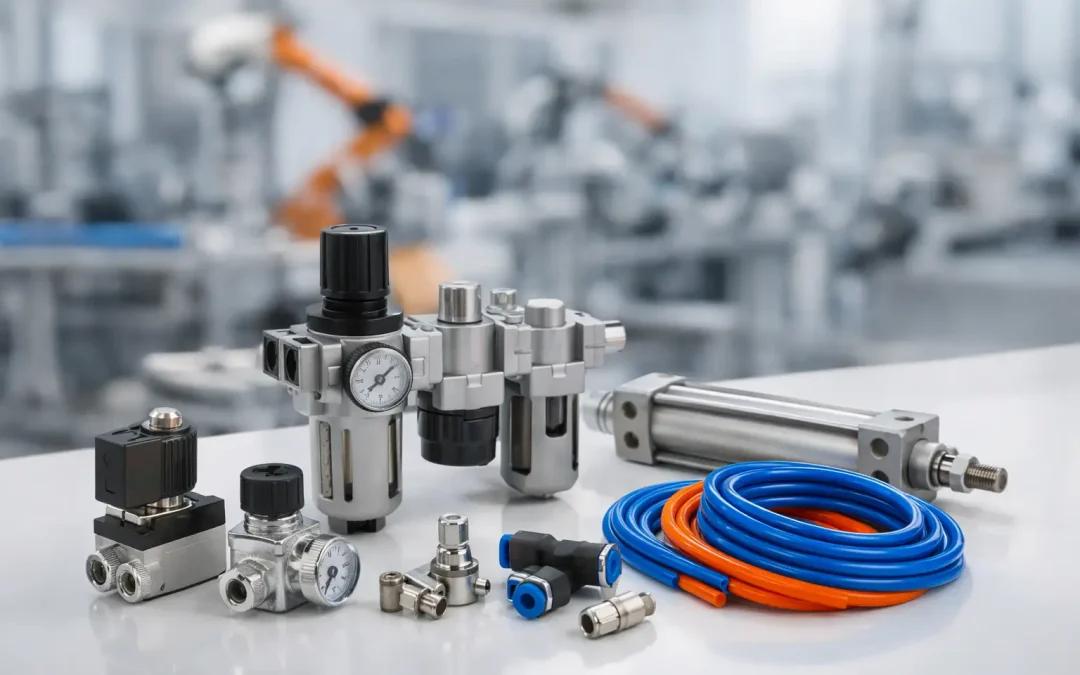
A pneumatic system rarely fails because of one dramatic mistake. More often, an OEM program gets into trouble through a chain of small compromises – an undersized valve, inconsistent air prep, tubing that kinks in motion, or a cylinder chosen on bore alone without enough attention to side load, speed, or mounting. When engineers ask about the best pneumatic components for OEMs, the real question is which components keep performance predictable after the machine leaves the floor.
For OEMs, that answer is not a list of the most expensive parts in a catalog. It is the right mix of actuators, valves, air preparation, fittings, tubing, and control hardware matched to duty cycle, contamination risk, available space, and service expectations. The best component set reduces commissioning time, protects uptime, and gives procurement a stable supply path when builds scale.
What makes the best pneumatic components for OEMs
In OEM work, component quality is only one part of the decision. Integration risk matters just as much. A premium cylinder that requires awkward brackets, unusual porting, or long lead-time seal kits can create more lifecycle cost than a well-engineered standard platform with broad availability.
The best pneumatic components for OEMs usually share five traits. They deliver repeatable performance, fit cleanly into the machine envelope, support fast replacement or maintenance, offer configuration flexibility, and come from a supplier that can support both standard and application-specific needs. That last point gets overlooked during prototype builds and becomes critical during production ramps.
Trade-offs are unavoidable. Stainless air prep may be the right call in washdown or corrosive settings, but it adds cost where standard aluminum assemblies would perform well. Compact valves save cabinet or manifold space, but not if higher flow is needed to maintain actuator speed under load. Good OEM selection is less about chasing a single specification and more about balancing the system.
Actuators set the performance ceiling
If the actuator is wrong, the rest of the pneumatic package spends its life compensating. For most OEM machines, cylinders and guided actuators define motion quality, cycle consistency, and mechanical reliability.
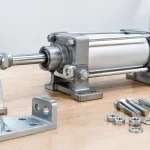
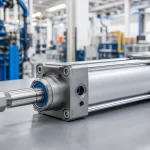
Standard linear actuators remain the workhorse for clamp, lift, eject, gate, and transfer functions. The best choices for OEMs are models with durable seals, consistent bore tolerances, common mounting options, and enough cushioning control to manage speed without hammering the mechanics. Engineers should look past theoretical force calculations and consider real installed conditions like pressure variation, shock at end of stroke, and load alignment.
Specialty actuators matter when the machine cannot tolerate side loading, deflection, or poor repeatability. Slide table actuators are often the better fit for compact pick-and-place, short indexing moves, and guided transfer where a basic rod cylinder would need additional external support. That can simplify the assembly and improve positioning stability, even if the initial component cost is higher.
Rotary actuators also earn their place in OEM designs where clamp rotation, gate motion, or limited-angle indexing must stay compact. The right rotary unit can replace a more complicated linkage arrangement and reduce assembly variation.
For higher-speed applications, the question is not just whether the actuator can cycle fast. It is whether seals, bearings, cushions, and valve flow can hold up under sustained use. An actuator that performs well in testing but degrades at production speeds is not a best-fit component.
Valves and solenoids decide responsiveness
A well-sized actuator still depends on the valve package to deliver speed and control. OEMs often run into trouble here by selecting around voltage or manifold format first, then discovering the flow capacity is too tight for the motion profile.
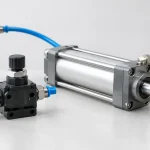
Directional control valves and solenoids should be matched to both actuator volume and desired cycle rate. If response time matters, valve shifting speed, Cv or flow characteristics, and exhaust behavior need close review. In compact automation, the right valve can sharpen cycle performance without increasing supply pressure. In larger motion systems, under-sizing the valve forces the machine to run harder for less result.
Electro-pneumatic controls bring another layer of value when pressure must be adjusted by recipe, product type, or operating mode. They are especially useful where force control or motion tuning changes between SKUs. For OEMs building flexible equipment, that adjustment range can reduce changeover time and improve repeatability.
Refrigeration solenoids belong in a different application family, but for OEMs in thermal systems or process equipment, they are equally critical. Durability under pressure and temperature swings matters more than headline specs. Valve leakage, coil reliability, and media compatibility drive field performance.
Air prep is where reliability starts
Many pneumatic problems blamed on cylinders or valves begin upstream. Poor air quality shortens seal life, destabilizes motion, and increases maintenance frequency. For OEMs, air preparation is not an accessory line item. It is a system protection strategy.
A properly selected filter-regulator-lubricator assembly, or a filter-regulator where lubrication is not desired, protects every downstream component. Filter grade should reflect the actual contamination profile, not a generic standard. Regulators should maintain stable downstream pressure under changing demand, especially in machines with multiple actuators cycling at once.
In harsh environments, stainless steel air prep devices can justify their premium. Food-related equipment, chemical exposure, washdown zones, and outdoor service conditions can all punish standard materials. Here, corrosion resistance is not just about appearance. It protects adjustment points, threads, bowls, and long-term serviceability.
OEMs should also think about drain style, gauge visibility, and service access. If maintenance teams cannot inspect or service the assembly easily, contamination issues tend to linger until they affect production.
Tubing and fittings are small parts with large consequences
Tubing and push-to-connect fittings do not get the same design attention as actuators and valves, but they have an outsized effect on leak rate, installation time, and long-term reliability.
The best tubing choice depends on routing, motion, environment, and media. Flexible tubing that works well in a static panel may fail early in continuous motion. Tight bend requirements can create kinking or flow restriction if the tubing material is too rigid. Heat, oil mist, UV exposure, and abrasion all change what counts as a good choice.
Fittings should be evaluated for more than thread type and tube OD. Thread sealing method, body material, release collar quality, and resistance to vibration all matter in OEM equipment. Cheap fittings often show their true cost later through nuisance leaks, cracked bodies, and inconsistent assembly torque.
This is one area where standardization pays off. Keeping fitting styles and tubing families consistent across a machine platform reduces spare-part complexity and shortens assembly training.
Vacuum and soft gripping components expand design options
For OEMs handling cartons, films, electronics, formed parts, or delicate products, vacuum components can outperform mechanical grippers in both speed and product protection. The right vacuum generator, cup selection, and sensing approach depend on surface condition, porosity, and handling orientation.
The trade-off is straightforward. Vacuum can simplify end-of-arm tooling and reduce part marking, but it becomes less forgiving when product geometry changes or surface quality varies. Engineers should evaluate real product variation early, not just nominal samples.
Soft robotic grippers are increasingly useful where part fragility, shape variation, or sanitation requirements make rigid gripping less practical. They are not the right answer for every cycle or payload, but in specialty packaging, food handling, and irregular-part automation, they can remove a lot of custom finger design work.
Controls and supply strategy matter more than spec sheets suggest
PLCs and electro-pneumatic hardware deserve attention because OEM success is not just about component performance in isolation. It is about how quickly the machine can be wired, programmed, tested, and supported in the field.
Choosing components with sensible catalog structure, predictable configuration options, and accessible technical support can shorten design cycles. Factory-direct sourcing can also help OEMs manage cost without giving up performance, especially when a supplier supports both off-the-shelf and configured-to-order components. That combination matters when a standard build evolves into customer-specific variants.
A broad product line has practical value here. When actuators, valves, air prep, tubing, fittings, and vacuum components can be sourced through one technical channel, compatibility questions get solved faster. VidoAir’s model is built around that reality – durable pneumatic and electro-pneumatic products delivered direct for demanding industrial applications.
How OEMs should narrow the field
The fastest way to make a better choice is to rank components by application risk, not by catalog category. Start with the functions that can stop the machine, create scrap, or drive service calls. Then evaluate the component package around those points.
Ask whether the actuator has enough real-world margin, whether valve flow supports the required cycle, whether air prep matches the environment, and whether fittings and tubing are suitable for installation and motion. Then check the supply side: lead times, replacement consistency, and technical support access. That is where many otherwise solid designs become difficult to scale.
The best pneumatic components for OEMs are the ones that keep machine performance stable when production volume increases, operators vary, and maintenance conditions are less than perfect. Spec sheets help, but field stability is the standard that matters.
A strong OEM pneumatic design should feel uneventful in operation. If the cylinders move cleanly, the valves respond predictably, the air stays conditioned, and the fittings stay tight, the machine can spend its time making product instead of asking for attention.