
In high-cycle automation, every millisecond counts-and every component failure registers on the bottom line. When standard actuators falter under the pressure of relentless speed and precision demands, the resulting downtime is more than an inconvenience; it’s a significant operational cost. This is where high performance pneumatic actuators move from being a premium option to an essential investment for system reliability and efficiency. But how do you identify a component that can truly withstand these demanding environments and justify its cost?
This comprehensive guide is engineered to provide the clarity you need. We will delve into the key performance metrics, advanced materials, and critical design considerations that distinguish a superior actuator. By the end, you will have the technical knowledge to confidently select a robust solution that minimizes maintenance, maximizes uptime, and delivers a clear return on investment for your most critical applications, truly powering your success.
Key Takeaways
- Learn to evaluate pneumatic actuators based on concrete engineering metrics like speed, force, and durability, not just marketing claims.
- Discover how specific internal components and materials directly impact an actuator’s resistance to friction, wear, and leaks in demanding applications.
- Follow a systematic process to select the right high performance pneumatic actuators by precisely defining your system’s mechanical and environmental requirements.
- Understand why your choice of supplier is as critical as the component itself for achieving long-term operational efficiency and system reliability.
What Defines a ‘High-Performance’ Pneumatic Actuator?
The term ‘high-performance’ is often used in marketing, but in industrial automation, it signifies a specific set of measurable engineering metrics. While a standard Pneumatic Actuator converts compressed air into mechanical motion, high performance pneumatic actuators are meticulously engineered to excel where conventional models fall short. These robust components are designed for the most demanding operational challenges-including high-cycle automation, heavy loads, and harsh environments. True high performance is defined by a superior combination of speed, force, precision, and durability, all working to maximize output and ensure a long, reliable operational life.
Speed and Cycle Rate
This metric measures how rapidly an actuator can complete a full extend-and-retract cycle. In high-throughput applications like automated packaging, sorting, and assembly lines, cycle rate is directly tied to productivity. High-performance models achieve superior speeds by incorporating advanced features such as low-friction seals, lightweight piston designs, and optimized air ports. Integrated cushioning technology is also critical, as it safely decelerates the piston at the end of its stroke, preventing impact damage and ensuring longevity even at maximum velocity.
Force and Torque Output
Force (for linear actuators) or torque (for rotary actuators) is the raw power the component generates. While fundamentally determined by bore size and operating air pressure, high-performance units are engineered to deliver that power with exceptional consistency and efficiency. This is achieved through precision-machined components that minimize internal friction and high-integrity seals that prevent air leakage, ensuring that input pressure is converted directly into reliable output for tasks like clamping, pressing, and heavy material handling.
Precision and Repeatability
Precision is the actuator’s ability to consistently and accurately reach a target position, cycle after cycle. This is non-negotiable in applications like robotics, positioning systems, and automated quality control, where even minute deviations can lead to product defects. High-performance actuators achieve superior repeatability through tight manufacturing tolerances, robust guidance systems that prevent rod deviation, and advanced features like low-backlash designs. For ultimate control, many can be integrated with precise position feedback sensors.
Durability and Lifespan
Beyond immediate performance, the true value of a high-performance actuator lies in its long-term reliability. Durability is measured in the total number of cycles or operating hours before requiring maintenance or replacement. These actuators are constructed from superior materials, such as hard-anodized aluminum or stainless steel, to resist wear and corrosion. Their advanced seal compounds are formulated to withstand millions of cycles without degrading, representing a lower total cost of ownership that far outweighs a higher initial investment.
Key Components and Materials for Superior Performance
The distinction between a standard pneumatic cylinder and a truly premium model is not always visible from the outside. The real engineering excellence lies within-in the meticulous selection of materials and the precision design of key components. These internal features are engineered to reduce friction, prevent costly air leaks, and resist wear over millions of cycles. Understanding this construction is critical for specifying high performance pneumatic actuators that deliver sustained reliability. This principle of material innovation is constantly evolving, pushing the boundaries into areas like flexible robotics, as explored in recent IEEE research on Soft Pneumatic Actuators, which highlights the critical role of advanced polymers.
Advanced Sealing Technologies
Seals are the first line of defense against performance degradation. Premium actuators utilize specialized seals designed for specific operational demands, directly impacting efficiency and service life.
- Low-Friction Seals: Polyurethane (PU) or PTFE-based seals minimize resistance, enabling higher speeds and smoother, more consistent motion.
- Self-Lubricating Compounds: Seals impregnated with lubricant reduce maintenance requirements and ensure reliable performance in applications where external lubrication is impractical.
- High-Temperature Seals: Materials like Viton (FKM) maintain their integrity and sealing capability in extreme heat, preventing failure in harsh industrial environments.
- Double-Lip Rod Seals: This design provides a dual function, wiping contaminants from the piston rod on retraction while ensuring a tight seal to prevent air loss on extension.
Actuator Body and Rod Materials
The structural integrity of an actuator is determined by its core materials. The right choice ensures durability against both internal pressures and external environmental factors, making it a cornerstone of high performance pneumatic actuators.
- Actuator Bodies: Hard-anodized aluminum offers an excellent combination of strength, light weight, and corrosion resistance. For washdown, food-grade, or highly corrosive applications, 304 or 316 stainless steel is the superior choice.
- Piston Rods: A hard chrome-plated steel rod provides a smooth, durable surface that resists scoring and wear. Stainless steel rods offer the ultimate protection in corrosive settings.
- Tie-Rod Construction: For heavy-duty applications, high-strength steel tie-rods provide exceptional rigidity and resistance to shock and vibration.
Piston and Bearing Design
The piston and its supporting bearings are where linear motion originates. Precision manufacturing of these components is essential for smooth, efficient, and accurate travel throughout the actuator’s life.
- Wear-Resistant Bearings: Composite or bronze piston bearings ensure low-friction, stable movement and prevent metal-to-metal contact with the actuator body.
- Magnetic Pistons: A standard feature in premium models, magnetic pistons allow for precise position sensing using external switches without mechanical contact.
- Self-Lubricating Bushings: Rod bushings made from oil-impregnated bronze or advanced polymers provide smooth, maintenance-free guidance for the piston rod.
Types of High-Performance Actuators and Their Applications
Selecting the right high-performance pneumatic actuator begins with understanding that different designs are meticulously engineered for specific industrial challenges. Matching the actuator type to the application is the key to unlocking optimal efficiency, reliability, and longevity. The first step is to evaluate the required motion-whether it’s linear, rotary, or gripping-along with critical factors like space constraints, load guidance needs, and cycle speed.
This section connects the robust features of different actuator families to the real-world demands they are built to conquer, ensuring your automation system is powered for success.
Linear Actuators for High-Speed Automation
In modern automation, speed and precision are paramount. Linear actuators are the workhorses of systems requiring rapid, repeatable straight-line motion. Each design offers a distinct advantage for streamlined integration:
- Rodless Actuators: Deliver long strokes in a compact footprint, making them ideal for transfer systems where space is at a premium.
- Guided Cylinders: Incorporate guide rods to provide exceptional stability, support off-center loads, and prevent piston rod bending in high-moment applications.
- Compact Cylinders: Engineered for maximum power in a minimal package, these are essential for tight-fit machine designs and end-of-arm tooling.
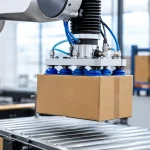
These actuators are commonly found in pick-and-place robotics, high-speed product sorting, and conveyor gating systems where performance cannot be compromised.
Heavy-Duty Actuators for High-Force Applications
When an application demands significant force, heavy-duty actuators provide the robust power and durability required. The design of these high performance pneumatic actuators prioritizes structural integrity to handle immense loads safely and consistently. Achieving precise control under such pressure is a complex engineering challenge, as detailed in studies like the ASME’s research on Nonlinear Controller Design for Pneumatic Actuators, which highlights the advanced engineering required. Key types include:
- Large-Bore Cylinders: Generate exceptionally high force output for pressing, punching, or clamping operations.
- Tie-Rod Cylinders: Feature a classic, robust construction that is easily serviceable and proven in heavy industrial equipment.
- Locking Cylinders: Provide a critical safety function by mechanically locking the piston rod’s position in the event of air pressure loss, securing heavy loads.
Specialty Actuators for Demanding Environments
Standard actuators may fail when faced with extreme temperatures, corrosive substances, or stringent cleanliness standards. Specialty actuators are engineered with specific materials and features to thrive in these demanding conditions. From food processing to foundries, these components ensure operational continuity. Examples include stainless steel models for washdown areas, high-temperature variants for heat-treating ovens, and precision rotary actuators for valve control or part orientation. Find the right actuator for your application.
How to Select the Right High-Performance Actuator
Selecting the ideal component for your automation system is a process of precision engineering. A systematic approach ensures you acquire a solution that delivers optimal performance, longevity, and cost-efficiency. The key is to start by meticulously defining the mechanical and environmental requirements of the application. This prevents over-specifying-a common mistake that increases initial cost and operational complexity without adding value. Remember, high performance pneumatic actuators are part of an integrated system; their output is only as good as the components supporting them.
Proper sizing is the critical foundation for both performance and service life. An undersized actuator will fail prematurely, while an oversized one wastes compressed air and increases costs. Follow these steps for a methodical selection process.
Step 1: Calculate Load, Force, and Speed Requirements
The first step is to quantify the physical work the actuator must perform. This data forms the basis for all subsequent calculations and component choices. Use online sizing tools or consult with our engineers to ensure accuracy.
- Load: Determine the precise mass of the object or load that needs to be moved.
- Force: Calculate the required force using the formula Force = Pressure x Area. It is critical to add a safety factor of 25-50% to overcome system friction and handle unexpected variables.
- Speed: Define the required cycle time (extend and retract) to determine the necessary actuator speed, which in turn dictates air consumption requirements.
Step 2: Assess Environmental and Operating Conditions
The operational environment directly dictates the necessary materials, seals, and protective coatings for your actuator. A component specified for a cleanroom will not survive in a washdown environment. Consider the following:
- Temperature: Note the ambient temperature range of the operation, as extreme heat or cold affects seal performance and lubrication.
- Contaminants: Identify any potential exposure to moisture, corrosive chemicals, or abrasive dust that could compromise standard materials.
- Certifications: Determine if special ratings are needed, such as food-grade for sanitary applications or explosion-proof for hazardous locations.
Step 3: Factor in Air Supply and Control Systems
Even perfectly specified high performance pneumatic actuators will underperform if the supporting infrastructure is inadequate. Your entire pneumatic circuit must be designed to work in harmony.
- Air Supply: Ensure your air compressor and supply lines can deliver the required pressure (psi) and flow rate (SCFM) without significant drops during the actuator’s cycle.
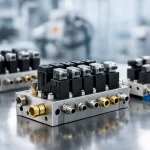
- Valves and Fittings: Select solenoid valves, tubing, and fittings that are properly sized to avoid creating bottlenecks that restrict airflow and limit speed and force.
- Process Control: For applications requiring high precision, consider incorporating sensors for position feedback to enable closed-loop control.
By carefully analyzing these core areas, you can confidently specify an actuator that powers success in your application. For expert assistance with complex calculations or custom configurations, contact the VidoAir engineering team.
Why VidoAir is Your Partner for High-Performance Pneumatics
Selecting the right component is only half the battle; choosing the right supplier is what ensures long-term success and operational efficiency. At VidoAir™, we have engineered our entire business model to deliver more than just a product. We provide a strategic partnership for OEMs and automation specialists who demand superior performance and unmatched value. By combining premium engineering with a streamlined factory-direct model, we deliver robust high performance pneumatic actuators that power your most critical applications.
The Factory-Direct Advantage
Our factory-direct approach fundamentally changes the procurement process, putting you in a position to succeed. By removing distributors and middlemen, we create a direct line of communication between your team and ours. This model provides tangible benefits:
- Better Pricing: Gain a significant cost advantage with transparent, direct-from-manufacturer pricing and our best-cost guarantee.
- Direct Engineering Access: Collaborate directly with the engineers who design and build your components for faster, more accurate technical solutions.
- Faster Lead Times: Receive both standard and custom-configured actuators more quickly, reducing project delays and improving your time-to-market.
Meticulously Engineered for Durability
Performance is not an accident-it’s the result of relentless precision and a commitment to quality. Every VidoAir™ actuator is built using premium-grade materials and advanced manufacturing techniques to withstand the rigors of modern industrial automation. Each design undergoes rigorous quality control and is tested to perform for millions of reliable cycles. Our components are not just parts; they are the engine of your productivity, meticulously engineered to power your success.
Customization and Technical Support
Standard solutions don’t always fit complex challenges. That’s why we specialize in providing tailored high performance pneumatic actuators with custom bore sizes, stroke lengths, and mounting options to meet your exact specifications. Our dedicated technical support team partners with you from initial design through implementation, ensuring you have the perfect component for your application. Let us help you engineer a more efficient and powerful automation solution. Contact us for a quote on your custom actuator.
Your Partner in High-Performance Automation
In demanding applications, success hinges on precision and durability. As we’ve explored, true high performance is defined by robust materials, superior engineering, and a design perfectly matched to its task. Making the right choice is not just about meeting specifications; it’s about maximizing efficiency, reliability, and output. Selecting the right high performance pneumatic actuators is a critical decision that directly impacts your operational success and long-term profitability.
At VidoAir™, we are committed to being your strategic partner in this process. We eliminate the guesswork by providing meticulously engineered solutions with the value of Factory-Direct Pricing and Support. Our ability to deliver Custom-Configured, Made-to-Order Components ensures you get the perfect fit for your unique challenge, all backed by our Dedicated Technical Support Team every step of the way.
Ready to elevate your operations with components built for excellence? Explore VidoAir’s Range of High-Performance Actuators and discover the difference precision engineering can make. Let’s power your success together.
Frequently Asked Questions About High-Performance Pneumatic Actuators
What is the typical lifespan of a high-performance pneumatic actuator?
A meticulously engineered high-performance pneumatic actuator is designed for exceptional longevity, often rated for 10 to 20 million cycles or more under ideal operating conditions. However, the actual service life is directly influenced by factors such as load, cycle speed, proper alignment, and adherence to a strict maintenance schedule. Consistent, clean air supply and correct lubrication are paramount to achieving the maximum operational lifespan and ensuring sustained precision throughout the actuator’s service life.
How does operating temperature affect actuator performance and material choice?
Operating temperature is a critical factor that directly impacts actuator performance. Extreme heat can cause standard seals, like Buna-N, to soften and fail prematurely, while extreme cold can make them brittle and prone to cracking. For high-temperature applications, materials such as Viton™ seals are specified for their superior thermal resistance. Conversely, low-temperature environments may require special greases that maintain viscosity, ensuring smooth, reliable actuation without compromising speed or force.
Are high-performance actuators significantly more expensive than standard models?
High-performance actuators do carry a higher initial investment compared to standard models. This cost is justified by the use of premium materials, tighter manufacturing tolerances, and advanced seal technologies. The result is significantly greater durability, higher precision, and reduced operational downtime. For demanding applications, this superior reliability translates into a lower total cost of ownership (TCO) and a more robust, efficient automation process, delivering unmatched long-term value.
What are the common signs that a pneumatic actuator is beginning to fail?
Common indicators of impending actuator failure include audible hissing, which signals an air leak past the piston or rod seals. A noticeable reduction in speed or force, or jerky, inconsistent motion, points to internal wear or seal degradation. Visually, inspect the piston rod for scoring or scratches, which can damage seals and lead to further leaks. Any of these signs warrant immediate inspection to prevent unscheduled and costly production halts.
Can a standard actuator be upgraded with high-performance seals or bearings?
While replacing seals on a standard actuator with high-performance components is technically possible, it is generally not recommended. A true high-performance actuator is an integrated system, engineered with superior body materials, finer surface finishes, and tighter tolerances throughout. Simply upgrading individual components will not replicate the precision and durability of a unit designed for high performance from the ground up and may create new points of failure.
How critical is air quality for the longevity of a high-performance actuator?
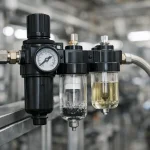
Air quality is absolutely critical to the longevity and reliability of high performance pneumatic actuators. Contaminants such as water, oil, and particulate matter act as abrasives, accelerating wear on seals and internal surfaces. This degradation leads to leaks, reduced efficiency, and premature failure. A properly specified and maintained Filter-Regulator-Lubricator (FRL) unit is essential to supply clean, dry air, thereby protecting your investment and ensuring consistent, peak performance.