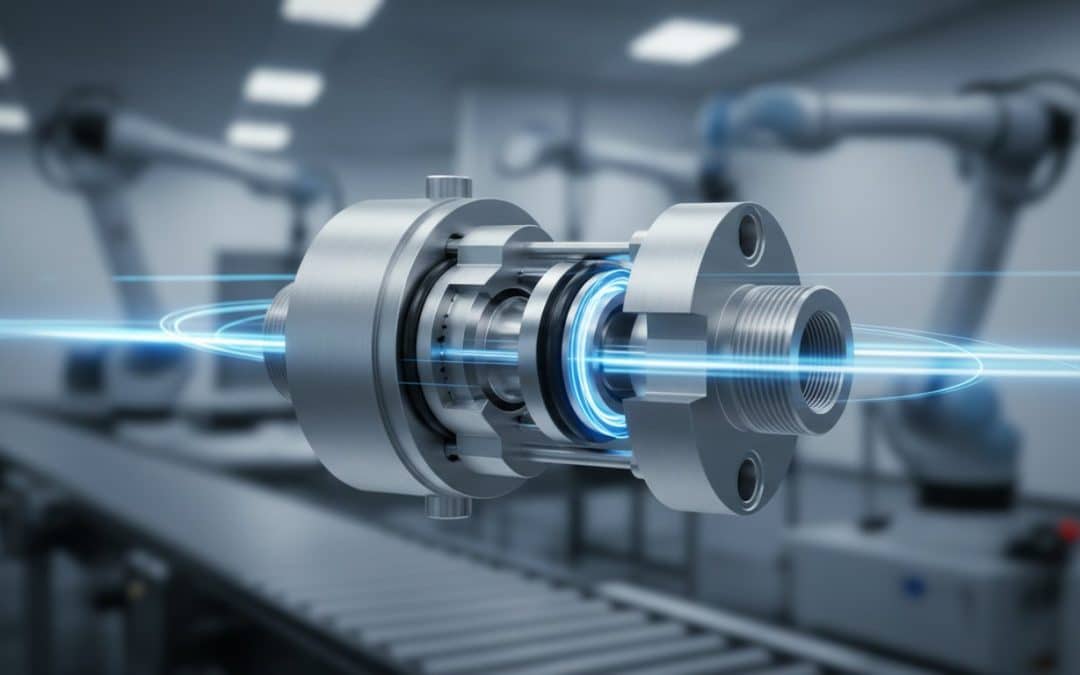
Unscheduled downtime is a direct threat to productivity, often stemming from the failure of a single, critical component: the pneumatic valve. For engineering teams, this challenge is compounded by confusing porting configurations and the persistent issue of inconsistent lead times from distributors. These obstacles don’t just delay projects; they erode efficiency and impact the bottom line, demanding a more strategic approach to component selection.
This comprehensive guide is engineered to provide that strategy. We will equip you with the technical expertise to master the nuances of valve operation and integration, moving beyond basic specifications to achieve tangible outcomes. You will learn how to select components that reduce system energy consumption, guarantee 100% compatibility with your actuators, and help you secure a reliable supply chain. Prepare to optimize your industrial automation systems for the high-performance demands of 2026 and beyond.
Key Takeaways
- Master the “X/Y” port and position nomenclature to precisely specify the right valve function for any automation task.
- Learn the critical difference between direct-acting and pilot-operated valves to optimize your system for either maximum speed or force.
- Correctly calculate the Flow Coefficient (Cv) to ensure your chosen pneumatic valve provides sufficient airflow for peak actuator performance.
- Discover how a factory-direct sourcing model can significantly reduce OEM and MRO costs while ensuring access to ready-to-ship solutions.
What is a Pneumatic Valve? Defining the Logic of Air Flow
At its core, a pneumatic valve is a high-precision mechanical or electro-mechanical device engineered to control the flow of compressed air. Its primary function is to direct, stop, or regulate this airflow, effectively converting a control signal—whether manual, mechanical, or electrical—into a physical pneumatic action. This makes the valve the fundamental logic gate in any automated sequence, making decisions that actuate cylinders, power grippers, or run machinery. For a foundational overview, resources like Wikipedia’s entry on air-operated valves provide excellent context on their basic types and operations. These components are the mission-critical directors that bring automated systems to life.
The technology behind the pneumatic valve has evolved significantly from simple manual levers to the sophisticated, Industry 4.0-ready smart solenoids of today. This evolution reflects the industry’s relentless demand for greater speed, precision, and data integration, enabling the complex automation that powers modern manufacturing and robotics.
The Anatomy of an Industrial Valve
Understanding the core components reveals the source of their reliability. The valve body provides the robust housing and ports, the internal spool or poppet shifts to redirect airflow, and high-performance seals prevent leaks and ensure efficiency. Material choice is critical; while aluminum is a versatile standard, stainless steel is essential for harsh, corrosive environments. At VidoAir™, our meticulous engineering focuses on minimizing internal friction and wear between these parts, guaranteeing longevity and consistent high-performance operation.
Directional Control vs. Pressure Regulation
It is vital to distinguish between a valve’s primary roles. Directional control valves, as the name implies, change the path of the air to extend or retract an actuator. In contrast, pressure regulation valves manage the force by controlling the air pressure within the system. Both are crucial, but they serve different purposes. Optimal performance for any valve begins with proper air preparation. A Filter-Regulator-Lubricator (FRL) unit is essential to supply clean, dry air at a stable pressure, preventing contamination and ensuring system stability, a topic further explored in our guide to the [internal_link_target: pressure regulating unit].
How Pneumatic Valves Work: Mechanisms and Actuation
At the core of every high-performance pneumatic valve is a meticulously engineered internal component—typically a spool or poppet. When actuated, this spool shifts within the valve body, precisely opening and closing different air paths. This mechanical movement is the key: it redirects the flow of compressed air from an inlet port to an outlet port, which in turn drives an actuator like a cylinder or motor. Simultaneously, exhaust air is vented through another port, completing the circuit with maximum efficiency.
The force required to shift the spool can be applied in two primary ways. Direct-acting valves use the actuator’s force (e.g., a solenoid) to move the spool directly, offering rapid response times ideal for high-speed applications. In contrast, pilot-operated valves use a small amount of “pilot” air to control a much larger, main valve. This robust design leverages system pressure to achieve high flow rates with smaller, less power-intensive solenoids. A deep understanding of Pneumatic Valve Function and Construction is critical for selecting the right mechanism to balance speed, force, and energy efficiency.
To control the spool’s position, valves rely on return springs or detents. A spring-return valve automatically reverts to a default “home” position when the actuating force is removed, creating a predictable fail-safe state. Detented valves, however, remain in their last actuated position until an opposing signal is applied. These complex operations are communicated universally through standardized symbols defined by ISO 1219, providing a clear language for engineers to design and troubleshoot pneumatic systems.
Solenoid Actuation: The Standard for Automation
In modern automation, solenoid actuation is the industry standard. An electrical signal, typically 24V DC or 110V AC, energizes an electromagnetic coil, creating a magnetic field that drives a plunger to shift the valve’s spool. This provides fast, reliable, and repeatable control.
- Single Solenoid: Uses one coil and a spring return. When power is removed, the spring automatically returns the valve to its starting position, making it ideal for fail-safe operations.
- Double Solenoid: Uses two opposing coils. A momentary pulse to one coil shifts the valve, where it remains until a pulse is sent to the other coil. This is useful for maintaining a position without continuous power.
For detailed technical specifications and product selection, consult our complete [internal_link_target: solenoid valve] guide.
Manual and Mechanical Overrides
For system setup, troubleshooting, and emergency situations, manual overrides are indispensable. These integrated buttons or screws allow technicians to cycle the valve without an electrical signal. Beyond overrides, direct mechanical actuation is common, using triggers like foot pedals, hand levers, and roller-actuated limit switches for direct physical control. For ultimate safety, every robust pneumatic system should incorporate bleeder valves to quickly and safely depressurize circuits before maintenance, preventing unexpected actuator movement.
Classification by Function: Ports, Positions, and Ways
To select the correct pneumatic valve for any application, engineers rely on a standardized classification system based on “ports” and “positions.” This is typically expressed with an “X/Y” nomenclature, such as 5/2 or 3/2. The first number (X) indicates the quantity of working ports for airflow, while the second (Y) represents the number of distinct operational states or positions the valve can achieve. This nomenclature is the language of pneumatic circuit design, and a deep understanding of its application can be found in technical resources like this detailed Pneumatic Valve Circuit Guide from Norgren.
This system provides a clear, at-a-glance summary of a valve’s core capability:
- 2/2 Valves (2-Way, 2-Position): The most fundamental configuration, acting as a simple on/off switch for a single air line.
- 3/2 Valves (3-Way, 2-Position): The standard for controlling single-acting cylinders. It uses three ports to supply air, connect to the actuator, and exhaust the air, allowing a spring to return the cylinder.
- 5/2 Valves (5-Way, 2-Position): The workhorse of industrial automation for controlling double-acting actuators. It provides two separate output ports to power both the extend and retract strokes of a cylinder.
3-Way vs. 5-Way: Choosing for Your Actuator
The choice between a 3-way and 5-way valve is dictated by the actuator’s requirements. For applications demanding enhanced control, a 5/3 valve offers a stable center position—often used for safety stops (center-exhaust) or holding a load mid-stroke (center-closed). This is critical in heavy-duty lifting or pressing operations, whereas a high-speed sorting line may only require the rapid cycling of a standard 5/2 valve to achieve its goals.
Specialty Valves: Shuttle and Check Functions
Beyond directional control, several specialty valves perform critical logic and performance-enhancing functions within a pneumatic circuit. These meticulously engineered components provide an additional layer of precision and safety to any automated system.
- Shuttle Valves: Implement “OR” logic, allowing a single component to be pressurized from two different, independent sources without backflow.
- Check Valves: Ensure one-way airflow, a simple yet robust solution for protecting sensitive components from damaging back-pressure.
- Quick Exhaust Valves: Mounted directly at the cylinder port, they vent exhaust air to the atmosphere, bypassing long tubing runs and dramatically increasing actuator stroke speed.
Selection and Troubleshooting: Engineering for Reliability
A pneumatic system’s reliability is not accidental; it is the result of meticulous engineering and perceptive component selection. Choosing the correct valve ensures optimal performance, minimizes downtime, and extends the life of your entire automation setup. This process involves a deep understanding of both application requirements and potential failure points, transforming a standard component into a cornerstone of operational excellence.
The foundational metric for selection is the Flow Coefficient (Cv), which quantifies a valve’s capacity to flow air. A properly calculated Cv ensures your actuator receives adequate airflow without creating a bottleneck. Beyond flow, environmental resilience is critical. Specifying components with appropriate temperature ratings and IP-rated solenoid coils is essential for systems operating in extreme temperatures or washdown environments, guaranteeing durability where it matters most.
Sizing Your Valve for Performance
Matching port sizes (e.g., 1/8″, 1/4″, 1/2″ NPT/G) to system CFM requirements directly impacts actuator speed and machine cycle time. Under-sizing a valve starves the actuator, causing sluggish performance. Conversely, an oversized valve can lead to abrupt, uncontrolled motion, wasted compressed air, and increased component wear—proving that precision in sizing is non-negotiable for efficiency.
Integrating with Robotics and EOAT
In modern robotics, valves are integral to End-of-Arm Tooling (EOAT), providing precise control for vacuum grippers and innovative solutions like “Soft Fingers” flexible grippers. Using manifold-mounted valves directly on robotic arms drastically reduces plumbing complexity and improves response times. For maintenance, a key troubleshooting tip is using an ultrasonic detector to pinpoint costly, often inaudible, air leaks that compromise system efficiency.
Common failure modes often stem from preventable issues. Proactive maintenance can mitigate risks such as:
- Seal Degradation: Caused by contaminated air or incompatible lubricants. Most modern VidoAir™ valves are designed for non-lubricated air, simplifying maintenance.
- Coil Burnout: Often resulting from sustained over-voltage or contaminants restricting plunger movement.
- Contamination: Debris entering the valve from the air supply can cause spools to stick, leading to malfunction.
Ensuring your system is equipped with the right high-performance pneumatic valve is the first step toward operational excellence. For expert assistance in selecting the ideal components for your application, explore the meticulously engineered solutions at vidoair.com.
The VidoAir™ Advantage: Factory-Direct Pneumatic Solutions
Understanding pneumatic technology is the first step; the next is sourcing components that deliver reliability and value without compromise. VidoAir™ revolutionizes this process with a factory-direct model, connecting you straight to the source of high-performance pneumatic solutions. This direct partnership eliminates supply chain inefficiencies, ensuring you receive premium components and expert support at an unmatched value.
Our approach is built on four pillars designed to streamline your operations and enhance your bottom line:
- Factory-Direct Savings: By sourcing directly from our factory, OEMs bypass distributor markups, significantly reducing procurement costs and lead times for critical projects.
- Vast MRO Inventory: We maintain an extensive stock of ready-to-ship components, from solenoid valves to air cylinders, ensuring your MRO teams can minimize downtime and keep production lines running at peak efficiency.
- Custom Configurations: For specialized machinery requiring unique specifications, our engineers design and manufacture made-to-order solutions, including any custom pneumatic valve you may need, tailored to your exact performance requirements.
- Unmatched Technical Support: Gain direct access to our team of pneumatic engineers for application guidance, troubleshooting, and system optimization—expert advice when you need it most.
Quality Assurance and Global Shipping
Every VidoAir™ component is meticulously engineered to meet stringent precision standards and is backed by a comprehensive one-year warranty. We extend this reliability to our logistics, offering dependable door-to-door worldwide shipping to support global manufacturing facilities. For large-scale industrial needs, our “Best Cost” guarantee ensures you receive the most competitive pricing on bulk orders without sacrificing performance or quality.
Powering Success: Your Partner in Automation
Our commitment is to POWERING SUCCESS. In a recent partnership, we helped a major packaging facility reduce compressed air consumption by 22% by optimizing their system with our energy-efficient valve series. For a complete overview of our product lines and technical specifications, download our 2026 catalog. Ready to enhance your automation systems? Contact VidoAir™ for a custom quote on pneumatic valves and partner with the factory-direct experts.
Mastering Pneumatic Control: Your Next Step to Automation Excellence
From understanding the fundamental logic of airflow to classifying components by ports and positions, this guide has equipped you with the core knowledge for mastering pneumatic systems. The key to operational success lies not just in theory, but in selecting robust, reliable hardware. When your project demands uncompromising performance, choosing the right pneumatic valve is the most critical decision you can make.
At VidoAir™, we are dedicated to POWERING SUCCESS through meticulously engineered solutions. Our components are precision-engineered for high-cycle durability and backed by a comprehensive one-year warranty. With our factory-direct pricing guarantee, you gain access to premium technology without the premium cost. Empower your operations with components built for reliability and peak efficiency.
Ready to elevate your automation? Browse the VidoAir™ Pneumatic Valve Catalog and discover the components that will move your vision forward.
Frequently Asked Questions About Pneumatic Valves
What is the difference between a 3-way and a 5-way pneumatic valve?
The primary difference lies in their function and port count. A 3-way valve has three ports and is typically used to control single-acting cylinders (spring-return), allowing it to pressurize and exhaust a single port. A 5-way valve has five ports and is engineered for double-acting cylinders. It can alternately pressurize and exhaust two different outlet ports, providing precise control over both the extension and retraction strokes of an actuator for more complex automation tasks.
Can I use a pneumatic solenoid valve for water or oil?
No, it is not recommended. Pneumatic solenoid valves are specifically designed and engineered for use with compressed air or inert gases. The seals and internal components are optimized for gaseous media, not the higher viscosity and different chemical properties of liquids like water or oil. Using a pneumatic valve with liquids can lead to improper sealing, rapid wear, and premature valve failure. For liquid applications, you must use a valve specifically rated for that medium.
How do I know what size NPT fitting my pneumatic valve needs?
The required NPT (National Pipe Taper) fitting size is determined by the valve’s port size, which is clearly specified on the product datasheet. For example, a valve listed with 1/4″ ports requires a 1/4″ NPT fitting. It is critical to match the fitting size directly to the port size to ensure a secure, leak-free connection and maintain optimal airflow. Using an incorrect size will restrict flow or prevent a proper seal, compromising system performance.
What is a manifold and when should I use one for my valves?
A manifold is a mounting base that allows multiple valves to share a common air supply and exhaust port. You should use a manifold when installing a group of valves in a concentrated area to control multiple actuators. This approach significantly simplifies plumbing, reduces potential leak points, saves installation time, and creates a more organized, compact system. Manifolds are ideal for streamlining complex machine controls and improving the efficiency of maintenance and troubleshooting procedures.
Why is my pneumatic solenoid valve humming or buzzing?
A humming or buzzing noise from an AC-powered solenoid valve typically indicates an electrical or mechanical issue. The most common causes are low voltage, which prevents the coil’s plunger from fully seating, or foreign debris trapped within the armature assembly. First, verify that the coil is receiving the correct, stable voltage as specified. If the voltage is correct, the valve may need to be carefully disassembled and cleaned to remove any contamination obstructing its path.
What happens if a pneumatic valve is under-sized for the cylinder?
If a pneumatic valve is under-sized, it cannot deliver the required volume of air (measured by its flow coefficient, or Cv) to the cylinder quickly enough. This results in slow, sluggish actuator movement and reduced force output. The cylinder will not achieve its designed speed, which can create bottlenecks and decrease the overall efficiency of your automated process. Proper valve sizing is essential to match the cylinder’s air consumption needs and achieve peak operational performance.
How long do pneumatic valves typically last in a high-cycle environment?
High-performance pneumatic valves are engineered for exceptional durability, often rated for 30 to 50 million cycles or more. However, the ultimate service life in a high-cycle application is heavily dependent on operating conditions. The single most critical factor is air quality; clean, dry, and properly filtered air minimizes internal wear on seals and moving parts. Adhering to specified pressure ratings and ambient temperatures is also essential for maximizing the valve’s operational lifespan and reliability.
Are VidoAir™ valves compatible with other major brands like SMC or Festo?
Yes. VidoAir™ valves are meticulously engineered to be dimensionally and functionally interchangeable with equivalent products from major brands like SMC and Festo. Many of our valve series adhere to established ISO standards (e.g., ISO 5599/1), ensuring that mounting patterns, port locations, and electrical connections are compatible. This allows for seamless drop-in replacement, providing a high-performance, factory-direct alternative without requiring costly modifications to your existing automation systems.