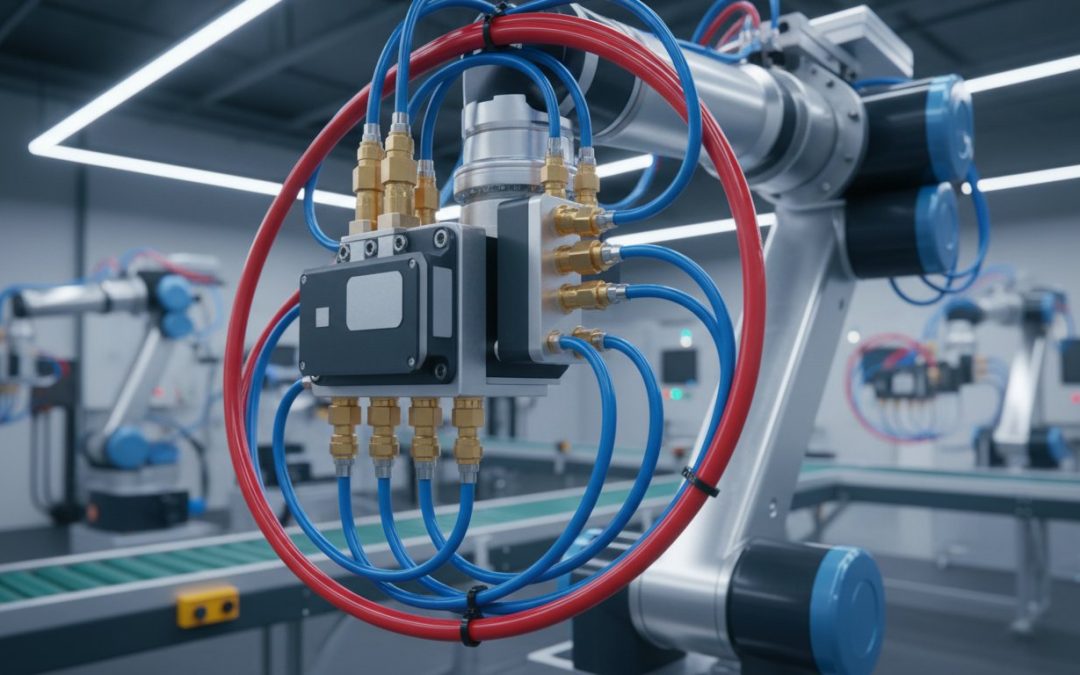
That subtle hiss of a compressed air leak isn’t just an annoyance-it’s the sound of lost productivity and rising energy costs. In high-performance automation, system integrity is paramount, yet navigating the complex world of pneumatic fittings and their competing thread standards often leads to frustrating downtime. When NPT, BSPP, and BSPT connections are mismatched, the result is inefficiency at best and a critical system failure at worst, undermining the precision your operation demands.
This ultimate industrial guide is engineered to eliminate that uncertainty and empower your success. Here, you will master the technical nuances required to achieve zero-leak system integrity, optimize airflow for reduced energy costs, and confidently select the perfect factory-direct components for any application. From the speed of push-to-connect technology to the robust reliability of threaded connectors, we provide the definitive knowledge to transform your pneumatic systems into models of high-performance efficiency.
Key Takeaways
- Avoid the #1 cause of component returns by mastering the critical differences between NPT, BSPP, and BSPT thread standards.
- Determine when to use rapid push-to-connect fittings versus the robust security of compression connectors for your specific application.
- Learn how selecting the correct pneumatic fittings based on pressure and temperature ratings directly impacts system efficiency and reduces energy costs.
- Discover the simple tube preparation technique that prevents over 90% of common system leaks and ensures a secure, zero-leak connection.
Understanding Pneumatic Fittings: The Foundation of Air Distribution
In any high-performance pneumatic system, compressed air is the lifeblood, and pneumatic fittings are the critical arteries that ensure its efficient delivery. More than simple connectors, these components form the essential link between tubing, hoses, actuators, and valves. The integrity of these connections directly impacts overall system efficiency. A single, low-quality fitting can introduce leaks that lead to significant pressure drops (PSI loss), forcing compressors to run longer, consume more energy, and ultimately drive up operating costs.
The technology has advanced far beyond the heavy, threaded iron pipe fittings of the past, which were often cumbersome and prone to installation errors. The modern era is defined by precision-engineered components designed for reliability and performance. VidoAir™ fittings, for example, exemplify this evolution, providing not only a secure connection but also sophisticated control over air distribution. They are engineered to manage flow direction, support pressure regulation, and enable the system modularity required for today’s dynamic automation environments.
The Role of Fittings in Industrial Automation
In complex industrial automation, every component must contribute to peak efficiency and minimal downtime. High-performance fittings are mission-critical for:
- Ensuring Leak-Free Transitions: Creating a perfect seal between rigid and flexible air lines to maintain consistent system pressure and power.
- Facilitating Rapid Maintenance: Utilizing quick-disconnect designs that allow for swift component replacement, drastically reducing costly production stops.
- Minimizing Energy Loss: Featuring smooth internal pathways that reduce air turbulence and pressure drops, especially in high-speed pneumatic circuits.
Anatomy of a High-Performance Fitting
The reliability of a fitting is determined by the quality of its internal components and materials. A superior push-to-connect Air-line fitting is a product of meticulous design, featuring a robust body constructed from materials like corrosion-resistant nickel-plated brass, high-strength stainless steel, or lightweight composites. Internally, precision components work in concert:
- O-Rings: Made from materials like Buna-N or Viton to create an airtight seal around the tubing.
- Gripping Claws: A stainless steel collet that securely anchors the tubing without causing damage.
- Release Buttons: An intuitive mechanism that allows for quick and effortless tube disconnection.
This is where VidoAir™ Precision Engineering makes the difference. Each fitting is manufactured to exceptionally tight tolerances, ensuring every connection is secure, leak-proof, and built to withstand the demands of industrial use, POWERING SUCCESS in your operations.
Types of Pneumatic Connectors: Matching Mechanism to Application
Selecting the correct connector is a critical engineering decision that directly impacts system performance, reliability, and maintenance efficiency. The optimal choice depends on factors like operating pressure, vibration, temperature, and how often the connection needs to be assembled or disassembled. Understanding the core differences between connection styles ensures your system is both robust and cost-effective.
Push-to-Connect (One-Touch) Fittings
Engineered for speed and efficiency, push-to-connect fittings provide instant, tool-free connections. A robust internal collet with stainless steel teeth grips tubing securely without causing damage, allowing for repeated use. This style is ideal for complex automation, robotics, and manifold assemblies where rapid setup and modification are essential. The VidoAir™ advantage lies in our meticulously engineered O-ring seals, which guarantee superior, long-term performance under both vacuum and positive pressure.
Compression and Barb Fittings
For applications demanding maximum security, compression fittings are the definitive choice. They create a powerful mechanical seal by deforming a ferrule or sleeve onto the tubing, making them exceptionally resistant to high vibration and extreme temperatures. Conversely, barb fittings offer a simple, cost-effective solution for low-pressure, flexible hoses in static applications. A key consideration with compression styles is to avoid over-tightening, which can damage the tubing or the fitting itself, compromising the seal.
Functional and Flow Control Fittings
Beyond simple connections, many pneumatic fittings integrate logic and control functions directly at the point of use. This enhances system responsiveness and safety. Key types include:
- Speed Controllers: These fittings, often installed directly on an actuator’s ports, provide precise control over cylinder extension and retraction speeds.
- Non-Return (Check) Valves: Essential for preventing backflow, check valves are critical components in safety circuits. Building safe pneumatic systems requires adherence to established principles, as detailed in expert resources like Emerson’s Machine Safety Guide, which covers important industry standards.
- Pilot-Operated Valves: These specialized pneumatic fittings use an air signal to shift the valve, enabling the creation of sophisticated pneumatic logic circuits without electrical inputs.
The Technical Guide to Thread Standards: NPT vs. BSPP vs. BSPT
In the world of pneumatics, precision is paramount. A system’s reliability hinges on every connection, yet the single greatest cause of fitting returns and operational downtime is ordering the wrong thread standard. This issue often stems from fundamental geographic differences: North American systems predominantly use NPT, while European and Asian equipment typically relies on BSP standards. Understanding these core differences is essential for anyone working with fluid power systems. As the International Fluid Power Society explains, controlling pressurized gas requires robust, leak-free connections. Visually, the primary distinction is between tapered threads, which seal by deformation, and parallel threads, which require a separate seal.
NPT (National Pipe Taper) Explained
NPT is the U.S. standard for tapered threads used on pipes and fittings. Its design features a 60-degree thread angle and a taper that creates an “interference fit.” As the fitting is tightened, the threads compress against each other to form a seal. While this design is robust, it requires a sealant like Teflon tape or a pre-applied compound to fill any microscopic gaps. Common sizes in industrial pneumatic fittings include 1/8″, 1/4″, 3/8″, and 1/2″. Crucially, NPT requires careful torque; over-tightening can crack the female port, leading to costly damage.
BSP (British Standard Pipe) Standards
The BSP standard, common outside North America, is divided into two distinct types:
- BSPT (Tapered): Similar in concept to NPT but with a 55-degree thread angle. The different angle and pitch make it fundamentally incompatible with NPT.
- BSPP (Parallel/G-Thread): These threads do not form the seal themselves. Instead, they provide mechanical strength while a bonded washer or O-ring, compressed against a flat surface, creates the leak-proof seal.
Never attempt to force an NPT fitting into a BSP port, or vice-versa. Despite looking similar, the mismatch will cause thread damage and inevitable, persistent leaks.
Metric and Specialty Threads
Beyond the major standards, certain applications use specialized threads. Miniature pneumatic components, like compact solenoid valves, often utilize M5 and M7 metric threads. In specialized aerospace or legacy American equipment, you may encounter UN/UNF (Unified National Fine/Coarse) threads. When in doubt, guesswork is not an option. For 100% accuracy, always use professional tools like a digital caliper to measure diameter and a thread gauge to identify the pitch. This ensures you select the correct component for a secure, high-performance connection.
Selection Criteria: Engineering the Perfect Connection
Choosing the right component is a critical engineering decision that extends far beyond matching thread sizes. The performance, longevity, and safety of your entire automation system depend on selecting pneumatic fittings that are meticulously matched to their operational demands. A failure to account for pressure, temperature, and environmental conditions can lead to premature wear, costly leaks, and unexpected downtime.
To ensure optimal system integrity and POWERING SUCCESS, consider these core operational parameters:
- Pressure Ratings: While standard nickel-plated brass fittings are robustly engineered for up to 150 PSI-ideal for most factory automation-specialized industrial applications may demand fittings rated for significantly higher pressures. Always verify the fitting’s maximum operating pressure against your system’s requirements to guarantee safety and reliability.
- Temperature Ranges: The operational temperature directly impacts the integrity of a fitting’s seals. Standard NBR seals perform exceptionally in moderate conditions, but extreme cold can cause them to become brittle, while high heat can lead to softening and failure. For demanding thermal environments, fittings with FKM seals are essential.
- Environmental Factors: In food-grade or pharmaceutical settings, stainless steel is required for its corrosion resistance and ability to withstand aggressive washdown procedures. For outdoor use or exposure to harsh chemicals, UV-stable and chemically resistant materials are non-negotiable to prevent degradation.
- Tubing Compatibility: The fitting’s internal gripping mechanism must be compatible with the tubing. Flexible Polyurethane (PU) tubing pairs well with standard push-to-connect fittings, while more rigid Nylon or chemical-resistant PTFE tubing requires specific fitting designs to ensure a secure, leak-proof seal.
Material Science in Fitting Selection
The material composition of a fitting is fundamental to its performance. Nickel-plated brass offers a robust, cost-effective solution for general-purpose automation. For applications demanding superior corrosion resistance, such as food processing or chemical handling, 304 or 316 stainless steel is the definitive choice. In high-speed robotics, lightweight composite and technopolymer fittings reduce the payload on end-of-arm tooling (EOAT), enabling faster, more efficient motion.
Flow Capacity and Port Sizing
An undersized fitting creates a bottleneck, starving an actuator of the air it needs to perform. To prevent this, engineers use the Flow Coefficient (Cv) to calculate a fitting’s capacity. The geometry also matters; a 90-degree elbow introduces more restriction than a straight connector. For large-bore cylinders or tools with high air consumption, specifying a “High-Flow” series of pneumatic fittings ensures maximum power is delivered where it counts.
For meticulously engineered solutions designed for peak performance, explore the VidoAir™ factory-direct catalog.
Installation and Maintenance for Zero-Leak Performance
Achieving a zero-leak pneumatic system is not a matter of chance; it is the direct result of meticulous installation and proactive maintenance. The most robust pneumatic fittings can fail if not installed correctly, leading to energy waste and reduced system efficiency. Following best practices from the start ensures optimal performance, minimizes costly compressed air loss, and extends the life of your entire automation system.
The foundation of a secure connection is professional preparation. An estimated 90% of push-to-connect leaks are caused by an improper tube cut. A clean, square cut allows the tube to seat perfectly against the internal O-ring. Before pressurizing, always perform a simple “push-pull” test: push the tubing firmly into the fitting until it bottoms out, then gently pull back to confirm the internal collet has securely gripped the tube. For threaded connections, proper use of sealant is critical. Avoid applying PTFE tape to the first one or two threads to prevent material from breaking free and contaminating sensitive downstream components.
VidoAir™ Pro-Tips for Installation
Executing a flawless installation is straightforward with the right techniques. These expert tips from VidoAir™ engineers help guarantee a secure, leak-free seal every time.
- Use a Dedicated Tube Cutter: A specialized cutter ensures a square, burr-free cut. A standard utility knife can deform the tube’s outer diameter, compromising the O-ring seal.
- Mark Insertion Depth: Lightly mark the tube to the depth of the fitting’s bore. This provides a visual confirmation that the tube is fully inserted past the O-ring.
- Manage Bend Radius: Avoid sharp bends right at the fitting entrance. Excessive side-load can distort the O-ring and create a persistent, hard-to-diagnose leak path.
Preventative Maintenance and System Audits
For large-scale systems, “silent” leaks can account for significant energy waste. Using an ultrasonic leak detector allows maintenance teams to pinpoint minute air losses that are otherwise inaudible. Regular visual inspections of O-rings for signs of thermal degradation or chemical swelling are also essential. When a component does need replacement, the VidoAir™ Factory Direct Advantage ensures you can source genuine, high-performance parts with unmatched lead times, keeping your operations running at peak efficiency. If a leak is detected, it can often be fixed without replacing the entire unit; a simple O-ring replacement or re-cutting the tube is often all that is needed to restore a zero-leak seal.
For all your component needs, explore the meticulously engineered solutions at vidoair.com.
Mastering Your Pneumatic System: The Final Connection
Understanding the nuances of your system, from connector types to critical thread standards like NPT and BSP, is fundamental to operational excellence. As this guide has detailed, selecting the correct pneumatic fittings is a foundational engineering decision that directly impacts efficiency, reliability, and leak-free performance. Meticulous selection and proper installation are not just best practices-they are essential for maximizing the power and longevity of your compressed air applications.
When you are ready to implement these principles, VidoAir™ provides the high-performance components your system demands. Our fittings are meticulously engineered for precision and efficiency, supported by a vast inventory of ready-to-ship industrial solutions. With the VidoAir™ Best Cost Pricing Guarantee, you receive unmatched value without compromising on the robust quality essential for your operations.
Take the next step toward system integrity. Browse VidoAir™ Factory-Direct Pneumatic Fittings today and equip your application with connections designed to power success.
Frequently Asked Questions About Pneumatic Fittings
Can I use NPT fittings with BSPT ports?
It is strongly advised not to use NPT (National Pipe Taper) fittings with BSPT (British Standard Pipe Taper) ports. While they may seem similar, their fundamental design is incompatible. NPT threads have a 60-degree angle, whereas BSPT threads have a 55-degree angle. This mismatch prevents a secure, leak-proof seal and can lead to thread damage and system failure. For optimal performance and safety, always match the fitting thread type to the port thread type.
What is the difference between a push-to-connect and a quick-connect fitting?
Push-to-connect fittings are designed for rapid, semi-permanent installation of pneumatic tubing where a tube is simply pushed in to create a secure seal. Quick-connect fittings, or couplers, are two-part systems (a plug and a socket) designed for frequent connection and disconnection of entire air lines, such as for pneumatic tools. While both offer convenience, push-to-connects are for component assembly, whereas quick-connects are for operational flexibility at the point of use.
How do I know if I need a tapered or parallel thread?
The choice between a tapered and parallel thread is determined by the port’s design. Tapered threads, like NPT or BSPT, form a seal by the wedging action of the threads themselves and require a sealant like Teflon tape. Parallel threads, such as BSPP or metric, have a consistent diameter and are designed to seal using a gasket, O-ring, or bonded washer that compresses against a flat surface on the port. Inspect the port for a sealing surface to identify the required type.
What is the best material for pneumatic fittings in a food-processing environment?
For food-processing applications, 316-grade stainless steel is the premium material choice for pneumatic fittings. This material offers superior corrosion resistance, making it ideal for environments with frequent, high-pressure washdowns and exposure to aggressive cleaning chemicals. Its robust and non-porous surface prevents contamination and ensures compliance with stringent food safety standards. Stainless steel provides unmatched durability and hygienic performance for long-term reliability in these demanding settings.
Why is my push-to-connect fitting leaking even though the tube is inserted?
A leak in a push-to-connect fitting typically stems from an imperfect seal. First, ensure the tubing was cut perfectly square with a proper tube cutter; an angled cut prevents the O-ring from sealing correctly. Inspect the outside diameter of the tube for any scratches or gouges that could create a leak path. Also, verify that the tube is fully inserted past the O-ring and that its diameter precisely matches the fitting’s specification. A damaged internal O-ring could also be the culprit.
How much pressure can a standard plastic pneumatic fitting handle?
Standard composite or plastic pneumatic fittings are typically rated for a maximum operating pressure of approximately 150 PSI (10 bar) at ambient temperatures (around 70°F / 20°C). However, this pressure rating is highly dependent on the operating temperature; as temperature increases, the maximum allowable pressure decreases significantly. For any critical application, it is essential to consult the manufacturer’s specific data sheet to confirm the pressure and temperature ratings for that exact fitting model.
What are the most common sizes for industrial air line fittings?
In industrial automation, the most prevalent NPT thread sizes for air line fittings are 1/8″, 1/4″, 3/8″, and 1/2″. For the tubing connections, common imperial outside diameter (OD) sizes include 1/4″, 5/16″, 3/8″, and 1/2″. In systems utilizing metric standards, the most frequently used tube OD sizes are 4mm, 6mm, 8mm, 10mm, and 12mm. Selecting the correct size is critical for maintaining optimal flow and system efficiency.
Do I need Teflon tape on all pneumatic threads?
Teflon tape or a liquid pipe sealant is only required on tapered threads, such as NPT and BSPT, to fill the small gaps between the male and female threads and ensure a leak-proof seal. It should never be used on parallel threads (like BSPP or metric), as these are designed to seal with a gasket or O-ring. Applying tape to a parallel thread can prevent a proper seal and potentially damage the fitting. Note that many premium fittings come with a pre-applied sealant.