Choosing a pneumatic cylinder for its low upfront price is often the most expensive mistake a design engineer can make in 2026. While air-driven systems appear simple, the hidden reality is that an electric linear actuator now delivers a 25% lower total cost of ownership across most high-cycle automated lines. You likely value the rugged reliability of traditional fluid power. However, you’re probably frustrated by the 30% energy loss typical of compressed air systems and the constant struggle to hit precise intermediate positions without expensive external braking.
At VidoAir™, we believe in POWERING SUCCESS through technical clarity and precision engineering. This guide helps you master the critical differences between electric and pneumatic motion so you can select the most efficient solution for your specific application. You’ll learn how to achieve 0.01mm repeatability while simplifying your system architecture. We will analyze real-world energy consumption data, compare integration timelines for non-electronic staff, and provide a roadmap for reducing your factory’s footprint without sacrificing performance.
Key Takeaways
- Understand the fundamental shift from fluid power to electromechanical systems to achieve superior precision and control in modern industrial automation.
- Analyze the critical trade-offs between force, speed, and duty cycles to ensure your motion control system maintains peak performance without premature wear.
- Compare initial purchase prices against long-term energy savings to decide if an electric linear actuator provides the best total cost of ownership for your specific application.
- Apply five essential selection criteria to match your environmental conditions and movement paths with the most robust, meticulously engineered hardware.
- Discover how the VidoAir™ factory-direct model and Perceptive Engineering eliminate middleman markups while delivering high-performance, custom-configured solutions.
What is an Electric Linear Actuator and How Does it Differ?
An electric linear actuator is a precision-engineered device that transforms the rotational torque of an electric motor into controlled, straight-line displacement. It’s a system that replaces traditional fluid-based power with electromechanical efficiency. VidoAir™ identifies this technology as a cornerstone of “Perceptive Engineering,” where digital data and physical motion converge. According to What is a Linear Actuator, these units provide the mechanical force required to move loads with high repeatability and accuracy. By eliminating the need for air or oil, these devices offer a cleaner, more streamlined approach to automation.
The industrial sector is undergoing a rapid transition. By 2026, global manufacturing standards are projected to favor “All-Electric” architectures for 65% of new precision assembly projects. This shift is driven by the demand for tighter tolerances that pneumatic systems often fail to meet without expensive external controllers. Electric systems provide programmable positioning, allowing for mid-stroke adjustments that are impossible with basic cylinders. They maintain consistent travel speeds even when the load weight fluctuates. They also operate quietly, frequently maintaining noise levels below 55 decibels, which is essential for medical and laboratory environments.
The Core Components of Electric Motion
The performance of an electric linear actuator depends on three specific subsystems. First, the motor type dictates the power profile. Brushed DC motors are used for simple, low-cost tasks, while Brushless DC (BLDC) motors provide over 10,000 hours of maintenance-free service. Stepper motors are the preferred choice for open-loop position control. Second, the mechanical drive determines efficiency. High-performance ball screws convert torque with 90% efficiency, supporting 100% duty cycles in demanding factory environments. Finally, feedback systems like Hall Effect sensors or potentiometers track the rod’s position. This ensures the controller knows the exact location of the load at every millisecond of the stroke.
Electric vs. Pneumatic: The High-Level Contrast
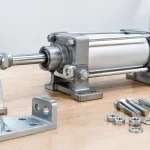
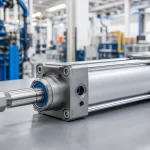
The fundamental difference lies in the energy source and the infrastructure required to support it. Pneumatic systems depend on plant-wide compressors and complex networks of tubes, valves, and manifolds. These systems are prone to energy loss; industry data suggests that air leaks can waste up to 30% of a compressor’s output. In contrast, electric actuators draw power directly from the grid or a local DC supply through simple wiring. This reduces the footprint of the machine and simplifies the installation process.
Control is where the two technologies diverge most sharply. Pneumatic cylinders typically rely on mechanical end-stops for positioning. If you need to change a stop point, you must physically move a sensor or a block. Electric units use software-defined parameters. A single electric linear actuator can handle five different product sizes on a single line without any physical retooling. VidoAir™ focuses on these high-performance solutions to help partners minimize energy consumption while maximizing output. This digital precision is the hallmark of modern, “POWERING SUCCESS” initiatives in the automation world.
Technical Specifications: Understanding Power and Precision
The performance of an electric linear actuator hinges on a rigid balance between mechanical load and electrical capacity. Unlike pneumatic systems that utilize compressed air to generate force, electromechanical units operate on an inverse relationship between force and speed. When you increase the lead pitch of a screw to achieve higher travel speeds, the available thrust naturally decreases. This trade-off requires engineers to prioritize either rapid positioning or heavy lifting, as pushing both limits simultaneously leads to motor saturation and potential failure.
Duty cycles represent a fundamental shift in how maintenance teams approach system uptime. A standard pneumatic cylinder can often cycle at 100% capacity without thermal issues because the air itself carries heat away from the seals. In contrast, electric models typically operate on a 25% or 50% duty cycle. This means for every 10 seconds of motion, the motor may require 30 seconds of rest to dissipate heat from the internal windings. Ignoring these thermal limits results in a 40% reduction in the motor’s operational lifespan.
Environmental protection is another critical specification. While pneumatic cylinders are inherently safe for many washdown areas, an electric system requires specific IP ratings to survive. We recommend IP66 for dusty environments and IP69K for high-pressure, high-temperature cleaning cycles. Modern industrial trends reflect this need for specialized protection. According to data from the Automotive Actuators Market, the transition toward electric systems is accelerating because they offer 15% better energy efficiency and more compact designs than hydraulic or pneumatic alternatives in controlled environments.
Calculating Thrust and Load Requirements
Determining the right size for your electric linear actuator starts with distinguishing between static and dynamic loads. Static load is the weight the unit supports while stationary; dynamic load is the force required to move that mass at a specific velocity. VidoAir™ engineers always suggest specifying a safety factor of 20% to 30% above your peak calculated load. This buffer compensates for friction, mechanical wear, and unexpected voltage fluctuations. To get your numbers right the first time, check out our technical guide on How to Calculate Axial Load.
Precision and Repeatability
Precision is where electromechanical systems truly outperform fluid power. High-performance ball screw actuators deliver micron-level accuracy, often maintaining repeatability within +/- 0.01mm over thousands of cycles. A key factor here is backlash, the tiny amount of clearance between the screw threads and the nut. In high-speed assembly lines, even 0.05mm of backlash can cause positioning errors. High-resolution encoders, often providing 4096 pulses per revolution, allow the controller to monitor the rod’s exact position in real time. This level of feedback is essential for complex motion profiles where multi-axis synchronization is required.
Stroke length also dictates mechanical stability. For applications exceeding 1200mm, rod deflection becomes a risk. Supporting the actuator with external guides prevents side-loading, which is the primary cause of premature screw failure. If you’re currently designing a high-precision system, you can view our full inventory of meticulously engineered components to find the exact match for your stroke and precision requirements.
Electric vs. Pneumatic: The Performance & Cost Showdown
Selecting the right motion control technology requires a cold look at the balance sheet and the production floor. VidoAir™ engineers see many facilities struggle with this choice because they only look at the sticker price. Choosing an electric linear actuator involves a higher initial investment, often costing 3 to 5 times more than a standard pneumatic cylinder. However, the purchase price is only 15% of the total life cycle cost. The real story lies in the daily operational overhead and the precision required for modern automation.
Total Cost of Ownership (TCO) Analysis
The upfront cost of electric systems includes the motor, controller, and specialized cabling. While a pneumatic cylinder is inexpensive, the infrastructure supporting it is not. You have to account for compressors, dryers, and complex valve manifolds. Electric systems prove their value through 70% higher energy efficiency. While pneumatic systems waste energy through heat and friction during compression, electric motors convert nearly all consumed power into mechanical force. Installation is also faster; wiring a digital drive takes 45% less time than plumbing a multi-stage pneumatic circuit with regulators and flow controls.
- Upfront Investment: Pneumatics are 75% cheaper at the point of purchase.
- Energy Consumption: Electric systems reduce monthly utility bills by up to 70% compared to air-driven alternatives.
- Infrastructure: Electric setups eliminate the need for centralized air compressors and expensive leak detection programs.
Performance consistency is another area where the two technologies diverge. Pneumatic systems are compliant, meaning the air inside the cylinder compresses under load. This leads to “spongy” movement or speed fluctuations when the workpiece weight varies. An electric linear actuator provides rigid, repeatable motion. It maintains a constant velocity within 0.01mm of accuracy regardless of whether the load is 5kg or 500kg. This precision is what allows VidoAir™ clients to achieve the “POWERING SUCCESS” mantra in high-speed sorting and assembly.
Maintenance profiles also differ significantly between the two. Pneumatic systems rely on soft seals and constant lubrication. If the air supply isn’t dry, internal corrosion ruins the cylinder within 2 million cycles. Electric units are generally “fit and forget” components. They utilize sealed ball screws and brushless motors that require zero intervention for 10,000 hours of operation. You’ll swap out electronic controllers occasionally, but you won’t be chasing the tiny air leaks that plague 90% of industrial pneumatic lines.
The environmental impact of these choices is a growing concern for global manufacturers. Air leaks aren’t just a nuisance; they’re a massive carbon liability. Statistics from the Department of Energy show that 30% of all compressed air is lost to leaks before it ever reaches an actuator. A single 2mm hole in a 100 PSI line costs a factory roughly $1,200 annually in wasted electricity. Electric systems remove this waste entirely, providing a cleaner, quieter, and more sustainable footprint for the facility.
When to Stick with Pneumatics
Despite the efficiency of electric motors, pneumatics remain the superior choice for specific high-force, low-complexity tasks. A standard VidoAir™ pneumatic cylinder can provide massive clamping force for a fraction of the weight of a motor-driven unit. They’re also the only safe choice for ATEX-rated explosive environments where electrical sparks pose a lethal risk. Furthermore, pneumatic components operate reliably in extreme temperatures ranging from -40°C to 200°C, environments that would cause motor insulation to melt or electronic sensors to fail completely.
Selection Criteria: 5 Questions to Ask Before You Buy
Selecting the right motion solution requires more than a glance at a datasheet; you must define the specific path your load will take. Is this a simple “A-to-B” transfer? Pneumatic cylinders excel at rapid, point-to-point motion. However, if your process requires 15 different stop positions or a variable speed profile, an electric linear actuator is the superior choice. These units offer precision repeatability within 0.01mm, which is essential for high-speed sorting or laboratory automation where precision is non-negotiable.
Environmental factors determine the lifespan of your hardware. Standard actuators fail in as little as 48 hours if exposed to high-pressure washdowns without proper sealing. You must verify if your site requires an IP66 rating for dust or an IP69K rating for steam cleaning. Extreme temperatures also dictate your lubricant and seal choice. Standard grease thickens and increases friction at -20°C, while high-heat Viton seals are necessary for 80°C environments to prevent premature degradation.
Duty cycle remains a critical failure point that many engineers overlook. If your machine runs 24/7, a motor with a 25% duty cycle will overheat and trigger a thermal shutdown within 15 minutes of continuous operation. You need to calculate your “on” time versus “off” time accurately. For high-frequency packaging lines, look for brushless DC motors designed for 100% continuous operation to maintain peak throughput without hardware fatigue.
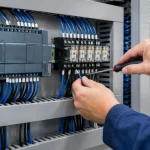
Evaluate your control architecture before finalizing a purchase. Simple systems might only need end-of-stroke limit switches to stop the motor. Complex industrial setups require real-time feedback for a PLC to monitor position, speed, and force. Using an electric linear actuator with an integrated potentiometer or encoder allows for closed-loop control, ensuring the system can compensate for load variations instantly.
Check your power rail availability to avoid costly electrical retrofits. While 12V or 24V DC is common for mobile equipment and battery-powered applications, heavy industrial machinery often utilizes 110V or 220V AC. Higher voltage options minimize current draw, which allows for thinner wire gauges and reduces the heat generated within the control cabinet. Always match the actuator’s peak current draw to your power supply’s maximum output to prevent voltage drops during high-torque startups.
While the actuators themselves draw from the main power rail, many essential diagnostic and calibration tools used during setup are battery-operated. To keep your support equipment powered and ready, you can check out BIVO for reliable, rechargeable options.
Integrating with Your PLC and Control System
Precision control relies on H-bridge drivers and Pulse Width Modulation (PWM) to manage speed and direction effectively. By integrating Hall Effect sensors into your logic controller, you achieve sub-millimeter positioning accuracy. In industrial settings, electrical interference from nearby VFDs often corrupts signals. Use shielded cables and 10k-ohm pull-up resistors to maintain signal integrity and prevent erratic behavior during high-load cycles.
Customization Options for OEMs
Standard off-the-shelf components rarely fit bespoke machine designs perfectly. OEMs often require tailored stroke lengths or specialized mounting brackets to reduce assembly time on the factory floor. Adjusting gear ratios allows you to prioritize a 2000N force over speed or vice versa. VidoAir™ provides custom-configured solutions with factory-direct delivery, ensuring your components meet exact mechanical specifications without the typical 12-week lead times found elsewhere.
Find the perfect match for your machine by browsing our high-performance actuator catalog.
The VidoAir™ Advantage: Factory Direct Performance
Choosing the right motion control solution requires more than just comparing spec sheets. It requires a partner that understands the financial and mechanical pressures of modern manufacturing. VidoAir™ operates on a factory-direct model that fundamentally changes the procurement process for OEMs. Traditional distribution networks often inflate costs by 15% to 35% through middleman markups. We eliminate these unnecessary layers. By sourcing directly from our precision manufacturing facility, you reclaim your margins while maintaining a direct line of communication to the source of your hardware.
Our commitment to Perceptive Engineering ensures that every electric linear actuator we produce isn’t just a component, but a solution to a specific industrial challenge. We utilize ISO 9001:2015 certified processes to maintain tolerances as tight as 0.02mm. This level of precision is vital for high-speed assembly lines where even a microscopic deviation causes hours of downtime. We don’t just manufacture parts; we engineer reliability into the very core of your automation system. Our team monitors every stage of production, from the initial spark of ingenuity in the design phase to the final quality control stress tests.
Logistics shouldn’t be a bottleneck for your innovation. VidoAir™ has optimized global door-to-door shipping to reduce standard industry lead times by an average of 12 days. We understand that a stalled production line costs thousands of dollars per hour. Our streamlined supply chain ensures that critical components arrive at your facility exactly when they’re needed. If technical hurdles arise during installation, you won’t be routed to a generic call center. You’ll gain immediate access to expert engineers who understand the full system architecture. These specialists provide definitive statements and solutions based on real-world data, not scripts.
Powering Success with VidoAir™ Actuators
Our high-performance product lines are built to thrive in the most demanding environments. Whether you require the high force of our pneumatic cylinders or the pinpoint accuracy of a VidoAir™ electric linear actuator, our hardware delivers consistent results. We’ve engineered our latest series to be 22% more energy-efficient than previous generations, helping you minimize operating costs without sacrificing power. Every purchase is protected by a comprehensive one-year warranty, reflecting our confidence in our “meticulously engineered” designs. We focus on robust construction that withstands 5 million cycles, ensuring your project remains profitable long after the initial installation.
- Vast inventory of ready-to-ship, high-performance solutions.
- Custom-configured components tailored to your specific stroke and force requirements.
- Dedicated technical support from engineers with over 10 years of field experience.
- Transparent pricing structures that guarantee unmatched value for OEM partners.
Next Steps for Your Automation Project
Taking the next step in your automation journey is straightforward. You can access our technical expertise immediately by downloading our full 180-page catalog, which contains detailed CAD drawings and performance curves for all pneumatic and electric components. For specialized projects, our team provides custom quotes for bulk OEM orders within 24 business hours. We’re ready to help you move the world forward with precision and power. Don’t let inefficient sourcing slow your progress. Use our engineering data to make an informed decision that secures your facility’s future.
Ready to optimize your system?
Future-Proof Your Industrial Motion Strategy
Choosing between drive technologies determines your facility’s operational efficiency for the next decade. While pneumatic systems remain relevant for high-speed cycling, a modern electric linear actuator delivers the sub-millimeter precision and programmable control required for 2026 industrial standards. You’ll likely see energy consumption drop by up to 35% when you replace aging air-powered systems with high-efficiency electric alternatives. VidoAir™ bridges the gap between premium performance and budget constraints by offering a factory-direct pricing guarantee that removes unnecessary markup. Every unit we produce is meticulously engineered for industrial automation, ensuring your systems handle heavy duty cycles without failure. We stand behind this reliability with a one-year comprehensive warranty on every component shipped. Don’t settle for outdated hardware when you can integrate cutting-edge motion control today. Our team focuses on delivering the power and accuracy your specific application demands. You’re ready to scale your production with equipment that’s built to last and designed to perform.
Browse VidoAir™ Factory-Direct Linear Actuators
Frequently Asked Questions
What is the difference between a linear actuator and a motor?
A motor generates torque through circular rotation, while an electric linear actuator uses a screw mechanism to convert that rotation into straight-line movement. VidoAir™ designs ensure these components deliver 90% mechanical efficiency during the conversion process. Motors alone can’t provide controlled thrust without external linkages. Our integrated units house the motor, gears, and screw in one robust enclosure to simplify your assembly.
Can an electric linear actuator replace a pneumatic cylinder?
You can replace a pneumatic cylinder with an electric model to achieve 0.02mm repeatability and eliminate air compressor maintenance. Traditional air systems often fluctuate by 1mm or more due to pressure drops. Switching to an electric system reduces energy consumption by 70% because power is only consumed during movement. It’s a premium choice for precision automation where exact positioning is vital for success.
How do I choose between a 12V and 24V linear actuator?
Choose 24V for industrial applications to reduce current draw by 50% compared to 12V alternatives. Lower current means you’ll use thinner wiring and experience less heat buildup during operation. 12V models remain the standard for mobile or battery-powered equipment. VidoAir™ provides both options factory direct to match your specific power infrastructure requirements. We recommend 24V for any run exceeding 10 feet to minimize voltage drop.
What happens if an electric linear actuator reaches its end of stroke?
Internal limit switches automatically disconnect power when the rod reaches the fully extended or retracted position. This safety feature prevents the motor from stalling and protects the internal gears from 100% of potential over-travel damage. Some high-performance models also utilize mechanical clutches. These components ensure your equipment stays operational without constant manual monitoring or the risk of burnout during heavy use.
Are electric linear actuators waterproof for outdoor use?
Electric actuators work outdoors if they carry an IP66 or IP67 ingress protection rating. An IP66 rating guarantees protection against heavy seas or powerful water jets from any direction. For harsher environments, IP67 models withstand submersion in 1 meter of water for 30 minutes. You should always check the seal material to ensure it handles temperature swings from -40°C to 85°C in your specific climate.
How much weight can a standard industrial electric actuator lift?
A standard industrial electric linear actuator typically handles dynamic loads between 200 and 2,000 pounds. Heavy-duty series push these limits further, reaching capacities of 10,000 pounds for massive lifting tasks. At VidoAir™, we meticulously engineer our components to maintain these ratings over thousands of hours. Selecting the right force ensures 100% reliability in your production line and prevents premature motor failure.
What is the lifespan of an electric linear actuator in a high-duty cycle application?
Most industrial actuators provide a lifespan of 20,000 to 50,000 cycles when operated within a 25% duty cycle. If you run a unit at 100% duty cycle without rest, the internal temperature rises, which can reduce component life by 60%. High-performance ball screw models often exceed 100,000 cycles. Regular maintenance and proper load matching are the best ways to maximize your investment and ensure long-term performance.