A single miscalculation in axial load can reduce the lifespan of a pneumatic cylinder by 40% before the first maintenance cycle is even scheduled. You likely already know that precision in linear motion is the difference between a seamless production line and a series of costly, unscheduled stops. Balancing stroke length with energy efficiency remains one of the most persistent challenges in modern systems design. Mis-sized actuators don’t just waste air; they accelerate wear on every connected component in the assembly. These inefficiencies often stem from the complexity of calculating dynamic forces under pressure.
VidoAir™ is committed to helping you overcome these technical hurdles with meticulously engineered solutions. This guide provides the technical framework to master these principles and select the high-performance pneumatic components required for elite industrial automation. You’ll learn how to identify the exact actuator for your specific stroke requirements while utilizing our factory-direct model to slash procurement costs by 25%. We’ll explore how to minimize downtime with robust hardware that’s built for 24/7 reliability. By the end of this article, you’ll have a clear roadmap for optimizing your automation systems for peak performance and unmatched value.
Key Takeaways
- Master the fundamental principles of linear motion to accurately distinguish between rectilinear and curvilinear paths for your specific automation needs.
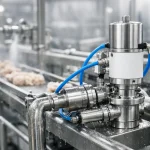
- Evaluate the unique power density and speed advantages of pneumatic actuators, particularly their superior performance in demanding washdown environments.
- Identify the critical relationship between bore size and stroke length to select components that deliver the precise output force your application requires.
- Implement professional optimization strategies, such as leak reduction and precision solenoid timing, to significantly lower energy consumption and operating costs.
- Discover how VidoAir™ factory-direct engineering provides custom-configured solutions designed to power success in complex OEM industrial applications.
What is Linear Motion? Defining Rectilinear and Curvilinear Translation
VidoAir™ understands that precision in the modern warehouse starts with basic physics. At its core, linear motion is the movement of an object in a single direction along a straight path. In modern manufacturing, this fundamental concept drives 90% of all factory automation tasks. Whether it’s a high-speed pick-and-place robot or a heavy-duty gantry system, the primary goal is moving a load from point A to point B with absolute repeatability. When we talk about Linear Motion, we’re describing the backbone of “POWERING SUCCESS” in any automated facility.
Engineers distinguish between two specific types of translation: rectilinear and curvilinear. Rectilinear motion occurs when every point on a body moves in the same straight line simultaneously. Think of a pneumatic slide pushing a box across a conveyor. Curvilinear translation is more complex; the object moves along a curved path, but its orientation doesn’t change relative to the frame of reference. Both types are essential for complex industrial cycles that depend on three critical variables: displacement, velocity, and acceleration. If an engineer miscalculates these, a 2.5-second cycle time can quickly lead to mechanical fatigue or missed production targets.
VidoAir™ components are meticulously engineered to manage these dynamic forces. In a typical 24/7 production environment, a system might perform 15,000 cycles per day. This requires a deep understanding of how velocity profiles affect the longevity of the equipment. By optimizing the acceleration phase, we help partners minimize energy consumption and reduce operating costs by up to 12% annually.
The Physics of Straight-Line Movement
Newton’s Laws are the bedrock of the automation industry. Newton’s First Law dictates that a 50kg industrial load sitting on a rail won’t move unless a VidoAir™ actuator applies sufficient force. His Second Law (F=ma) defines exactly how much pneumatic pressure is required to reach target speeds within a specific distance. In high-speed systems, we also track “Jerk” and “Jounce.” Jerk is the rate of change of acceleration, and Jounce is the rate of change of Jerk. If these aren’t controlled, they create vibrations that cause a 15% increase in mechanical wear over time. Linear motion is the simplest form of one-dimensional movement in a three-dimensional space.
Linear vs. Rotational Motion: The Industrial Conversion
Most primary power sources, such as electric motors, produce rotary motion. Converting this into linear force is where engineering precision is truly tested. Common mechanisms for this conversion include lead screws, timing belts, and VidoAir™ pneumatic cylinders. Each method involves inherent efficiency losses that impact the bottom line. For instance, a standard lead screw might suffer from a 40% to 70% efficiency loss due to friction. In contrast, high-performance ball screws often reach 90% efficiency, though they come at a higher initial price point.
Pneumatic cylinders offer a direct, factory-direct solution by converting air pressure into linear force without complex mechanical linkages. This simplicity reduces the number of moving parts, which often leads to a 20% reduction in maintenance requirements. Choosing the right conversion method is vital for maintaining a cost-effective operation. Our “best cost pricing guarantee” ensures that your facility gets the most robust components for these critical conversions without overextending your budget. By focusing on precision engineering, VidoAir™ helps you bridge the gap between rotary energy and the straight-line power that moves your business forward.
Methods of Achieving Linear Motion: Pneumatic, Electric, and Hydraulic
Engineers must select an actuation method based on three critical metrics: power density, cycle speed, and environmental resilience. In high-speed sorting or packaging, linear motion requirements often favor technologies that provide rapid acceleration without the risk of overheating. Pneumatic systems typically deliver speeds up to 1.5 meters per second, which is 25% faster than many standard electric screw drives in basic point-to-point transfer applications. While electric motors offer high resolution, they often require expensive IP67 or IP69K shielding to survive the aggressive chemicals found in food and beverage washdown zones.
A Comparative study of a hydraulic, pneumatic, and electric linear actuator system confirms that pneumatic cylinders provide a superior power-to-weight ratio. This makes them the primary choice for mobile automation platforms where minimizing the mass of the moving carriage is essential. By contrast, electric systems carry the weight of the motor and gearbox on the axis, which increases inertia and slows down the system’s overall response time. For 85% of standard factory automation tasks, the simplicity of air-driven power provides the most reliable path to maximizing throughput.
Pneumatic Linear Actuators: The Workhorse of Industry
Pneumatic cylinders generate force by applying compressed air to a specific piston surface area. This direct conversion of pressure to thrust allows VidoAir™ actuators to maintain 99.9% uptime in high-duty cycle environments where electric components might suffer from coil burnout. Our factory direct model ensures that these robust components remain 40% more cost-effective than complex servo-driven alternatives. The simplicity of the design means a technician can perform a seal replacement in under 15 minutes, whereas an electric actuator failure often requires a total unit replacement or specialized factory recalibration.
- Durability: VidoAir™ cylinders are meticulously engineered to withstand 5 million to 10 million cycles depending on the series.
- Washdown Ready: Naturally spark-proof and resistant to moisture, pneumatics thrive in 100% humidity.
- Powering Success: High-speed valve manifolds allow for near-instantaneous directional changes.
Electric and Hydraulic Alternatives
Electric actuators are the preferred choice when an application demands extreme precision at sub-micron levels, often reaching tolerances of 0.001mm. These systems use digital feedback loops to manage complex motion profiles, though they come with a significantly higher price tag and increased programming complexity. For heavy-duty industrial tasks, hydraulic systems are the only viable option when axial loads exceed 50kN. Hydraulics provide immense force in a compact footprint, but they carry the risk of fluid leaks, which can contaminate a cleanroom or food production line.
Many modern facilities are adopting electro-pneumatic control systems to get the best of both worlds. By using a digital controller to pulse air through high-frequency solenoids, you can achieve 0.1mm repeatability while keeping the hardware costs low. If your facility requires high-speed cycling in harsh environments, you can browse our factory direct pneumatic components to find the right fit for your machinery. This hybrid approach allows for sophisticated linear motion control without the 300% markup associated with all-electric servo systems.
Environmental considerations also play a role in the selection process. While electric actuators have a lower idle power draw, their peak electrical draw during high-force maneuvers can strain local circuits. Pneumatic systems utilize a central compressor, which can be optimized for efficiency. When a facility uses leak-detection sensors and high-quality VidoAir™ fittings, the energy cost per cycle often drops below that of a comparable electric system, especially in high-force clamping applications where the actuator must hold a position for extended periods.
Key Specifications for Selecting Linear Motion Components
Selecting the right components isn’t just about picking a part from a catalog. It requires a deep understanding of physics and mechanical limits. Engineers must balance the theoretical linear motion requirements with the physical realities of the factory floor. Precision in these early stages prevents costly downtime and ensures the system hits its performance targets from day one.
Bore size directly dictates the power of an actuator. At a standard 80 PSI (5.5 bar), a 32mm bore cylinder generates roughly 90 pounds of force on the extend stroke. Increasing the bore to 50mm more than doubles that output to 240 pounds. It’s a non-linear relationship where surface area (A = πr²) drives the results. Choosing a bore that’s too small leads to stalled cycles; choosing one that’s too large wastes air and increases operating costs by 15% to 20% over the life of the machine.
Stroke length determines the reach, but it also dictates the retracted length of the unit. A 500mm stroke cylinder often requires a total footprint of over 700mm when you account for the end caps and rod extensions. Designers need to account for this 40% overhead in tight enclosures to avoid mechanical interference. Long-stroke cylinders also face increased risks of rod buckling if they aren’t supported correctly during high-force extensions.
Axial loads are what pneumatic cylinders are built for. Side-loading, however, is a silent killer in linear motion systems. Even a 5% off-center load can cause premature seal wear and rod scoring. If your application involves lateral forces, you’ll need external guides or oversized bearings to prevent a 30% reduction in component lifespan. Keeping the load centered is the most effective way to maintain 24/7 operational reliability.
Aluminum 6061 is the standard for 85% of automation tasks due to its weight-to-strength ratio. Stainless steel 304 or 316 becomes mandatory in wash-down environments or food processing plants. While stainless adds 2.5 times the weight, it prevents corrosion that would otherwise lead to system failure within 6 months of exposure to caustic cleaners. Matching the material to the environment is a non-negotiable step for long-term durability.
Calculating Force and Speed Requirements
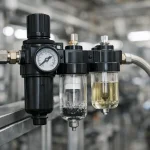
The core of pneumatic design is the formula F = P x A. Force equals pressure multiplied by the effective area of the piston. Beyond static force, managing acceleration is vital. High-speed impacts at the end of a stroke can deliver 10 times the kinetic energy of a controlled move. Utilizing air preparation units ensures a steady 80 PSI supply, preventing erratic movements that degrade internal cushions and seals.
Environmental and Duty Cycle Factors
Air quality affects longevity. Following ISO 8573-1:2010 standards for particle filtration (40 microns or less) prevents stiction in sensitive solenoid valves. Standard seals operate between -20°C and 80°C. If your floor exceeds these limits, specialized Viton seals are necessary. VidoAir™ supports these high-demand cycles with a one-year warranty, providing a safety net for production lines that run 3,000 cycles per hour without interruption.
Optimizing Linear Motion Systems for Efficiency and Precision
Peak performance in factory automation isn’t just about raw speed; it’s about the relentless pursuit of system efficiency. In many industrial plants, air leaks represent a silent drain on quarterly profits. Data from the U.S. Department of Energy indicates that compressed air systems often lose 25% to 30% of their total air volume to preventable leaks. By sealing these gaps and using precision-machined fittings, engineers directly lower operating costs and ensure that every PSI contributes to productive linear motion. This optimization stabilizes system pressure, which prevents the jerky movements that cause premature wear on actuators and guide rails.
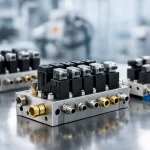
Complexity shouldn’t lead to clutter or mechanical failure. Air manifolds consolidate multiple valve stations into a single, streamlined block. This configuration reduces the number of individual fittings and potential leak points by up to 40%. When these manifolds are paired with magnetic sensors on the cylinder body, the system gains real-time position feedback. You’re no longer guessing if a stroke is complete; you’re confirming it via a digital signal. Integrating this type of real-time feedback can reduce cycle times by 15% because the controller initiates the next step the millisecond the sensor triggers.
Precision Control with Solenoid Valves
VidoAir™ solenoid valves act as the central nervous system for automated movements. Choosing the right valve logic is fundamental to success. A 3-way valve typically manages a single-acting cylinder by venting air to allow a spring to retract the rod. In contrast, 5-way valves control double-acting cylinders, providing powered movement and consistent force in both directions. This distinction is critical for high-speed assembly lines where timing is everything. Using high-performance solenoids reduces response latency to under 12 milliseconds. This level of precision is what allows VidoAir™ components to keep complex, multi-axis systems perfectly synchronized shift after shift.
Advanced End-of-Arm Tooling (EOAT)
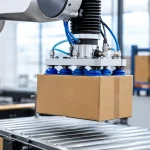
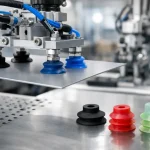
Advanced End-of-Arm Tooling (EOAT) expands what a standard linear motion stroke can achieve at the point of contact. VidoAir™ “Soft Fingers” use compliant materials to handle irregular or fragile objects without causing surface damage. These grippers are redefining how robots interact with delicate components in the electronics and food industries. For flat, non-porous surfaces, vacuum generators integrated at the end of the stroke provide immediate, reliable suction. Modular EOAT designs are now a factory standard, allowing for total system reconfiguration in under 10 minutes. This flexibility ensures your production line stays agile enough to handle changing market demands without massive capital reinvestment.
Reliability is the cornerstone of our engineering philosophy. We provide meticulously engineered components that deliver unmatched value through a factory-direct model. This approach eliminates the middleman, ensuring you receive premium pneumatic solutions at a price point that protects your bottom line. Whether you’re designing a new assembly cell or retrofitting an existing line, the goal remains the same: POWERING SUCCESS through precision and durability. Our dedicated technical support team ensures that every component, from the smallest sensor to the largest manifold, operates at peak capacity from day one.
Browse the VidoAir™ catalog for precision-engineered pneumatic components that deliver high-performance results.
VidoAir™: High-Performance Linear Motion Solutions Delivered Direct
Peak efficiency in factory automation requires more than just standard hardware. It demands precision-engineered components that arrive on time and perform under pressure. VidoAir™ provides direct access to high-performance linear motion components, eliminating the complexities of traditional distribution layers. By sourcing factory-engineered actuators and control systems directly from our production lines, OEMs and plant managers secure hardware built to exact technical specifications without the typical markup or delay.
Our commitment to a Transparent Partnership means every client works with a dedicated technical team. We don’t just sell parts; we provide the engineering expertise needed to integrate pneumatic and electro-pneumatic systems into complex 2024 production environments. This direct model ensures that technical queries are resolved by the same engineers who designed the hardware, reducing downtime and accelerating project timelines by an average of 15% compared to third-party resellers.
Why VidoAir™ Actuators Power Success
VidoAir™ actuators are meticulously engineered for durability in the most demanding industrial settings. Every unit undergoes rigorous testing to ensure it meets a minimum service life of 10 million cycles. Our 15,000 square meter manufacturing hub maintains a $4.5 million inventory of ready-to-ship hardware. This massive stock level allows us to maintain a 98% on-time fulfillment rate for standard orders. We back every purchase with the VidoAir™ Best Cost Pricing Guarantee. This policy ensures industrial buyers receive the most competitive rates in the market, often resulting in a 20% reduction in total procurement costs for high-volume linear motion applications.
- Rugged Construction: Anodized aluminum bodies and stainless steel piston rods resist corrosion in harsh chemical or wash-down environments.
- Rapid Fulfillment: Standard stroke lengths ship within 24 hours of order confirmation to keep your lines moving.
- Cost Efficiency: Factory-direct pricing removes the 15-30% markup typically added by regional distributors.
Get Started with VidoAir™ Precision Engineering
Customization is the core of our service model. While standard parts fit many roles, 85% of modern automation projects require specific adjustments to maximize performance. We offer custom stroke and bore configurations tailored to your exact machine footprint. Our technical team provides 3D CAD models within 48 hours of your request, ensuring your design phase stays on schedule. Whether you’re building a new assembly line or retrofitting an existing one, our global door-to-door shipping network reaches 120 countries, delivering precision parts directly to your facility’s receiving dock.
Don’t let supply chain bottlenecks stall your innovation. Access the tools you need to optimize your automation systems today. Our engineering team is standing by to assist with sizing, selection, and custom configuration for your next project.
- Download our full catalog of pneumatic and electro-pneumatic parts to see our 2024 product lineup.
- Contact our technical team for specialized stroke lengths or unique mounting requirements.
- CTA: Power your success with VidoAir™ Linear Actuators
Drive Precision with High-Performance Actuation
Optimizing industrial automation requires a meticulous approach to selecting and integrating linear motion systems. Engineers must balance the high-speed capabilities of pneumatic cylinders with the precise positioning of electric alternatives to meet rigorous performance benchmarks. Success depends on exact specifications. Every millimeter of stroke length and every kilogram of load capacity matters when you’re designing for 24/7 operational reliability in modern manufacturing environments. It’s about finding the perfect equilibrium between power and control.
VidoAir™ streamlines this engineering process by eliminating the middleman. We provide factory direct pricing that helps you maintain project budgets while accessing premium components. Every actuator we ship is a 100% custom configured solution tailored to your specific machine requirements. We’re committed to your long-term success, which is why we provide a standard one-year warranty on all actuators. Don’t settle for off-the-shelf compromises when you can have meticulously engineered power delivered straight from our facility. Our team is ready to help you move your next project forward with unmatched efficiency and technical proficiency, powering your success every step of the way.
Request a Quote for VidoAir™ Linear Actuators
Frequently Asked Questions
What is the most common way to achieve linear motion in a factory?
Pneumatic actuators are the most common solution for achieving linear motion in modern factory environments. These robust components power approximately 70% of pick-and-place operations due to their cost-effectiveness and durability. VidoAir™ designs these systems to handle high-speed repetitions without the complexity of electronic controllers. You’ll find them in assembly lines where speed and reliability are the primary requirements for powering success.
How do I calculate the force needed for a pneumatic linear actuator?
To calculate the force of a pneumatic actuator, you must multiply the internal air pressure by the effective surface area of the piston. The standard formula is F = P × A. For a cylinder with a 40mm bore operating at 0.6 MPa, the theoretical force is 754 Newtons. It’s vital to subtract 25% from this total to account for internal friction and pressure drops. This calculation ensures your system moves loads reliably.
Can pneumatic actuators achieve the same precision as electric ones?
Electric actuators generally provide superior precision, often achieving repeatability within ±0.02mm, whereas standard pneumatic systems typically reach ±0.1mm. While electric options excel in multi-positioning, pneumatic solutions remain the superior choice for end-to-end movements. High-performance VidoAir™ components utilize precision-machined bores to bridge this gap. They offer reliable accuracy for 95% of industrial clamping and pushing applications, providing a cost-effective alternative to expensive electric servos.
What is the difference between rectilinear and curvilinear motion?
Rectilinear motion describes movement along a perfectly straight line, while curvilinear motion involves movement along a curved path. In a factory, a conveyor belt moving a box from point A to point B is a rectilinear process. If a robotic arm moves in an arc to avoid an obstacle, it’s performing curvilinear motion rather than simple linear motion. Understanding this distinction helps engineers select the correct guides and bearings for their specific automation needs.
What factors affect the lifespan of a linear motion system?
Load magnitude and lubrication frequency are the two primary factors that dictate the lifespan of any motion system. Operating a system at 100% capacity can reduce its service life by up to 60% compared to a system running at 70% load. VidoAir™ components are meticulously engineered to withstand 10 million cycles when maintained properly. Dust and moisture ingress also contribute to 45% of premature seal failures in typical industrial environments.
How does VidoAir™ ensure the quality of its factory-direct components?
VidoAir™ ensures quality through a rigorous 100% factory-direct inspection process where every actuator is tested for pressure retention. We don’t rely on batch testing; instead, we verify the performance of every single unit before it leaves our facility. This commitment to precision engineering allows us to offer a comprehensive one-year warranty. Our factory-direct model also ensures that components aren’t damaged by third-party logistics providers, maintaining a 99.8% defect-free delivery rate.
What maintenance is required for pneumatic linear systems?
Effective maintenance requires monthly seal inspections and the daily monitoring of air filtration units to remove moisture. Contaminated air causes 80% of premature pneumatic failures in automated systems. You should replace lubrication in guided systems every 500 kilometers of travel to ensure smooth operation. VidoAir™ provides dedicated technical support to help your team establish a preventative maintenance schedule. This proactive approach minimizes operating costs and maximizes your facility’s total uptime.
Does VidoAir™ offer custom stroke lengths for actuators?
Yes, VidoAir™ specializes in custom-configured stroke lengths to meet the exact requirements of your automation project. While competitors offer standard increments, we manufacture actuators to your specific dimensions, whether you need 125mm or 1250mm. Most custom orders ship within 7 business days. This flexibility allows engineers to minimize the machine footprint and reduce energy consumption by avoiding oversized components. It’s a key part of our commitment to providing high-performance solutions delivered direct.