A failed $18 solenoid valve can stop a production cell that ships six figures of product each shift. The difference between a short repair and a prolonged outage is often not troubleshooting skill. It is whether the right replacement is already identified, stocked, and compatible. A disciplined industrial automation spare parts list turns maintenance inventory from a collection of miscellaneous components into an uptime-protection system.
For pneumatic and electro-pneumatic equipment, the challenge is more than carrying extra parts. Plants must decide which components justify shelf space, which assemblies should be held as configured units, and which items can be sourced quickly without exposing production to unacceptable risk. The right answer depends on failure consequences, lead time, interchangeability, and the level of technical certainty required during a breakdown.
Start With Production Risk, Not a Catalog
An effective spare-parts program begins at the machine level. Ask what happens when a component fails: Does the machine stop safely? Can an operator bypass one station? Is there parallel equipment? Does the failure create a quality issue, a safety concern, or a complete line shutdown?
A compact cylinder on a noncritical reject mechanism may be easy to replace and available from several sources. A guided slide table actuator with a custom stroke, unusual mounting pattern, magnetic sensing, and attached tooling is a different risk category. Its failure may stop a pick-and-place operation, while an incorrect substitute can create alignment errors or damage the tooling.
Classify components by operational consequence before setting stock levels. Critical spares are parts whose failure stops production, compromises safety, or causes costly quality loss. Essential spares affect output but may allow limited operation or a planned recovery window. Consumable and convenience spares are low-cost items that reduce repair time but do not normally justify large inventory positions.
This approach prevents a common inventory mistake: stocking dozens of low-risk fittings while lacking one correctly configured valve manifold, PLC module, or actuator needed to restart a critical machine.
What an Industrial Automation Spare Parts List Should Include
A useful list is not simply a part number and quantity. It must give a technician enough information to make a correct replacement under production pressure. At minimum, each record should identify the equipment or machine location, manufacturer part number, approved alternate if one exists, functional description, criticality level, stock quantity, reorder point, supplier lead time, and storage location.
For pneumatic equipment, record the technical details that determine compatibility. Cylinder bore, stroke, mounting style, rod thread, piston magnet option, seal material, operating pressure, port size, and sensor type can all matter. For valves, capture valve function, porting, coil voltage, connector style, flow capacity, pressure range, manual override arrangement, and whether the valve is part of a manifold.
A part number alone is rarely enough when an older machine has been modified over time. Add a photo of the installed component, wiring or tubing references, and the machine drawing number where possible. These details reduce the odds of ordering a physically similar component that does not match the actual application.
Core Pneumatic and Air-Preparation Spares
Pneumatic systems tend to fail in predictable areas: valves, cylinders, sensors, fittings, tubing, air-preparation assemblies, and vacuum hardware. Yet the correct spare strategy changes with operating conditions.
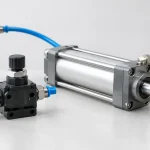
Solenoid valves and coils are high-value spares when they control a critical clamp, gate, diverter, or safety-related sequence. In dirty, high-cycle, or high-temperature service, coil failures and contamination-related valve issues deserve closer attention. Stocking a replacement coil may be sufficient for some valve designs, but a complete valve is usually the faster recovery option when internal wear or contamination is likely.
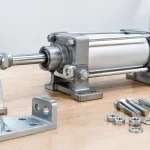
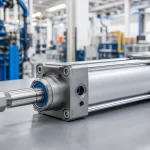
Cylinder spares require more judgment. Standard bore and stroke cylinders used across multiple stations can be held as complete units. For specialized actuators, such as rodless cylinders, guided cylinders, slide tables, or stainless steel units, consider keeping one configured replacement for every critical machine family rather than attempting to stock every variation.
Air preparation components deserve priority when a single filter-regulator, lubricator, soft-start valve, or dryer-related control device feeds a large portion of the line. A clogged filter element is simple to address. A cracked bowl, failed regulator, or unavailable specialty air-prep assembly can shut down multiple machines at once. Record bowl material, drain type, filtration rating, port size, pressure range, and whether the device is standard or stainless steel for washdown or corrosive environments.
Electrical Control and Sensor Spares
Automation downtime often begins as an electrical symptom that looks mechanical. A cylinder may appear slow because the valve output is not energizing. A machine may appear to have a PLC issue when a proximity sensor has failed or a cable has been damaged.
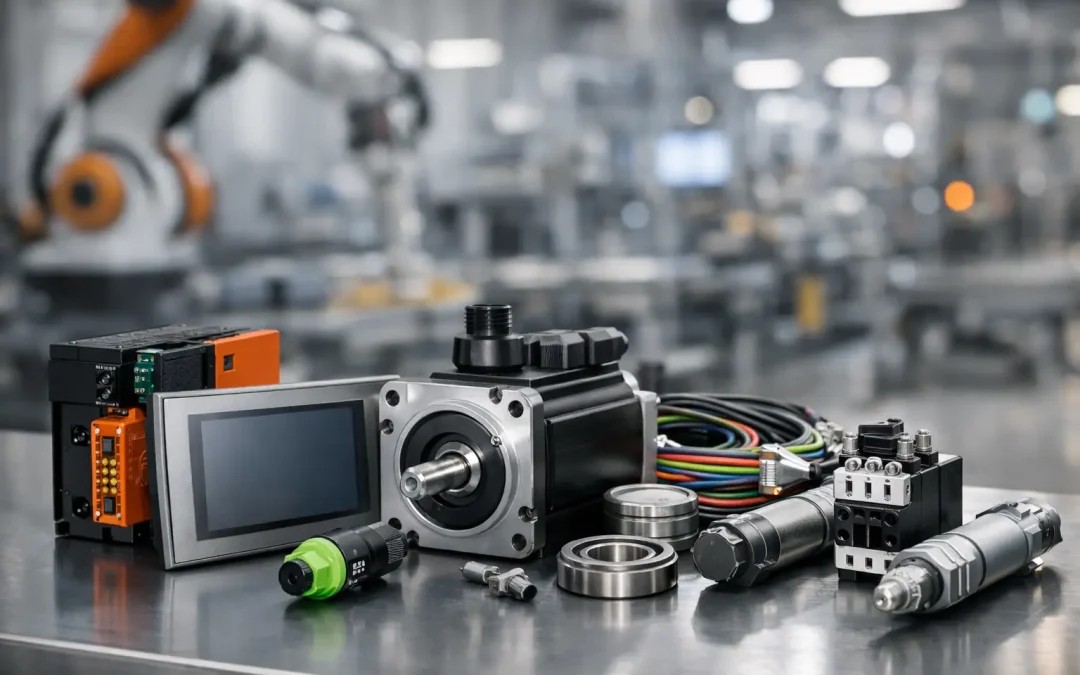
Maintain approved spares for PLC power supplies, critical input/output modules, communication components, relays, circuit protection, sensor amplifiers, and the sensors used repeatedly across the facility. For sensors, identify sensing method, output type, connector, cable length, voltage, sensing distance, mounting thread, and environmental rating. A PNP sensor is not a direct replacement for an NPN sensor, and a connector mismatch can turn a five-minute repair into a wiring job.
For PLCs and managed control hardware, the part on the shelf is only part of the recovery plan. Maintain current, verified program backups and document the firmware or configuration requirements. A replacement module without the correct configuration may restore power but not machine function.
Set Stock Levels With Lead Time and Failure Data
One spare is not always the right quantity. Use a practical calculation based on criticality, expected failure rate, replacement lead time, and the number of identical components in service.
If a plant uses forty identical compact cylinders across several high-volume cells, carrying only one replacement may be too lean, particularly if the cylinders operate at high cycle counts. Conversely, a custom actuator with an eight-week lead time may justify one dedicated spare even if its expected failure rate is low. The cost of holding that actuator should be compared with the cost of an extended outage, expedited freight, missed shipments, and overtime recovery.
Review maintenance history rather than relying only on assumptions. Repeated failures can reveal a stocking need, but they can also expose a system problem. Frequent valve replacement may indicate poor air quality. Repeated cylinder seal failures may point to side loading, excessive speed, incompatible media, or incorrect cushioning. Increasing inventory without correcting the root cause only makes the failure easier to repeat.
Standardize Where It Reduces Risk
Part standardization can dramatically simplify an industrial automation spare parts list. When new equipment is specified, select common voltages, sensor families, fitting styles, tubing sizes, and actuator mounting standards where the application allows it. Fewer variations mean faster troubleshooting, smaller inventory, and more confidence in substitutions.
Standardization has limits. A high-speed packaging machine, refrigerated process, washdown line, or corrosive application may require a specialized component that should not be replaced with a general-purpose alternative. Stainless steel air-prep devices, refrigeration solenoids, vacuum components, and specialty actuators should be selected for their service conditions first. Inventory efficiency is valuable, but not when it compromises lifecycle performance.
A factory-direct supplier can help validate interchangeable options, configured assemblies, and application-specific replacements before an emergency occurs. VidoAir supports this work with pneumatic, electro-pneumatic, air-management, vacuum, and motion-control hardware designed for demanding industrial applications.
Store Parts So They Are Ready to Install
A spare that cannot be located, identified, or trusted is not a spare. Keep inventory in labeled locations with a clear connection to the asset list. Protect valve coils, PLC modules, sensors, and electronics from moisture, static discharge, and contamination. Cap pneumatic ports and store fittings in organized bins to prevent thread damage and mixed sizes.
For assemblies, store the full replacement package together. A replacement valve manifold may require valve stations, end plates, blanking plates, connectors, mounting hardware, and a documented tubing map. A cylinder replacement may need sensors, mounting nuts, clevis hardware, and compatible flow controls. Packaging these items as a maintenance kit can remove hours of avoidable searching during a shutdown.
Review shelf stock during planned maintenance intervals. Verify counts, inspect items with seals or elastomers for age-related concerns, update discontinued part numbers, and remove unapproved substitutes from critical inventory. The list should evolve whenever machinery, controls, or production requirements change.
The most valuable spare-parts list is not the longest one. It is the one that lets a technician identify the failed component, pull an approved replacement, and return the machine to precise, reliable operation without gambling on compatibility.