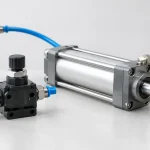

At 2:13 a.m., a cartoning line starts faulting every 20 to 30 cycles. The PLC points to a cylinder home signal timeout. Maintenance swaps the sensor, resets the machine, and gets another short run before the same fault comes back. By sunrise, the issue is no longer a sensor problem. It is an automation downtime reduction example most plants know too well – a small pneumatic weakness upstream creates repeated stops, wasted labor, and a backlog that grows by the hour.
For engineers and maintenance teams, the useful question is not whether automation can reduce downtime. It can. The better question is which failure chain is actually driving the stops, and which component changes produce measurable improvement instead of another temporary patch. In many pneumatic and electro-pneumatic systems, downtime is not caused by one catastrophic part failure. It comes from stacked losses: unstable air quality, slow valve response, marginal sensing, tube wear, and replacement parts that are technically compatible but inconsistent in performance.
A practical automation downtime reduction example from the plant floor
Consider a packaging machine with three pneumatic axes handling carton indexing, flap forming, and reject diversion. The machine runs at moderate speed, but the environment is dusty, the compressed air header serves multiple assets, and pressure drops show up during shift changes when more equipment comes online.
The recurring symptom is intermittent cycle interruption. The reject gate sometimes fails to reach end-of-stroke before the controller times out. Operators see nuisance alarms. Maintenance sees a valve issue one day, a cylinder issue the next, and an I/O issue after that. Production sees missed output.
After logging faults for two weeks, the plant notices a pattern. Most stoppages happen during short pressure dips and after washdown-adjacent cleaning periods that introduce more moisture into the air system. Inspection finds a filter element near saturation, evidence of water carryover, and a spool valve with contamination-related sticking. The tubing on one moving section also shows abrasion, and the magnetic switch bracket has enough play to shift the sensor point under vibration.
That matters because each issue alone looks manageable. Together, they create unstable motion. The cylinder still extends, but not at the same speed every cycle. The signal still changes state, but not at the same position every run. The machine still works, just not reliably enough to protect uptime.
Where downtime was really coming from
This kind of automation downtime reduction example is valuable because it shows how problems hide between components. Plants often replace the part closest to the alarm, but the root cause sits earlier in the chain.
In this case, the first contributor was air preparation. Inconsistent air quality changes valve behavior, accelerates seal wear, and can make a healthy actuator look weak. The second contributor was component margin. The valve and sensing setup were technically acceptable, but they offered very little tolerance for pressure fluctuation, contamination, or vibration. The third contributor was response planning. The plant stocked a generic replacement valve with matching port size and voltage, but its flow and response characteristics were not equivalent enough for repeatable machine timing.
That combination is common in demanding applications. A line can run for months in a gray zone before a seasonal humidity shift, a maintenance interval slip, or a production increase pushes it into repeated downtime.
The corrective action that actually reduced downtime
The fix was not dramatic. It was disciplined.
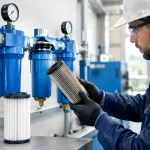
First, the plant upgraded air preparation at the machine level instead of relying only on a remote system-wide setup. A properly sized filter-regulator combination with better moisture control stabilized air delivery to the affected station. In applications where contamination risk is higher, that local protection often pays back quickly because it shields valves and actuators from conditions created elsewhere in the plant.
Second, maintenance replaced the sticking spool valve with a higher-performance unit better suited for the cycle rate and environment. Flow capacity, actuation speed, and contamination tolerance all mattered more than simple port compatibility. The line did not need the cheapest drop-in part. It needed a valve that would respond consistently after thousands of cycles in real operating conditions.
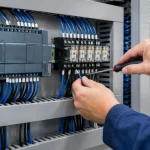
Third, the team corrected the mechanical side of signal reliability. They replaced worn tubing on the moving section, secured routing to prevent repeat abrasion, and changed the sensor mounting method so the switch point stayed fixed under vibration. That eliminated the false impression that the controls layer was unstable.
Finally, engineering adjusted preventive maintenance triggers. Instead of replacing filter elements and inspecting valve performance on a broad calendar schedule, they tied checks to actual machine cycle counts and pressure-drop trends. That shift matters in high-duty equipment where time-based intervals can be either too late or wastefully early.
Results from this automation downtime reduction example
Within the first month after the changes, nuisance stops on the cartoning line dropped sharply. More important, the faults that remained became easier to diagnose because the machine behavior was no longer erratic. Maintenance was not chasing overlapping symptoms. Production recovered scheduled output without adding labor. Spare parts usage also improved because technicians stopped replacing healthy sensors and cylinders during emergency calls.
A realistic takeaway is not that one filter, one valve, or one sensor mount solves every uptime problem. It is that downtime reduction in automation often comes from raising consistency across the whole pneumatic path. When air quality, valve response, actuator sizing, tube routing, and feedback hardware all have proper margin, the controls system can do its job without constantly compensating for physical instability.
Why component selection has such a large effect on uptime
Industrial buyers already know that part numbers can match on paper while performance differs in service. Downtime usually exposes those differences.
For pneumatic systems, air prep devices are a good example. An undersized or poorly maintained unit can introduce pressure variation that shows up as slow actuation, incomplete stroke, or delayed switching. On a low-speed utility function, that might be harmless. On an indexed machine with tight timing windows, it creates stops.
The same is true for solenoid valves. Coil voltage and port size are only the starting point. Engineers should also consider Cv, response speed, duty cycle, media cleanliness, environmental exposure, and how the valve behaves during brief pressure dips. If the application has washdown, heat, dust, vibration, or frequent cycling, a marginally specified valve will often fail as a downtime problem before it fails as a dead part.
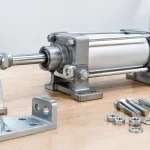
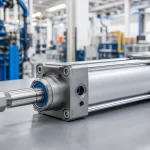
Actuators deserve the same scrutiny. A cylinder sized only for nominal load can become unreliable when friction increases, pressure sags, or machine speed rises. In these situations, adding force margin or selecting a specialty actuator with better guidance can reduce side loading and improve repeatability. That is not overspecifying for the sake of it. It is protecting uptime in a real operating envelope.
What engineers should check before blaming the PLC
When repeated faults show up at the controls layer, it is tempting to stay there. But if alarms move around or resist a clean fix, the physical system usually needs a closer look.
Start with delivered air quality and pressure stability at the machine, not just at the compressor room. Then verify valve response under actual load, not bench assumptions. Check tubing for wear, kink risk, and long runs that slow fill and exhaust behavior. Inspect sensor mounting for movement and confirm the switch point still matches the motion profile. If downtime appears random, look for environmental triggers such as shift-based load changes, cleaning cycles, or temperature swings.
There is a trade-off here. Adding local filtration, higher-grade valves, or more durable fittings raises component cost. But downtime is rarely priced honestly in these decisions. Lost output, maintenance labor, scrap, expedited freight, and operator disruption usually overwhelm the initial savings from a lower-tier part choice.
For OEMs and integrators, the lesson is even sharper. A machine that works during commissioning but runs near the edge of pneumatic stability will create support costs later. Better air management, cleaner component matching, and application-specific hardware selection reduce those callbacks.
A supplier with broad pneumatic, electro-pneumatic, and control component coverage can help here because the problem often crosses categories. A line issue may require air prep changes, a valve upgrade, new tubing and fittings, and a more durable sensing or control approach. VidoAir’s catalog-driven range is useful in exactly those situations where uptime depends on getting the whole motion and air path right, not just replacing one failed item.
The next time a machine throws the same timeout alarm for the third shift in a row, treat it as a system problem until proven otherwise. The fastest path back to uptime is usually not the nearest replacement part. It is the component combination that gives the machine enough stability to run the way it was supposed to run all along.