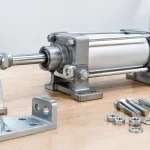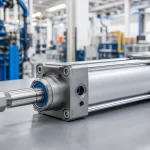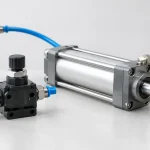
A failed cylinder at a packaging line is rarely just a cylinder problem. It can be a mounting mismatch, contaminated air, an undersized valve, a tube that kinks under motion, or a replacement part that arrives too late. That is why factory direct pneumatic components deserve evaluation beyond unit price. For OEMs, integrators, and maintenance teams, the direct model is valuable when it preserves the engineering details that keep a system running at cycle rate.
The appeal is clear: fewer layers between the component source and the buyer can improve pricing, availability visibility, and access to product knowledge. But direct purchasing is not automatically better. The real question is whether the supplier can support the full decision, from sizing and configuration through delivery and replacement. When it can, factory-direct sourcing becomes a practical way to reduce both component cost and production risk.
Where Factory-Direct Sourcing Creates Real Value
Traditional pneumatic supply chains often involve multiple handoffs. A manufacturer produces the part, a distributor selects inventory, another party may manage local fulfillment, and the end user finally receives a catalog number. Every handoff can add cost, lead-time uncertainty, and opportunities for specification errors.
A factory-direct supplier shortens that path. For standard products, this can mean faster confirmation of stock, clearer technical documentation, and better-cost pricing. For configured products, the advantage is even more significant. An engineer can work from actual bore size, stroke, mounting style, port thread, sensor arrangement, seal material, and operating environment rather than forcing an application into whatever a local shelf happens to hold.
That matters in demanding applications. A cylinder moving a light carton at modest speed has very different requirements from one indexing a fixture in a washdown cell or cycling continuously in a dusty aggregate environment. The component may look similar on a drawing, but the cost of poor selection is not.
Factory-direct purchasing also gives procurement teams a more accurate view of what is standard, what is configurable, and what requires production time. That distinction helps prevent a common failure in maintenance purchasing: ordering an apparent equivalent only to discover that the rod end, sensor slot, cushioning option, or port orientation does not match the installed machine.
Factory Direct Pneumatic Components Still Need Engineering Discipline
Buying direct does not remove the need to specify correctly. In fact, it makes disciplined specification more valuable because the buyer often has access to more options. A good supplier should help narrow those options quickly, not make the process more complicated.
Start with force rather than cylinder bore. Calculate the required push and pull force at the lowest expected operating pressure, then account for friction, side load, speed, tooling mass, and a sensible safety factor. A cylinder selected solely from nominal bore and maximum catalog force may perform acceptably during a trial but stall when supply pressure drops or friction rises after months of use.
Valve flow capacity deserves the same attention. A large-bore actuator paired with an undersized directional control valve will move slowly, waste compressed air, and create inconsistent cycle times. Tubing and fittings also influence response. Long runs, restrictive elbows, and undersized tubing can create enough pressure loss to make a well-sized valve appear inadequate.
Air quality is another frequent blind spot. Pneumatic equipment is forgiving compared with many motion technologies, but it is not indifferent to water, oil carryover, particulate, or excessive pressure variation. An air preparation assembly should be selected for actual flow demand and contamination risk, not simply matched by port size. Stainless steel air preparation devices may be appropriate where washdown exposure or corrosion resistance is a genuine requirement, while standard assemblies are often the more economical choice in dry indoor environments.
The direct model works best when application data travels with the order. Operating pressure, media, ambient conditions, cycle rate, load direction, mounting constraints, and required life expectations should be available to the person validating the configuration. That is how a direct supplier becomes a technical resource rather than only another ordering channel.
Configuration Is More Than a Part Number
Configured-to-order pneumatic components are particularly valuable where machine geometry or environment does not fit a standard catalog selection. Specialty actuators, slide table actuators, guided cylinders, compact cylinders, and rodless designs all solve different motion problems. Substituting one for another because dimensions are close can create early wear or poor repeatability.
For example, a standard cylinder can handle axial motion efficiently, but it should not be expected to manage significant offset load without proper external guidance. A guided actuator or slide table may cost more at purchase, yet it can eliminate binding, protect the rod, and improve positional consistency. The right answer depends on load moment, travel, speed, and available installation space.
The same principle applies to solenoids. Coil voltage, port configuration, flow requirement, response time, manual override needs, and enclosure requirements all affect suitability. In refrigeration circuits, selecting a refrigeration solenoid requires attention to refrigerant compatibility, pressure differential, temperature range, and valve function. A generic valve substitution can introduce reliability and safety concerns that outweigh any initial savings.
The Hidden Cost of Fragmented Pneumatic Purchasing
A plant may buy cylinders from one source, valves from another, fittings from a third, and controls from a fourth. There are reasons to do this, especially when a legacy machine demands a specific approved component. Yet fragmentation often creates avoidable troubleshooting time.
When a motion circuit is underperforming, technicians need to assess the actuator, directional valve, air preparation, tubing, fittings, sensors, and electrical control as one system. If each item comes from a different supplier with limited insight into the rest of the assembly, the team spends more time isolating responsibility than fixing the problem.
A broader factory-direct portfolio can reduce that friction. Sourcing actuators, solenoids, air preparation equipment, tubing, fittings, vacuum components, and electro-pneumatic controls from one technically capable supplier creates a more coherent bill of materials. It can also simplify spares planning. Instead of stocking random substitutes, maintenance can hold standardized, application-approved replacement parts.
Standardization is not about using one component everywhere. It is about reducing unnecessary variation. A facility may choose a defined set of cylinder bores, common valve manifolds, approved tubing materials, and consistent fitting thread standards. That approach makes training easier, reduces picking errors, and gives technicians familiar failure modes to diagnose.
Direct Pricing Is Only One Part of Best Cost
The lowest quoted part price is not always the lowest operating cost. A low-cost component that needs frequent replacement, takes weeks to source, or requires custom adapter work can be expensive in service. Best cost considers the full effect on uptime, labor, installation, air consumption, and inventory.
This is where factory-direct suppliers should be judged carefully. Ask whether technical support is available before ordering, whether product specifications are clear, whether common configurations are readily available, and whether the supplier can support both standard replacement needs and specialized machine requirements. Fast door-to-door shipping has real value when a failed component is holding up production, but speed should not become a reason to accept an unverified substitute.
There are trade-offs. A local distributor may be the right choice for an emergency item needed within hours, particularly if it has the exact approved part on the shelf. A factory-direct source is often stronger for planned maintenance, OEM builds, recurring production demand, configured assemblies, and projects where buyers want closer access to the product side of the supply chain. Many industrial teams benefit from using both channels intentionally rather than treating them as interchangeable.
A Better Purchasing Workflow for Pneumatic Systems
The most effective buyers treat pneumatic sourcing as part of system design and maintenance planning. For a new machine, establish the component families, pressure range, electrical standards, tubing materials, and environmental requirements early. For an existing line, document installed configurations before failure forces a rushed decision.
When requesting a quote or technical review, provide the details that change selection: actuator load and orientation, required stroke and cycle time, available pressure, valve voltage, control architecture, media conditions, ambient exposure, and any dimensional restrictions. Photos of the installed component and its mounting arrangement are often useful, but they should support rather than replace the written specification.
VidoAir supports this approach with factory-direct access to pneumatic, electro-pneumatic, vacuum, and automation hardware suited to standard replacements and application-specific configurations. The goal is not merely to move parts faster. It is to help buyers obtain components that fit the duty, integrate cleanly, and hold up in production.
The next time a pneumatic part is due for replacement, use the event to verify the entire motion circuit. A better actuator, valve, air preparation setup, or fitting choice can turn a recurring maintenance call into a lasting correction.