
A cylinder that moves on compressed air is simple. A machine that moves that cylinder only when a sensor confirms part position, a timer finishes its cycle, and a controller allows the next step – that is where electro pneumatic control earns its place.
If you are asking what is electro pneumatic control system, the short answer is this: it is a control method that combines electrical signal logic with pneumatic power. Electricity handles decision-making, switching, sensing, and sequence control. Compressed air handles the physical motion. In industrial automation, that pairing gives manufacturers a practical way to control actuators, valves, clamps, slides, grippers, and other motion devices with repeatable precision.
What Is an Electro Pneumatic Control System?
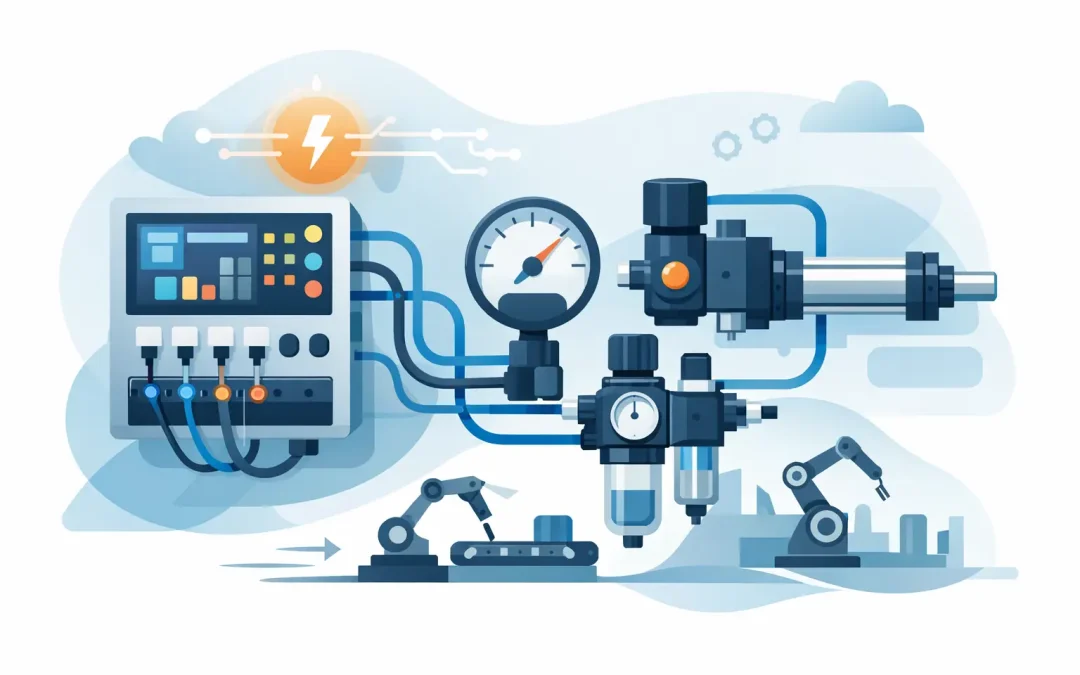
An electro pneumatic control system uses electrical inputs and control devices to operate pneumatic components. The electrical side typically includes pushbuttons, proximity sensors, relays, timers, PLCs, and solenoid coils. The pneumatic side includes air preparation units, directional control valves, flow controls, tubing, fittings, and actuators such as cylinders or rotary devices.
The reason this architecture is so common in demanding applications is straightforward. Pneumatics deliver fast, clean, cost-effective motion. Electrical controls make that motion easier to sequence, monitor, and integrate with modern automation systems. Instead of relying only on manual valves or purely air-based logic, the system uses electrical signals to tell pneumatic valves when to open, close, extend, retract, hold, or exhaust.
That distinction matters on a production floor. Pure pneumatic logic can still work well in certain environments, especially where simplicity is the priority. But once a machine needs interlocks, timed steps, sensor feedback, or communication with a controller, electro pneumatic design becomes the more practical choice.
How an Electro Pneumatic Control System Works
At a basic level, the electrical system decides and the pneumatic system does the work.
A sensor detects a condition, such as a part reaching a fixture. That sensor sends an electrical signal to a relay or PLC input. The controller then energizes a solenoid on a directional valve. When the valve shifts, compressed air flows to one side of a cylinder, causing extension. When the signal changes, the valve shifts again and the cylinder retracts or moves to the next commanded position.
This sounds simple because, in principle, it is. But the real value comes from how easily the system can be expanded. The same setup can include pressure switches for confirmation, timers for dwell, interlocks for operator safety, and multiple actuators working in a defined sequence.
In practice, most systems are built around a few core functions: sensing, signal processing, valve actuation, air management, and mechanical motion. If any one of those is undersized or poorly matched, overall performance suffers. A fast solenoid valve will not fix contaminated air. A high-quality cylinder will not improve a sequence if the sensor logic is unstable.
Core Components You Will See
The electrical section usually starts with input devices. These include pushbuttons, limit switches, photoelectric sensors, inductive sensors, and pressure switches. Their job is to report machine conditions.
The control layer receives those inputs and makes decisions. In smaller systems, relays and timers may be enough. In larger equipment, PLCs are the standard because they simplify sequence logic, diagnostics, and future changes.
The output side often centers on solenoid-operated directional valves. These valves convert an electrical signal into pneumatic action by shifting airflow paths. They are the bridge between the electrical and air-powered parts of the system.
Then there is the air side itself. Air preparation matters more than many buyers expect. Filters, regulators, lubricators when appropriate, and dryers help protect downstream valves and actuators. Pneumatic tubing, fittings, and manifolds also affect pressure drop, response time, and maintenance access.
Finally, the actuator produces motion. That could be a standard cylinder, a guided slide, a rodless actuator, a rotary actuator, or a gripper. The application decides the right choice, not the other way around.
Why Electro Pneumatic Control Is Used So Widely
Manufacturers use electro pneumatic systems because they strike a strong balance between force, speed, control, and cost. Compared with fully electric motion in some applications, pneumatics can be more economical for simple linear movement, clamping, indexing, ejection, and repetitive pick-and-place tasks. Compared with manual pneumatic controls, electro pneumatic systems are easier to automate and scale.
Another advantage is integration. Production equipment rarely operates as one isolated actuator. It works as a sequence. Sensors check part presence. A PLC verifies logic. A solenoid valve triggers motion. A pressure switch confirms completion. The electro pneumatic approach supports that chain without excessive complexity.
There is also a maintenance benefit when the system is specified correctly. Standardized valves, modular air prep, and catalog-based control hardware can reduce downtime and make replacement sourcing more predictable. For OEMs and plant teams, that matters as much as initial performance.
Typical Applications in Industrial Equipment
Electro pneumatic control appears anywhere compressed air is used for repeatable machine functions. Packaging lines use it for pushing, stopping, sealing, and diverting. Assembly stations use it for clamping, pressing, and indexing. Material handling systems use it for gates, lifts, grippers, and slides.
In robotics and end-of-arm tooling, electro pneumatic systems are common because air-powered gripping and short-stroke actuation are often compact and fast. In heavy equipment and transportation support systems, they are used where durable switching and reliable actuation are required in harsh environments. Process equipment can also use electro pneumatic valves where simple on-off control or pneumatic positioning functions make sense.
This is also why component consistency matters. If valves respond differently across machines or actuator friction varies from lot to lot, sequence timing can drift. In high-cycle production, small inconsistencies become real uptime problems.
What Is Electro Pneumatic Control System Design Really About?
The best answer is matching control logic, airflow, and mechanical load.
A lot of system issues are not caused by the concept of electro pneumatic control but by poor sizing or poor component selection. An undersized valve may slow cylinder response. Excess tubing length may create lag. Dirty air may cause spool sticking. A sensor placed in the wrong position may create false timing assumptions.
Design also depends on the application priority. If speed is the main goal, valve flow rate and exhaust performance deserve close attention. If repeatability matters more, controlled cushioning, pressure stability, and sensor placement become more critical. If the environment is wet, dusty, or corrosive, enclosure ratings and material choices need to move to the front of the specification process.
That is why experienced buyers look at the full control chain, not just the actuator. Precision engineering on one component does not compensate for weak system design.
Trade-Offs to Consider
Electro pneumatic control is highly effective, but it is not automatic perfection.
Compressed air systems require stable supply pressure, proper filtration, and leak control. If a plant has poor air quality or frequent pressure variation, performance can become inconsistent. Pneumatic actuators are excellent for many forms of point-to-point motion, but they are generally less suitable than servo systems when the application demands highly precise continuous positioning.
There is also the issue of energy use. Compressed air is convenient, but it is not free. In some applications, air consumption and leakage make operating cost a real design factor. That does not mean electro pneumatic is the wrong choice. It means the choice should be made with cycle rate, duty profile, and total system efficiency in mind.
Electrical complexity can also increase over time. A simple relay-based machine may be easy to troubleshoot, while a larger PLC-controlled system offers better flexibility but requires stronger documentation and support discipline. It depends on who will maintain the equipment and how much future change is expected.
How Buyers Should Evaluate a System
For engineers and procurement teams, the right question is not only what is electro pneumatic control system, but whether the system is built for the actual production demand.
Start with the motion requirement. Define force, stroke, cycle rate, mounting constraints, and expected life. Then review valve response, Cv or flow capacity, voltage requirements, and control architecture. Confirm air quality standards, pressure range, and environmental exposure. After that, look at serviceability: manifold layout, replacement access, spare part availability, and delivery lead time.
Support matters here. A broad catalog is useful, but practical technical guidance is what keeps a project moving when an actuator needs a specific mounting style or a valve manifold has to match an existing control scheme. That is where a factory-direct supplier with configured-to-order capability, such as VidoAir, can help reduce integration friction for OEMs and plant teams.
Closing Thought
Electro pneumatic control works because it puts each technology where it performs best: electricity for logic and compressed air for motion. When the components are matched correctly and the system is built around real operating conditions, it delivers fast response, dependable sequencing, and durable performance where uptime matters most.



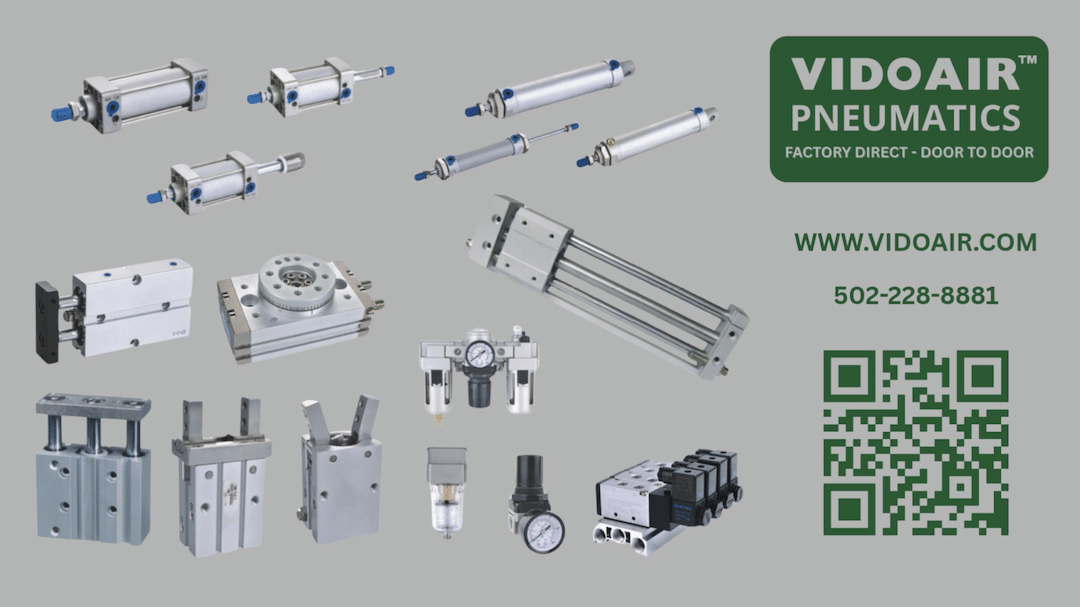
At VidoAir™, we pride ourselves on delivering complete, high-quality pneumatic solutions tailored to your needs. All of our products are engineered for durability, efficiency, and ease of use, ensuring your operations run smoothly. Whether you’re upgrading an existing system or building a new one, VidoAir’s pneumatic components are designed to deliver top performance.

FOLLOW US ON:
© Bright International, LLC | All Rights Reserved