WHAT IS A PNEUMATIC CONTROL SYSTEM?
A cylinder that extends too slowly, a valve that shifts late, or an actuator that repeats inconsistently usually points to one thing – the control side of the air system is doing more than people think. If you are asking what is pneumatic control system, the short answer is this: it is the coordinated set of valves, air preparation devices, tubing, actuators, sensors, and electrical or mechanical control elements that direct compressed air to create controlled motion or force.
That definition matters because in real production environments, pneumatic control is not just about moving air. It is about getting repeatable response, safe operation, and reliable cycle performance under plant conditions that are rarely ideal. For engineers, OEMs, and maintenance teams, understanding the control system behind the actuator is what separates a basic air circuit from a dependable machine function.
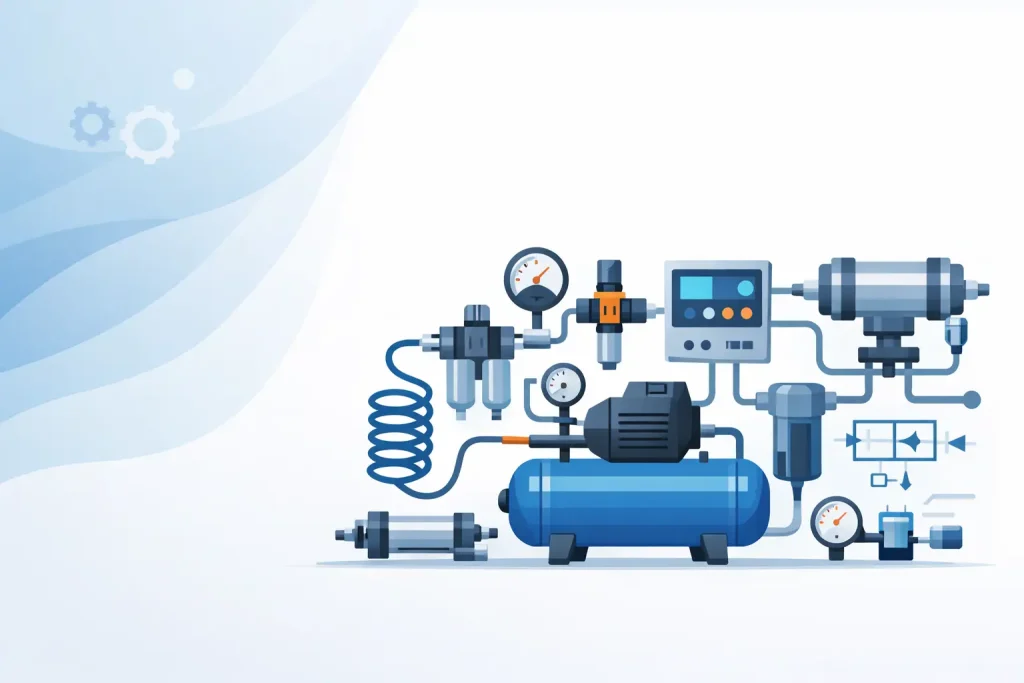
What is pneumatic control system in practical terms?
In practical industrial terms, a pneumatic control system uses compressed air as the working medium and a control method to decide when, where, and how that air is delivered. The system converts stored air energy into mechanical action such as clamping, lifting, indexing, ejecting, gripping, or opening and closing process devices.
The word control is the key part. Compressed air alone does nothing useful until the system regulates pressure, direction, and flow. A properly designed pneumatic control system determines actuator speed, output force, stroke timing, sequence logic, and response to machine conditions. That can be handled through manual valves, mechanically actuated elements, solenoid valves tied to a PLC, or more advanced electro-pneumatic architectures.
This is why two machines can both use air cylinders yet perform very differently. One may be stable and repeatable across thousands of cycles. The other may drift in timing, waste air, and create downtime. The difference is usually in the control design, air quality management, and component matching.
How a pneumatic control system works
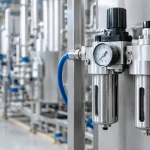
A pneumatic control system starts with compressed air generated upstream by a compressor. Before that air reaches the machine function, it typically passes through air preparation components that clean, regulate, and sometimes lubricate the supply. That conditioned air then moves through control valves and flow devices that route it to the correct actuator or process point.
When a control signal is given, a directional valve shifts. That shift sends air to one side of a cylinder or actuator while exhausting air from the other side. Pressure creates force. Flow influences speed. The actuator moves, and sensors or limit devices may confirm the position so the next sequence can begin.
In a simple manual setup, an operator may trigger the valve directly. In an automated system, the command usually comes from a PLC, relay logic, foot switch, pressure switch, or proximity sensor. In either case, the operating principle stays the same: the system manages compressed air to produce a controlled output.
The biggest advantage here is straightforward power delivery. Pneumatics can cycle quickly, tolerate harsh environments, and remain cost-effective for many linear and gripping tasks. The trade-off is that air is compressible, so precision control is possible but not always as rigid as a fully electric servo system. Whether that matters depends on the application.
Core components of a pneumatic control system
Every pneumatic control system is built around a few essential component groups. The first is air supply and preparation. This includes filters, regulators, and often lubricators or more specialized air prep assemblies. If air quality is unstable, the entire control scheme suffers. Contamination, water, and pressure fluctuation can reduce valve life, change response time, and create inconsistent actuator behavior.
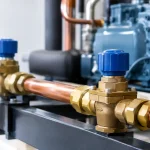
The second group is control valves. Directional control valves decide the path of airflow. Pressure control valves maintain or limit force-related conditions. Flow control valves tune actuator speed. Solenoid valves are common in automated equipment because they let electrical signals command pneumatic motion with fast, repeatable switching.
The third group is the output device. This is usually a pneumatic cylinder, rotary actuator, slide table actuator, gripper, or vacuum component. The actuator is where air energy becomes useful motion.
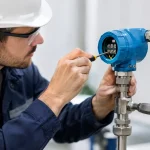
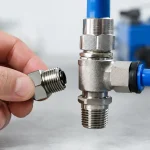
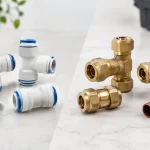
The fourth group is connection hardware and feedback. Tubing, fittings, manifolds, silencers, and sensors all affect performance more than many buyers expect. Poor tubing layout, undersized fittings, or mismatched valve Cv can slow down a system that looks correct on paper. Position sensors and switches add the feedback needed for sequencing and machine interlocks.
In more advanced assemblies, electro-pneumatic integration brings these pieces together with PLCs, I/O, and sensor logic. That is often the most efficient path when a machine requires repeatable sequencing, remote control, or integration into broader automation architecture.
Where pneumatic control systems are used
Pneumatic control systems are common in packaging lines, assembly equipment, material handling, food processing, automotive fixtures, conveying, sorting, refrigeration controls, and general factory automation. They are especially effective where the required motion is repetitive, fast, and force-driven rather than highly interpolated.
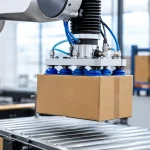
For example, a cylinder can push a part into position, a gripper can pick and release product, or a valve station can control multiple machine motions in sequence. In process settings, pneumatic control may regulate air-operated valves or support on-off fluid handling tasks. In specialty equipment, it can drive soft robotic gripping, indexing slides, and compact clamping functions where electric alternatives may add cost or complexity.
This is also why pneumatic systems remain standard in demanding industrial applications. They are proven, relatively easy to maintain, and well suited for environments where dust, vibration, washdown, or temperature swings would be harder on other motion technologies.
What makes a pneumatic control system perform well
Good performance starts with correct sizing. If the actuator bore is too small, force will be inadequate. If the valve is undersized, speed will suffer. If pressure regulation is unstable, repeatability drops. A pneumatic control system has to be treated as a complete circuit, not as a collection of parts.
Air quality is another major factor. Wet or contaminated air shortens component life and changes system behavior over time. Proper filtration and regulation are not optional if uptime matters.
Control strategy also matters. Some applications only need simple extend-retract motion. Others require timed sequences, interlocks, pressure verification, or safe exhaust behavior during faults. In those cases, electro-pneumatic control with sensors and PLC coordination usually delivers better machine reliability.
Then there is the issue of efficiency. Pneumatic systems are not automatically efficient just because they are common. Leaks, excessive pressure settings, poor valve selection, and unnecessary air consumption can increase operating cost. The best-performing systems are engineered for the actual load and cycle requirement, not just built around available parts.
Pneumatic control vs. hydraulic and electric systems
For industrial buyers, the better question is often not just what is pneumatic control system, but when is it the right choice.
Compared with hydraulics, pneumatics are cleaner, simpler, and generally easier to install for moderate-force applications. Hydraulics deliver much higher force density and better stiffness under load, so they are often the better fit for heavy pressing or large-force motion.
Compared with electric actuation, pneumatics can be more cost-effective for basic motion, especially in high-cycle applications with simple end positions. Electric systems offer stronger control over position, acceleration, and servo-level precision. If the application needs exact motion profiling, pneumatics may not be the ideal solution. If it needs fast, repeatable, end-to-end movement with strong durability and lower hardware complexity, pneumatics can be the smarter choice.
That is where application review matters. The right answer depends on force, speed, precision, environment, duty cycle, maintenance skill level, and available utilities.
Common issues and what they usually mean
When a pneumatic control system underperforms, the root cause is often straightforward but easy to overlook. Slow cycle times may indicate restricted flow, undersized valves, clogged silencers, or pressure loss through tubing. Erratic actuator motion often traces back to contaminated air, inconsistent regulation, internal valve wear, or poor cushioning adjustment.
If valves overheat or fail electrically, the issue may sit on the electrical side rather than the pneumatic side. If an actuator lacks force, check pressure first, then bore size, then load condition. Many problems that appear to be component failures are actually specification or air quality problems.
That is why system-level thinking matters. Replacing one valve without checking pressure stability, filtration, or signal timing can solve nothing.
Why the control side deserves more attention
In many factories, the mechanical hardware gets most of the focus because it is visible. The control side gets attention only after a machine starts missing cycles. That approach is expensive. A well-designed pneumatic control system improves repeatability, protects component life, reduces wasted air, and makes troubleshooting faster when problems do appear.
For manufacturers and integrators sourcing components, this is where product breadth and technical support make a difference. Matching actuators, solenoids, air prep, tubing, fittings, and controls from a technically aligned source can reduce integration friction and shorten time to production.
If you are evaluating a new machine design or replacing aging hardware, treat pneumatic control as an engineered function, not just an air hookup. That shift usually leads to better uptime, cleaner motion, and fewer surprises on the plant floor.
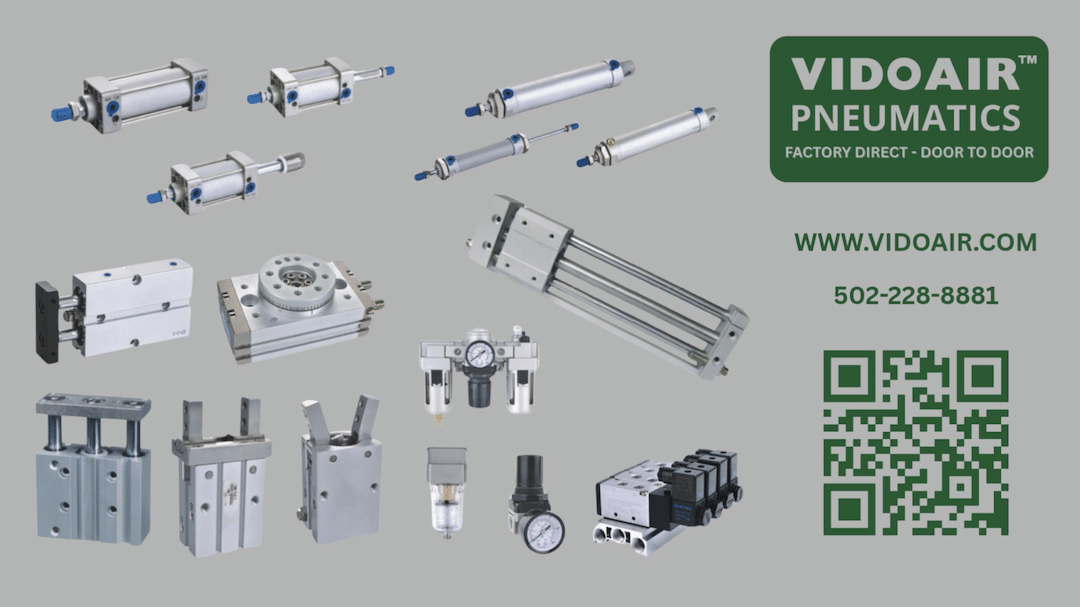
At VidoAir™, we pride ourselves on delivering complete, high-quality pneumatic solutions tailored to your needs. All of our products are engineered for durability, efficiency, and ease of use, ensuring your operations run smoothly. Whether you’re upgrading an existing system or building a new one, VidoAir’s pneumatic components are designed to deliver top performance.