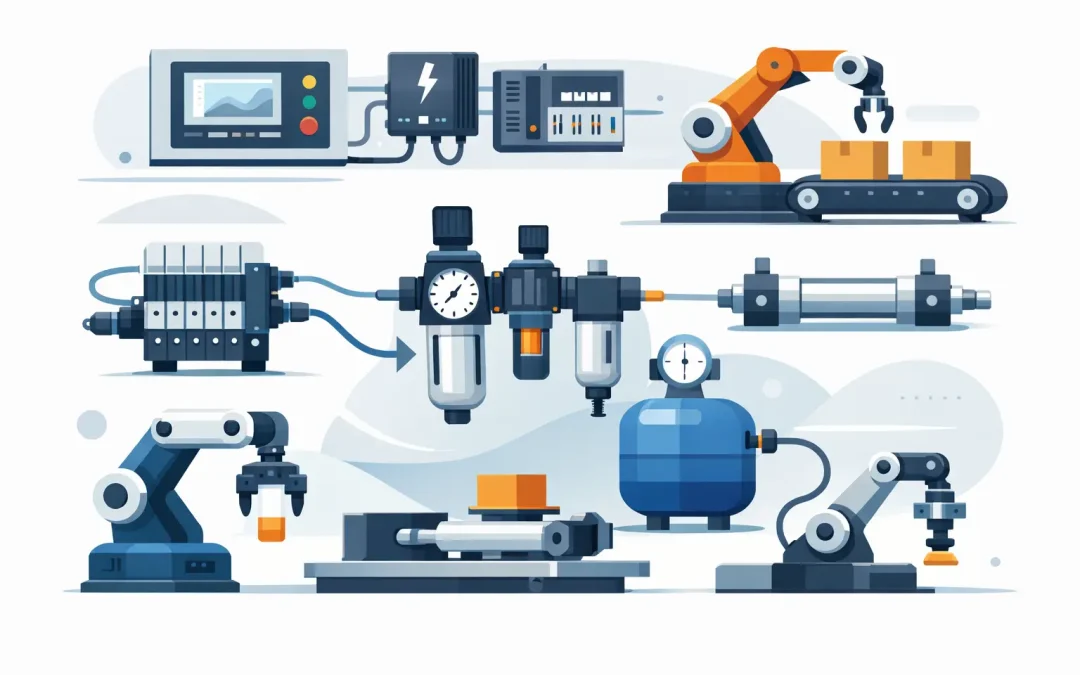
When a machine needs the force of compressed air and the decision-making of electrical control, electro-pneumatics is usually where the design lands. For engineers, integrators, and maintenance teams, reviewing real electro-pneumatic system examples is often the fastest way to evaluate fit, avoid overdesign, and specify components that will hold up in production.
Electro-pneumatic systems combine electrical signals with pneumatic actuation. A PLC, relay, sensor, or switch sends a signal to a solenoid valve, and that valve directs air to a cylinder, gripper, slide, or other actuator. The concept is straightforward. The application details are where performance is won or lost.
What electro-pneumatic systems actually do
In practical terms, these systems translate low-power electrical commands into repeatable mechanical motion. That makes them useful anywhere a machine needs fast linear movement, clamping force, indexing, ejecting, lifting, sorting, or valve actuation without the cost and complexity of full electric servo motion.
The value is not just movement. It is controlled movement. Electrical inputs make sequencing, sensing, and interlocking much easier, while pneumatic power delivers strong force in a compact footprint. That combination is why electro-pneumatics remains standard across packaging, assembly, food processing, transportation equipment, and general factory automation.
8 electro-pneumatic system examples in real equipment
1. Packaging line pusher and stopper stations
A common electro-pneumatic setup on packaging equipment uses photoelectric sensors, a PLC, and solenoid valves to drive compact cylinders that stop, separate, or push cartons into position. One sensor confirms product arrival, the PLC triggers a 5/2 valve, and a cylinder extends to divert or index the package.
This is one of the most common electro-pneumatic system examples because it balances speed, cost, and serviceability. If the application is light-duty and needs only two fixed positions, pneumatics often beats more expensive motion systems. The trade-off is that if the machine needs variable positioning or continuous profile control, electric actuators may be the better fit.
2. Pick-and-place units with pneumatic grippers
In assembly cells and end-of-line automation, a pick-and-place unit may use a slide table actuator for horizontal travel and a pneumatic gripper for part handling. Solenoid valves control the extension, retraction, and grip action, while sensors verify jaw position and part presence.
This arrangement works especially well for repetitive part transfer where cycle time matters more than programmable path complexity. It is also easier to maintain than many all-electric systems. The downside is that grip force and stroke behavior still depend on stable air pressure and proper air preparation, so neglected filtration or lubrication decisions can quickly turn into downtime.
3. Conveyor sorting gates
Sorting gates on conveyors are another strong example. A barcode scanner or vision sensor identifies the product, sends an electrical signal to the controller, and the controller actuates a solenoid valve. Air then drives a rotary actuator or short-stroke cylinder that redirects the product to the correct lane.
The reason this design remains popular is response time. Pneumatic devices can move very quickly, which is critical when products are spaced closely and conveyor speeds are high. Still, timing windows are tight. If valve response, tubing length, or cylinder sizing is off, sort accuracy suffers. In these applications, component matching matters as much as the logic.
4. Machine safety door locking and opening assist
Some guarded machines use electro-pneumatics to assist door movement after the electrical safety circuit confirms a safe condition. A signal from the control system energizes a valve, and a cylinder helps open or hold the guard in position. In other setups, an air cylinder controls a pin or latch as part of the access sequence.
This can reduce operator effort and speed up repeated access cycles. However, safety functions must be engineered carefully. Pneumatics can support machine access, but the full safety architecture has to account for pressure loss, stored energy, and controlled states during faults. This is not an area for generic component substitution.
5. Clamp-and-hold fixtures in assembly stations
Assembly fixtures often use electrically controlled pneumatic cylinders to clamp parts before drilling, pressing, welding, or testing. A part-present sensor confirms the load, the controller energizes the valve, and the clamp cylinder extends with enough force to keep the workpiece stable through the cycle.
Among electro-pneumatic system examples, this one shows the strength of compressed air clearly. Pneumatic clamps deliver high force from compact hardware, and they are easy to sequence with limit switches or magnetic cylinder sensors. The design question is usually not whether pneumatics can clamp the part. It is whether pressure regulation, cushioning, and component durability have been specified well enough for the duty cycle.
6. Ejection systems on molding and machining equipment
Molding cells, machining lines, and automated inspection stations frequently use air cylinders to eject finished parts or scrap. The trigger may come from a timer, a sensor, or a machine-ready output. Once energized, a solenoid valve sends air to a cylinder that pushes the part into a bin, chute, or downstream conveyor.
This setup is simple, fast, and economical, which makes it attractive for OEM equipment. But simplicity can hide recurring issues. If the part shape varies, if contamination is present, or if ejection timing shifts with upstream conditions, a basic cylinder may start missing parts. In those cases, cushion adjustment, guided actuators, or sensor feedback can make the difference between a workable station and a reliable one.
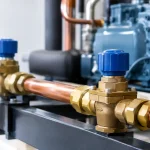
7. Refrigeration and process fluid valve control
Not all electro-pneumatic systems are about cylinders. In some refrigeration and process applications, electrical control signals operate solenoid valves that manage air-assisted or pilot-controlled flow functions tied to broader pneumatic logic. These systems are often integrated into equipment where timing, shutoff reliability, and environmental durability are more important than visible motion.
This is a good reminder that electro-pneumatics also includes air management and controlled media handling, not just end effectors. For buyers, the selection criteria shift here toward valve construction, seal compatibility, temperature range, and response consistency under demanding operating conditions.
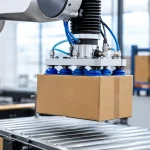
8. Soft robotic gripping for delicate products
Soft robotic grippers use controlled air pressure, often managed by electrically actuated valves, to handle irregular or fragile items. In food processing, packaging, and light industrial automation, the system may include a PLC, pressure regulators, solenoids, vacuum components, and a soft end effector designed to conform to the product.
This is one of the newer electro-pneumatic system examples gaining traction because it offers flexibility without the complexity of custom mechanical fingers for every SKU. It also introduces a different design challenge. Instead of focusing only on motion speed, the engineer has to balance grip security, pressure control, and product protection.
Why these electro-pneumatic system examples keep showing up
The common thread is control with practical force. Electro-pneumatic systems are not always the most precise option, and they are not ideal for every motion profile. But for many industrial tasks, they hit the right balance of cost, speed, compact size, and maintenance familiarity.
They also scale well. A simple stand-alone station might use a switch, valve, and cylinder. A larger machine might integrate multiple manifolds, sensors, FRLs, compact cylinders, slide tables, and PLC logic across several axes of motion. The architecture can stay relatively clean while supporting real production throughput.
What to watch before specifying a system
Application fit starts with the load, stroke, cycle rate, and control requirements. If the job needs only end-to-end movement with repeatable timing, pneumatics is often a strong choice. If it needs intermediate positions, force profiling, or closed-loop path control, that answer can change.
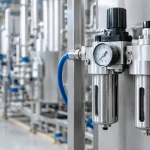
Air quality is another deciding factor that gets underestimated. Poor filtration, water carryover, and unstable pressure shorten valve life, affect actuator performance, and create troubleshooting problems that look electrical at first. Good air prep is not an accessory. It is part of system performance.
Response time also depends on the full circuit, not just the valve. Tubing diameter, run length, flow capacity, regulator selection, and exhaust configuration all affect how quickly an actuator actually moves. On paper, two systems may look identical. In production, one can feel sharp and consistent while the other lags through every cycle.
For buyers and OEM teams, supplier support matters too. Catalog clarity, available configurations, and technical guidance can save time when matching cylinders, solenoids, air prep, fittings, and controls. That is especially true when the application is not a standard catalog build but still needs fast delivery and reliable performance. Brands like VidoAir are positioned around that exact need: direct access to industrial components, application flexibility, and support that helps keep projects moving.
Electro-pneumatics earns its place when the system is sized correctly, protected by good air management, and built around the real operating conditions of the machine. Start with the motion you need, the environment you have, and the uptime you cannot afford to lose. The right design usually becomes obvious from there.



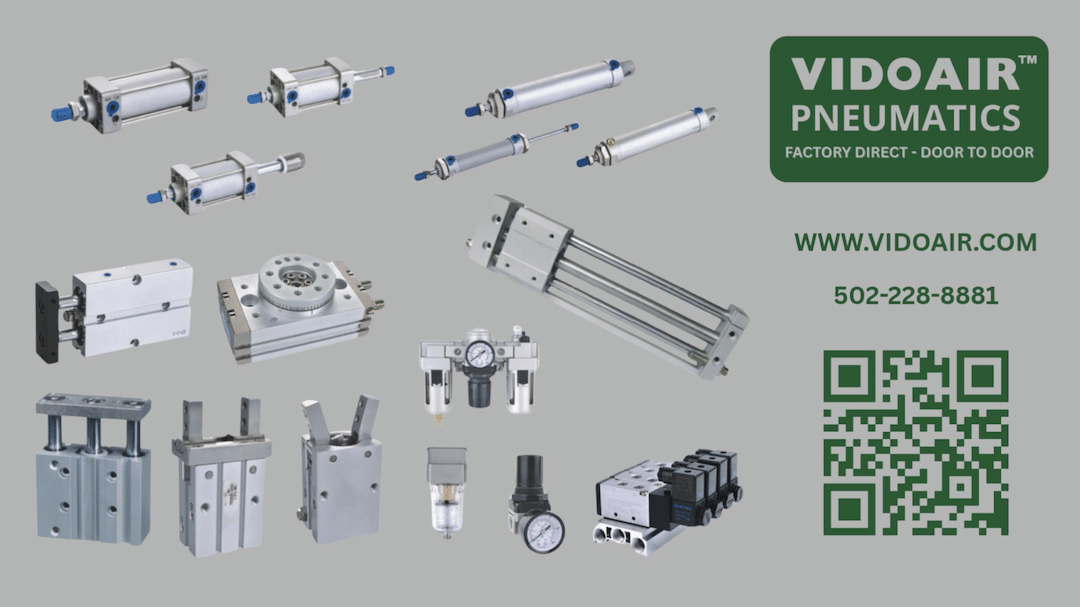
At VidoAir™, we pride ourselves on delivering complete, high-quality pneumatic solutions tailored to your needs. All of our products are engineered for durability, efficiency, and ease of use, ensuring your operations run smoothly. Whether you’re upgrading an existing system or building a new one, VidoAir’s pneumatic components are designed to deliver top performance.