WAREHOUSE AUTOMATION: Unlocking Efficiency, Safety, and Scalable Growth
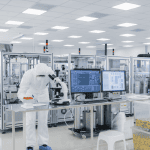
Warehouse automation is no longer a future concept—it’s quickly becoming a competitive necessity. As supply chains grow more complex and customer expectations rise, companies are turning to automation to improve efficiency, reduce costs, and create safer working environments.
Recent industry insights show that automation adoption continues to accelerate globally, with measurable gains in throughput, labor efficiency, and operational accuracy.
For manufacturers and distributors alike, the question is no longer if automation should be implemented—but how to do it effectively.

The Real ROI of Warehouse Automation
One of the biggest misconceptions about automation is that it’s simply about adding robotics or equipment. In reality, the highest-performing operations focus on process first, technology second.
Companies seeing the strongest return on investment typically:
- Map workflows to identify true bottlenecks
- Integrate warehouse management systems (WMS) with automation tools
- Roll out automation in phases
- Design for exceptions—not just ideal scenarios
This approach ensures automation enhances operations instead of complicating them.
Productivity Gains That Change the Game
Automation delivers measurable performance improvements when implemented correctly.
In one real-world example, a major global retailer doubled warehouse output—from 57,000 to 114,000 orders—after deploying automated systems.
Beyond throughput, automation also:
- Reduces travel time for workers
- Speeds up picking and fulfillment
- Improves inventory accuracy
- Enables 24/7 operations
Emerging technologies like AI-driven robotics are pushing efficiency even further, with advanced systems increasing throughput by up to 25% by optimizing robot movement and reducing congestion.
Improving Safety and Workforce Efficiency
Automation doesn’t replace workers—it redefines how they work.
Instead of repetitive, physically demanding tasks, employees shift toward higher-value roles like system oversight, quality control, and exception handling.
The impact on safety is significant:
- Reduced walking distances (from miles per day to under one mile in some cases)
- Fewer repetitive motion injuries
- Lower accident rates in picking operations
This creates a more sustainable workforce while improving retention and morale.
The Role of Pneumatics in Automated Warehousing
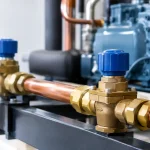
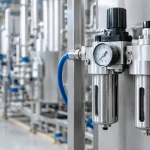
While robotics and software often take center stage, pneumatic systems are a critical enabler of warehouse automation.
Compressed air solutions power:
- Actuators for sorting and diverting systems
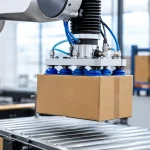
- Pick-and-place mechanisms
- Conveyor controls
- Packaging and palletizing equipment
Reliable pneumatic components ensure:
- Fast, precise motion control
- Low maintenance requirements
- Energy-efficient operation
- Scalability across automation upgrades
At VidoAir, we understand that performance starts at the system level. Optimized compressed air delivery ensures automation equipment runs consistently, efficiently, and without costly downtime.
Best Practices for Implementing Automation
To maximize success, companies should focus on a phased, strategic approach:
1. Start with Data
Understand order profiles, SKU variability, and throughput requirements.
2. Fix Process Gaps First
Automation amplifies inefficiencies if they aren’t addressed early.
3. Integrate Systems
Ensure seamless communication between WMS, controls, and equipment.
4. Plan for Flexibility
Your warehouse will evolve—your automation should too.
Looking Ahead: The Smart Warehouse Era
Automation is rapidly evolving into fully connected, intelligent warehouse ecosystems. With advancements in AI, robotics, and real-time data integration, the next generation of warehouses will be:
- More adaptive
- More scalable
- More resilient to disruption
For companies investing now, the payoff is clear: greater efficiency, safer operations, and long-term competitive advantage.
Conclusion
Warehouse automation isn’t just about speed—it’s about building smarter, more reliable operations from the ground up.
And behind every high-performing automated system is a foundation of dependable components—including pneumatic solutions that keep everything moving.
Research from MHI (Material Handling Industry Association) shows that as automation expands, system reliability becomes critical—placing greater importance on dependable pneumatic solutions that power and support material handling equipment.
If you’re exploring automation or looking to optimize your current systems, VidoAir can help ensure your infrastructure is built for performance.


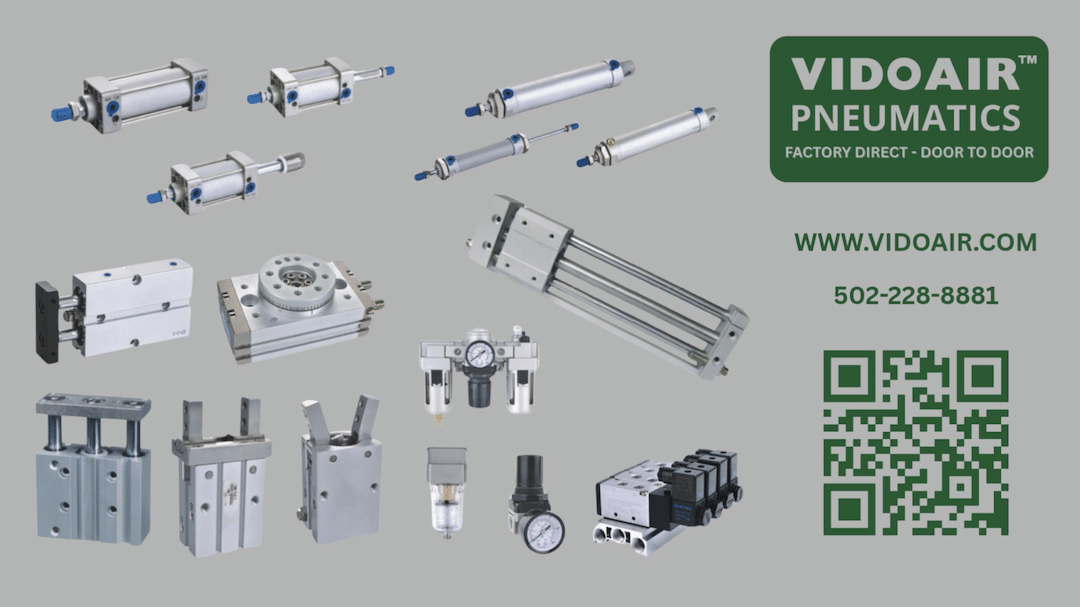
At VidoAir™, we pride ourselves on delivering complete, high-quality pneumatic solutions tailored to your needs. All of our products are engineered for durability, efficiency, and ease of use, ensuring your operations run smoothly. Whether you’re upgrading an existing system or building a new one, VidoAir’s pneumatic components are designed to deliver top performance.