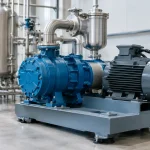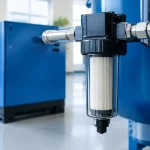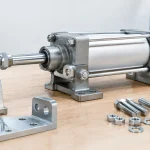

A pneumatic system can hold pressure and still be unfit for production. Water vapor condenses downstream as temperature changes, carrying corrosion, washout, sticking valves, damaged seals, and inconsistent process results into places where compressed air is expected to be clean and predictable. Effective air dryer selection begins with the consequences of moisture at the point of use, not with a dryer type on a line card.
For a packaging machine, a little water may mean sluggish cylinders and premature valve failures. For paint, instrumentation, food packaging, electronics, or outdoor equipment, the same moisture load can create rejected product, frozen lines, or a production-stopping reliability issue. The correct dryer is therefore a system decision: it must achieve the required dew point at the real flow, pressure, and ambient conditions of the installation.
Start Air Dryer Selection With the Required Dew Point
The most useful specification is pressure dew point, not simply a claim that the dryer produces “dry air.” Pressure dew point identifies the temperature at which water will begin to condense at system pressure. The lower the pressure dew point, the drier the compressed air and the greater the protection against downstream temperature drops.
A refrigerated dryer is often the efficient choice for general factory air. It typically delivers a pressure dew point around 35°F to 39°F under rated conditions, which is suitable for many indoor pneumatic tools, actuators, machines, and air preparation systems. It removes liquid water effectively without the energy demand associated with regeneration.
That performance has a boundary. If compressed air lines, equipment, or end uses are exposed to temperatures below freezing, a refrigerated dryer can allow moisture to condense and freeze. In those applications, regenerative desiccant drying is normally the better fit. Heatless, heated, and blower-purge desiccant dryers can reach substantially lower pressure dew points, often down to -40°F and, where required, -100°F. The trade-off is higher initial cost, purge-air loss or electrical demand, and more maintenance attention.
Do not specify a -40°F dew point merely because it appears safer. Drying compressed air beyond the application requirement consumes capital and operating energy. Conversely, specifying only for average indoor conditions can be expensive when a line extension runs outdoors or through an unheated loading area. Define the coldest downstream condition, then build in a practical margin.
Size for Actual Conditions, Not Compressor Nameplate Flow
Dryer capacity is frequently undersized because the selection starts with compressor horsepower or nominal CFM. Those figures are useful references, but they do not establish the moisture load entering the dryer. Capacity changes with inlet temperature, operating pressure, ambient temperature, and the compressor’s actual delivered flow.
Hotter inlet air contains more water vapor. A dryer receiving 120°F compressed air after a poorly performing aftercooler has a different load than the same dryer receiving 90°F air. Higher ambient temperatures also reduce the ability of a refrigerated dryer to reject heat. Lower operating pressure can increase the volumetric flow through the dryer and may require a larger unit than a catalog rating suggests.
Start with the maximum compressed-air demand the system will see, including simultaneous machine operation, future additions, and compressor control behavior. Then verify these conditions:
- maximum inlet air temperature at the dryer, not the compressor discharge estimate
- minimum operating pressure through the dryer
- highest expected ambient temperature around the installation
- required pressure dew point at the point of use
- acceptable pressure drop at peak flow
Apply the manufacturer’s correction factors to the published dryer rating. If site conditions vary widely by season or shift, size for the credible worst case rather than the annual average. A unit that performs well during a mild commissioning period may struggle during summer production when compressor rooms are hottest and air demand is highest.
A buffer for future capacity is sensible, but oversized equipment is not automatically better. An oversized refrigerated dryer can cycle more frequently and may not provide the operating efficiency expected. With desiccant dryers, oversizing can raise purchase cost and make regeneration strategies less economical. Select capacity with a defined expansion plan, not a vague desire for the biggest available model.
Choose the Dryer Architecture Around the Application
Refrigerated dryers are well suited to central plant systems where the air stays above freezing and the priority is dependable moisture removal with low operating complexity. Cycling refrigerated designs can reduce energy use where demand swings significantly. Non-cycling designs are often preferred where loads are steady and closely controlled outlet conditions matter.
Desiccant dryers are built for low-dew-point service. Heatless models are mechanically straightforward and effective, but they consume a portion of dry compressed air during regeneration. That purge demand must be included in compressor capacity calculations. Heated and blower-purge models reduce purge-air consumption, often making more sense for larger flows or continuous operations, though they add heaters, controls, and service requirements.
Membrane dryers can serve localized, lower-flow applications where compact size, no electrical power, and low maintenance are priorities. They are not a universal replacement for a central dryer. Their performance and air consumption must be evaluated at the exact application flow and inlet condition.
For critical production areas, consider whether one central dryer creates an unnecessary single point of failure. A central refrigerated dryer combined with point-of-use desiccant drying can be more efficient than drying all plant air to an ultra-low dew point. This approach protects sensitive instruments, robotics, coating equipment, or specialty processes without imposing high regeneration costs on every pneumatic device in the facility.
Filtration Is Part of Dryer Performance
A dryer is not a substitute for correct filtration. Oil aerosols, particulate, and liquid water can reduce dryer performance, contaminate desiccant, foul drains, and reach downstream equipment. The filter train must match both the compressor type and the air-quality requirement.
A typical system uses a bulk liquid separator and particulate filter upstream to remove water and debris. Where lubricated compressors are used or low oil carryover is required, a coalescing filter is often installed before the dryer or at the point of use, based on the equipment design and contamination risk. Desiccant dryers particularly benefit from high-quality upstream coalescing filtration because oil can permanently degrade desiccant media.
Downstream filtration is equally application-specific. A particulate afterfilter protects the air stream from desiccant dust. Sensitive processes may need final filters at the machine, where the required air quality is known. Do not assume an upstream filter protects against corrosion debris generated by old distribution piping after the dryer.
Pressure drop deserves the same attention as filtration efficiency. Every filter, dryer, regulator, fitting, and undersized pipe section consumes pressure. That lost pressure can force a compressor setpoint increase, raising energy cost across the plant. Monitor differential pressure and replace filter elements based on condition and service guidance, not only calendar intervals.
Design the Installation to Keep Dry Air Dry
Even a properly selected dryer cannot correct a poor distribution layout. Install aftercoolers, moisture separators, and automatic drains ahead of the dryer so the dryer processes vapor rather than unnecessary bulk liquid. Confirm that drains discharge reliably. A failed zero-loss drain or a clogged condensate line can overload the treatment train quickly.
Place the dryer where it receives manageable ambient temperatures, has service clearance, and can be inspected without shutting down access to other equipment. Avoid bypass arrangements that can accidentally feed untreated air into critical production lines. If a bypass is necessary for maintenance continuity, label it clearly and define the operating procedure.
Distribution piping should slope toward drain points, with drops taken from the top of main headers where possible. This basic detail prevents accumulated condensate from being carried directly into branch lines. Insulate or protect runs that pass through cold zones, especially when a refrigerated dryer is used.
Verify Performance After Startup
Commissioning should establish a baseline, not merely confirm that air is flowing. Measure inlet and outlet pressure, dryer differential pressure, ambient temperature, drain operation, and pressure dew point under meaningful load. For desiccant equipment, verify regeneration timing, purge flow, heater function where applicable, and switching-valve operation.
A dew point monitor is justified when moisture can stop production, compromise quality, or create a safety risk. Trending makes it easier to distinguish a genuine dryer problem from an overloaded compressor room, failed drain, contaminated desiccant, or an unexpected flow increase. Maintenance teams can then act before water reaches valves, actuators, and process equipment.
VidoAir supports factory-direct air preparation solutions for standard systems and configured industrial requirements. The strongest selection process is still application-led: define the real air condition, choose the dew point the process needs, and verify performance at peak demand. That discipline turns air treatment from a recurring maintenance complaint into dependable production infrastructure.