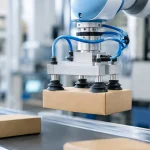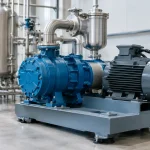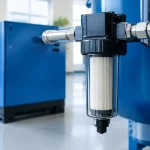
A vacuum pump that reaches its catalog vacuum level can still underperform on the production floor. If evacuation takes too long, pick-and-place parts drop, filters clog early, or motors run hot, the issue is rarely captured by one pressure reading. A useful vacuum pump performance review measures the pump in the context of the complete system: the load, plumbing, contamination level, duty cycle, and control strategy that determine usable vacuum at the point of work.
For OEMs, integrators, and maintenance teams, this is a practical exercise in protecting cycle time and uptime. The goal is not to select the pump with the highest published specification. It is to verify that the selected technology, capacity, and installation can sustain the required vacuum with predictable energy consumption and service intervals.
What a Vacuum Pump Performance Review Should Measure
A performance review should begin with the process requirement, not the pump nameplate. Define the minimum vacuum level at the end effector, fixture, chamber, or material-handling device. Then establish how quickly that level must be achieved and how long it must be maintained under normal operating conditions.
The most useful review tracks four connected measures: vacuum level, evacuation time, flow capacity, and power draw. Ultimate vacuum indicates the lowest pressure a pump can reach under controlled conditions, but it does not describe how rapidly the pump removes air from a leaking fixture or porous workpiece. Flow capacity does. A pump with excellent ultimate vacuum may still be the wrong choice when a high-flow demand appears every few seconds.
Measure vacuum at the application, not only at the pump inlet. A small line, restrictive fitting, undersized filter, or long run of tubing can create pressure loss that is invisible when the gauge sits beside the pump. For high-speed automation, logging vacuum through an entire machine cycle is more revealing than recording a single stabilized value.
Key operating data to capture
Record inlet vacuum, vacuum at the point of use, evacuation time, ambient temperature, motor current, and cycle frequency. If the system has a vacuum switch or analog sensor, compare actual values against the control setpoints. A switch that responds too slowly or is set too close to the process minimum can make a healthy pump look unreliable.
Also document the workpiece condition. Corrugated material, textured surfaces, castings, bags, and irregular molded parts all introduce leakage. Testing a gripper on a sealed test plate may prove pump capability, but it does not validate performance on production material.
Separate Pump Capacity From System Losses
When vacuum performance declines, replacing the pump immediately is an expensive shortcut. First isolate the pump from the system and run a controlled no-load test. If it reaches its expected vacuum level and current draw, the restriction or leak is likely downstream. If it fails the isolated test, inspect the pump, inlet filter, exhaust path, and motor condition before returning it to service.
Leaks are often the largest hidden capacity drain. A system can maintain acceptable vacuum while the pump runs continuously, consuming energy and accelerating wear. Common sources include cracked tubing, loose push-to-connect fittings, worn cup lips, damaged seals, and open unused ports. On central vacuum systems, one poorly sealed station can reduce available capacity for every other station on the manifold.
Restrictions create a different signature. The pump may achieve adequate vacuum eventually, yet the evacuation time increases enough to affect cycle time. Clogged inlet filters, undersized vacuum generators, long narrow tubing, and restrictive check valves are frequent causes. Look for a large pressure difference between the pump inlet and the application during demand. That difference points to a flow-path problem rather than a low-capacity pump.
Match the Test to the Pump Technology
A credible vacuum pump performance review accounts for the technology in service. Dry rotary vane pumps, oil-lubricated rotary vane pumps, diaphragm pumps, liquid ring pumps, and compressed-air vacuum generators do not respond to load, contamination, and duty cycle in the same way.
Dry rotary vane pumps are common in automated handling because they deliver practical vacuum with straightforward maintenance. Their vanes and filters are wear items, so a gradual increase in evacuation time can signal a service requirement before a complete failure occurs. Oil-lubricated pumps can reach deeper vacuum levels and support demanding processes, but oil condition, exhaust filtration, and process vapor management directly affect reliability.
Diaphragm pumps suit applications that require oil-free operation or chemical compatibility, though their flow and ultimate vacuum limits must be evaluated against process demand. Liquid ring designs tolerate wet or dirty streams well, but require attention to seal-fluid condition and water usage. Venturi vacuum generators eliminate electric motor maintenance at the point of use and can respond quickly, but their compressed-air consumption must be included in the energy calculation.
The right technology depends on the process. A packaging line handling porous cartons needs a different performance profile than a refrigeration evacuation station or a fixture holding machined metal parts. Selecting on maximum vacuum alone creates avoidable operating cost and unstable performance.
Review Energy Use at the Machine Level
Vacuum cost is frequently underestimated because it is spread across utility systems. Electric pumps draw visible motor power, while pneumatic generators consume compressed air that has already required substantial energy to produce. For a fair comparison, calculate energy per completed cycle or per part handled, not only pump horsepower or air consumption listed in a catalog.
Continuous operation deserves special attention. If a pump runs at full output while the machine is idle, vacuum control may be the larger opportunity than pump replacement. Vacuum reservoirs, check valves, vacuum switches, variable-speed controls, and zone isolation can reduce unnecessary run time. These components must be sized correctly, however. A reservoir that is too small provides little buffering, while one that is too large can lengthen recovery after a leak or fixture change.
For multi-station equipment, consider decentralized generation when only a few stations cycle at a time. A point-of-use generator can limit losses through long lines and simplify zoning. Centralized electric vacuum may be more efficient where demand is steady, capacity is shared, and maintenance access is a priority. Neither architecture wins in every plant.
Inspect the Components That Protect the Pump
A pump review is incomplete without examining the components around it. Inlet filters protect internal surfaces but become restrictions as they load. Filter condition should be checked against pressure drop and evacuation time, not replaced only when visibly dirty. For dusty applications such as woodworking, corrugated handling, powders, or machining, staged filtration may be justified.
Moisture and process debris require equal attention. Vacuum lines can pull in coolant mist, oil, fines, and water when fixtures are poorly designed or parts are not adequately drained. Install suitable traps, separators, and filters before the pump. This is less costly than rebuilding a pump damaged by contamination.
Check valves are valuable for preserving vacuum during brief supply interruptions or isolating zones, but they can stick, leak internally, or restrict flow. Test them under actual flow conditions. Vacuum cups and grippers should also be reviewed as consumable production components. A cup that looks intact may have hardened enough to lose conformity on a textured part.
Turn Results Into an Actionable Baseline
The best review produces a baseline that maintenance and engineering can use after the line changes. Record the acceptable vacuum range, maximum evacuation time, normal current draw, filter replacement interval, and leak-rate limit for each critical machine. Pair those values with the exact product configuration, including tubing diameter, fitting style, filtration, valves, and control settings.
This baseline makes troubleshooting faster. A technician who sees evacuation time increase from 0.4 to 0.8 seconds has a clear early-warning signal, even if the system still reaches its final vacuum setpoint. That creates time to replace a filter, repair a leak, or service the pump before quality losses or unplanned downtime occur.
For new equipment, specify margin deliberately. Capacity margin should cover expected leakage, material variation, temperature effects, and reasonable component aging. Excessive oversizing is not a safety factor if it drives unnecessary energy use, noise, and maintenance. Precision engineering means selecting enough capacity for the real application, then validating it with production data.
A well-documented vacuum system gives engineers something more valuable than a passing test: a repeatable operating standard. When pump performance, flow-path condition, and control response are evaluated together, the next corrective action becomes clear – and production keeps moving.