A pneumatic cylinder that sticks halfway through a production cycle rarely fails because of the cylinder alone. Contamination has often been moving through the system for weeks: compressor carryover, condensed water, pipe scale, fitting debris, or fine particles pulled in at the intake. Effective air filtration stops that contamination before it reaches the valves, actuators, sensors, and precision controls that keep equipment moving.
For maintenance teams, the practical question is not whether compressed air needs treatment. It is whether the installed filter train matches the application, flow demand, and actual condition of the plant air supply. An underspecified filter can create repeat failures. An oversized or poorly maintained filter can create unnecessary pressure loss. The right approach protects equipment without restricting the air supply that production depends on.
Why Air Filtration Fails in Real Plants
Compressed air begins as atmospheric air, carrying water vapor and airborne particulates into the compressor. The compression process concentrates those contaminants. As air cools in the receiver, piping, and drops, water condenses. Lubricated compressors may also introduce oil aerosols and vapor. Meanwhile, older distribution systems contribute rust, scale, thread sealant, and internal hose debris.
A common failure is treating filtration as a single-component purchase. A general-purpose particulate filter may catch solid debris and bulk liquid, but it will not reliably remove the fine oil aerosol that causes valve deposits, swells seals, and contaminates sensitive processes. Conversely, installing a high-efficiency coalescing element at the point of entry without upstream water removal can load the element quickly and create a pressure-drop problem.
The result appears elsewhere in the system: slow actuator response, solenoid valves that fail to shift, sticky cylinder seals, inconsistent vacuum generation, or instruments that drift. These issues are frequently diagnosed as component failures even when the root cause is poor air quality.
Build the Filter Train Around the Contaminant Load
A well-engineered air preparation strategy separates contaminants in stages. The order matters because every stage protects the next one.
Start With Bulk Water and Particulate Removal
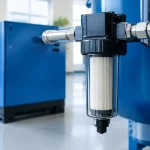
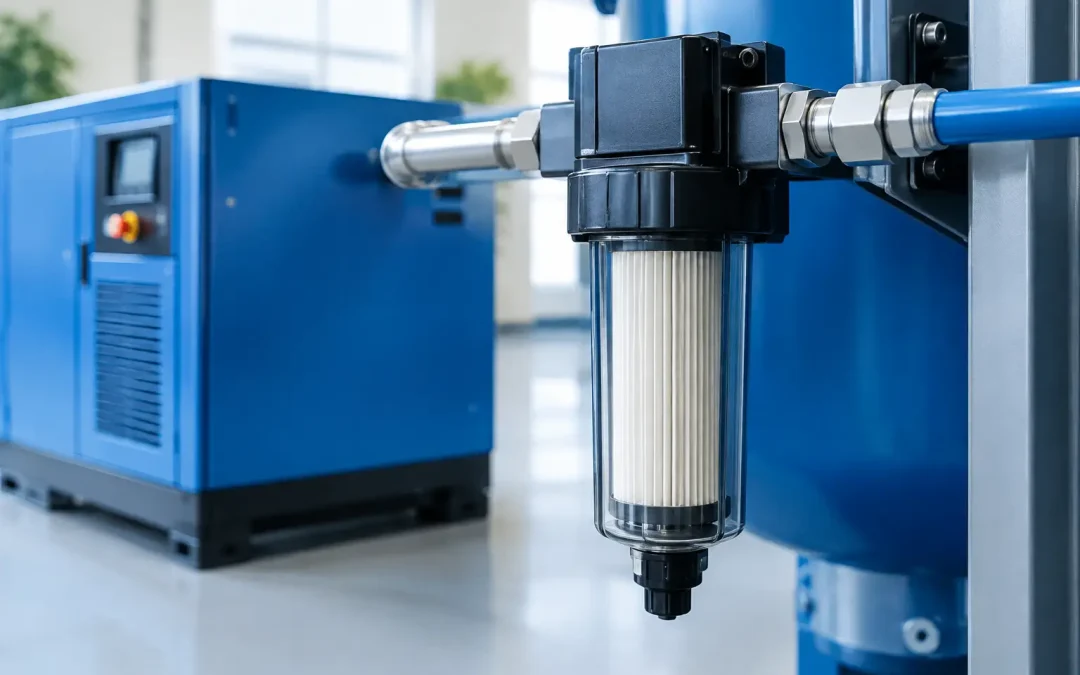
The first stage is generally a particulate and water-separation filter installed downstream of a receiver, aftercooler, or refrigerated dryer as appropriate. Its job is to remove pipe debris, compressor-generated particles, and entrained liquid water. A filter with an automatic drain is often the better choice where condensate volume is significant or where manual drain routines are inconsistent.
Filter bowls should be selected for the environment as well as the media. Standard bowls can be suitable for many indoor industrial installations, while metal bowls or protective guards are a stronger fit for impact-prone locations, washdown exposure, elevated temperatures, or applications with chemical compatibility concerns. For food, pharmaceutical, corrosive, or demanding process environments, stainless steel air preparation devices may offer the durability and material performance the installation requires.
Use Coalescing Filtration for Oil Aerosol Control
Coalescing filters target very small liquid droplets and fine aerosols that pass through standard particulate elements. They are essential when lubricated compressor carryover could affect sensitive valves, paint systems, instrumentation, packaging equipment, or clean manufacturing processes.
Coalescing elements work by capturing fine droplets that merge into larger drops and drain from the element. They are highly effective, but they need relatively clean upstream air. If a coalescing filter is asked to remove heavy rust, standing water, and oil aerosol at the same time, service intervals shorten sharply and differential pressure rises faster.
A practical point for designers: filter ratings are not interchangeable. A nominal micron rating does not describe the same capture efficiency as an absolute rating, and neither rating alone communicates oil aerosol performance. Review the stated efficiency, residual oil specification, maximum flow at operating pressure, and allowable pressure drop before selecting an element.
Add Activated Carbon Only Where Vapor Matters
Activated carbon filtration is used when oil vapor, odor, or trace hydrocarbons are unacceptable. It is often specified downstream of a coalescing stage because liquid oil can quickly saturate carbon media. This final polishing stage can be appropriate for certain instrumentation, specialty manufacturing, clean air blow-off, and process applications.
It is not automatically the best answer for every pneumatic machine. Carbon filters add cost and require scheduled replacement. If the application only needs clean, dry air for standard cylinders and directional valves, a correctly sized particulate and coalescing arrangement may deliver the required protection more efficiently.
Pressure Drop Is a Production Problem
Filters protect pneumatic hardware, but they also introduce resistance. As elements collect contamination, differential pressure increases. That pressure loss is not merely a utility concern. It changes machine performance.
A cylinder that was sized with a narrow force margin can lose usable output force when inlet pressure falls. Grippers may close inconsistently. Blow-off systems become weaker. Vacuum generators lose performance. Operators may respond by increasing regulator settings or compressor discharge pressure, masking the restriction while increasing energy consumption.
Measure pressure at the point of use, not only at the compressor room. A system can show acceptable main-line pressure while a remote machine experiences substantial losses through undersized piping, restrictive fittings, clogged filters, and improperly selected regulators. Differential-pressure indicators provide a direct view of element condition and reduce reliance on calendar-only maintenance.
Replacement intervals should be based on pressure drop, contamination conditions, and process risk. A clean indoor assembly operation may have predictable element life. A facility with aging pipe, high humidity, or intermittent compressor oil carryover may require much more frequent inspection. If filters load unusually fast, replacing elements without investigating the upstream cause only repeats the expense.
Where to Place Air Filtration in a Pneumatic System
Central treatment and point-of-use treatment serve different purposes. The main treatment station should control the broad contamination load entering the distribution network. Point-of-use filter-regulator assemblies then provide localized protection and stable pressure for individual machines or zones.
For a typical industrial system, locate primary filtration where condensate can be drained effectively and where technicians can inspect it without interrupting production. Install additional fine filtration close to sensitive equipment. This limits the length of downstream pipe that can shed contaminants after the air has been cleaned.
Placement also depends on the device being protected. High-cycle solenoid valves and compact actuators benefit from clean, regulated air at the machine. Vacuum components often need filtration selected for their specific flow and particle exposure. Pneumatic controls serving outdoor equipment, transportation systems, or heavy machinery may need protected bowls, corrosion-resistant construction, and drain arrangements that perform reliably in harsh conditions.
Do not overlook flow direction, service clearance, and bowl access. A filter that cannot be inspected or drained will not receive the maintenance it needs. Likewise, a filter sized only by port connection can become a bottleneck. Select for actual standard cubic feet per minute demand, peak flow, operating pressure, and acceptable pressure-drop range.
Troubleshooting Signs That Point to Contamination
When pneumatic performance becomes erratic, inspect the air supply before replacing multiple downstream components. Water in valve exhaust, oily residue around cylinder ports, darkened filter elements, and visible debris in bowls are direct warning signs. Less obvious symptoms include intermittent valve response, shortened seal life, pressure instability after high-flow events, and repeated regulator issues.
Start by checking drain operation. A stuck manual drain or failed automatic drain can allow collected liquid to re-enter the air stream. Next, compare pressure upstream and downstream of each filtration stage under operating flow. Then inspect element condition and verify that the filter type matches the contaminant. A particulate element cannot solve oil-vapor contamination, and a carbon stage cannot compensate for poor water separation.
Also examine the compressor and distribution network. Excessive oil downstream may indicate compressor carryover beyond normal limits, while recurring rust particles can point to deteriorating pipe. Dryers, separators, drains, and filters work as a system. Weak performance in one area increases the load on every component downstream.
Specify for the Application, Not the Catalog Page
Industrial buyers need filtration that fits the machine rather than a generic assembly selected by connection size alone. Consider pressure range, flow capacity, filtration efficiency, drain style, bowl material, chemical exposure, ambient conditions, and service access. For OEM equipment, standardizing a properly engineered air preparation package can reduce field failures and simplify replacement parts for customers.
VidoAir supports configured pneumatic air preparation solutions for applications where standard catalog selections need to meet specific pressure, material, or performance requirements. That matters when uptime depends on consistent air quality across multiple machines, operating environments, or production sites.
Clean air is not an abstract utility target. It is a controllable input to every pneumatic motion cycle. Treat filtration as part of the machine design, monitor the pressure it costs, and investigate recurring contamination at its source. The payoff is quieter maintenance schedules, more stable equipment behavior, and fewer production interruptions traced back to the air line.