A rigid jaw gripper works well right up to the moment your line has to pick a bruisable tomato, a glossy cosmetic cap, and a bagged medical kit in the same shift. That is where soft robotic gripper applications start making financial sense. For manufacturers dealing with product variation, delicate surfaces, sanitation requirements, or frequent changeovers, soft gripping is not a novelty feature. It is a practical way to reduce damage, simplify end-of-arm tooling, and keep automation viable where hard tooling becomes too narrow or too expensive.
The real value is not that a soft gripper can pick up something fragile. The value is that it can often do it repeatedly, with fewer custom jaws, less tuning, and better tolerance for part inconsistency. That matters on lines where throughput and scrap both show up quickly on the monthly report.
Where soft robotic gripper applications deliver the most value
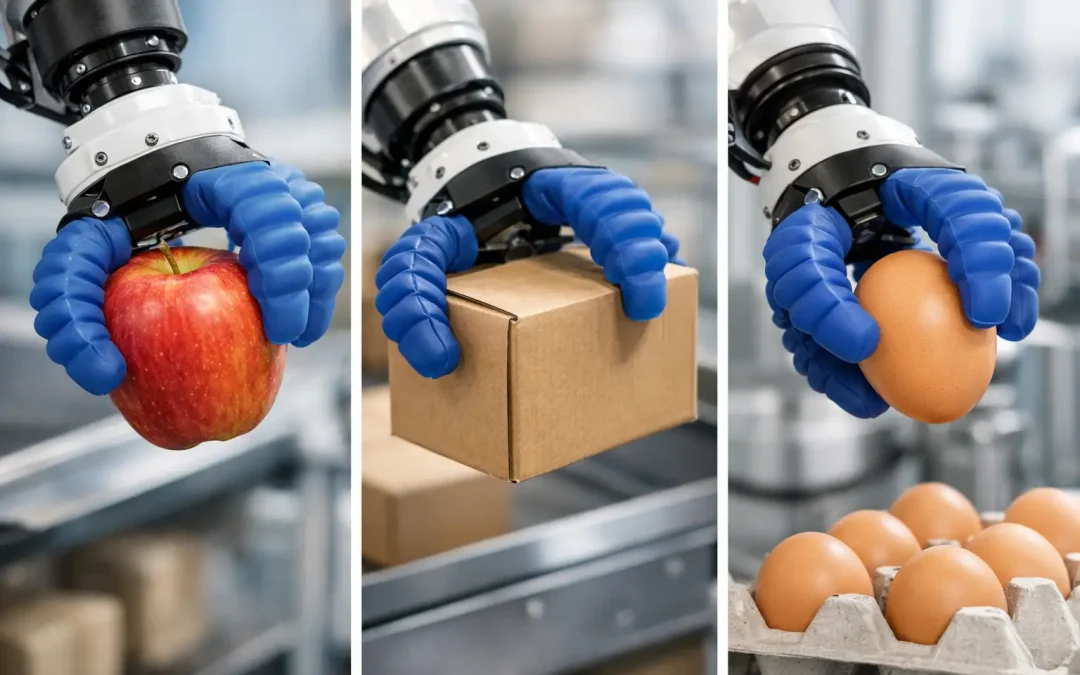
Soft grippers perform best when the part is irregular, delicate, slick, compressible, or inconsistent from one cycle to the next. In those cases, compliance is an advantage, not a compromise. The gripper conforms to the product instead of forcing the product to conform to the tooling.
Food handling is one of the clearest examples. Produce, baked goods, meat portions, and packaged convenience foods often vary in shape, firmness, and surface condition. A rigid gripper can work, but it usually needs tighter part presentation and more careful force control. A soft gripper gives the cell more margin. It can handle apples, peppers, pastries, or flow-wrapped products with lower risk of crushing, surface marking, or dropped picks.
Medical and pharmaceutical packaging is another strong fit. Thin pouches, blister packs, vials with label-sensitive surfaces, and kitted products all benefit from lower contact stress. In these environments, repeatability still matters, but so does gentle handling. A soft gripper helps when product integrity is as important as cycle count.
Consumer goods packaging also benefits, especially in high-mix operations. Think of deodorant containers, cosmetic bottles, flexible refill packs, molded plastic components, or seasonal packaging formats. A soft gripper can absorb variation that would otherwise drive multiple end-effector swaps. That reduces downtime during product transitions and makes the automation cell easier to justify across more SKUs.
Electronics assembly and handling can be a good match as well, although this depends heavily on tolerances and orientation requirements. A soft gripper is useful for moving housings, light subassemblies, and surface-finished parts that should not be scratched. For precision insertion or tight mechanical alignment, it may need to be paired with a more rigid downstream locating fixture.
The best use cases are usually messy, not perfect
The strongest case for soft robotic gripper applications is often not found in highly controlled, perfectly repeatable conditions. It shows up in operations where the incoming part is a little different every time. Size shifts. Surface moisture changes. Orientation is close, but not exact. Packaging film wrinkles. The product itself compresses under load.
In that kind of environment, engineers are typically choosing between adding more fixturing, adding vision complexity, slowing the cycle, or accepting a certain amount of scrap. A soft gripper can reduce the burden on the rest of the cell. That does not remove the need for good system design, but it can make the process more forgiving.
This is especially useful in secondary packaging, pick-and-place, bin picking of lightly structured products, and machine tending for non-uniform components. If the part can tolerate slight deformation and the process does not require hard datum control during pickup, compliance becomes a performance advantage.
When soft grippers beat custom hard tooling
Custom hard tooling still has a place. If the part geometry is fixed, the cycle rate is very high, and orientation has to be exact at pickup, rigid tooling may remain the better choice. It often offers higher grip force, more direct motion transfer, and tighter positional control.
But hard tooling gets expensive when variation enters the picture. If one cell must run six product sizes, three package materials, and seasonal design changes, every tooling revision adds cost and delay. Soft grippers can reduce those changeover demands because one end effector may handle a wider operating window.
That flexibility is not unlimited. The trade-off is that soft grippers may have lower payload, lower lateral stiffness, and less precise object constraint during fast moves. Engineers need to evaluate acceleration, part mass, center of gravity, and downstream placement tolerance. A gripper that handles a part well at moderate speed may become unreliable if the robot path is too aggressive.
Soft robotic gripper applications in food and packaging lines
In food production, the line between successful handling and product waste is often small. Surface texture changes with temperature. Moisture affects grip consistency. Product dimensions drift naturally. A soft gripper helps by distributing contact force over a larger area and adapting to those shifts.
This matters in primary handling of baked goods, produce sorting, and packaged product transfer. It also matters in end-of-line case packing, where different carton counts, film finishes, and product weights can complicate traditional tooling. Instead of changing jaw geometry for every product revision, the gripper can adapt within a workable range.
For OEMs and integrators building packaging equipment, this can shorten development time. There is less pressure to create highly specific part nests just to achieve a stable pick. That can simplify machine design and support a broader machine sales profile.
Integration questions engineers should ask early
Soft gripping succeeds or fails at the application level, not at the demo level. Before specifying a gripper, engineers should look closely at part variability, required throughput, sanitation or washdown conditions, compressed air quality, and how much positional control is needed after pickup.
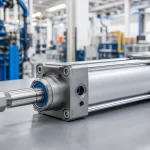
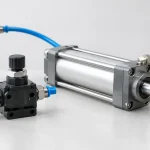
The pneumatic side deserves more attention than it sometimes gets. Grip performance depends on consistent pressure delivery, valve response, tubing layout, and overall air preparation. If the cell has pressure fluctuation, contamination, or slow actuation caused by poor component selection, the gripper may be blamed for a system problem it did not create.
Material compatibility is another early decision point. Some products need food-safe or cleanable contact materials. Others may involve oils, powders, sharp edges, or elevated temperatures that affect gripper life. In a demanding plant, durability is not a side issue. It directly affects maintenance intervals and cost per cycle.
Controls strategy also matters. A basic on-off pick may be enough in one application, while another may need proportional control or staged gripping to avoid deforming the product. The right electro-pneumatic setup can expand the operating window considerably.
Common mistakes in soft gripper selection
One mistake is treating all delicate handling jobs as identical. A soft bakery item, a flexible plastic pouch, and a molded medical tray may all look like good candidates, but each behaves differently under contact and motion. The gripper profile, finger geometry, and pressure settings need to match the product.
Another mistake is ignoring the rest of the motion system. A compliant gripper attached to a robot with abrupt acceleration can still drop or damage parts. Good handling comes from the combination of end effector design, pressure control, robot path tuning, and part presentation.
A third mistake is assuming soft means low performance. In many applications, a properly specified soft gripper supports high-output automation. The limit is usually not the concept itself. It is whether the system was engineered around actual production conditions rather than showroom conditions.
Why this matters for high-mix manufacturing
High-mix production is where soft grippers often prove their worth fastest. Plants running shorter batches and more product variation need tooling that does not force a lengthy reset every time the schedule changes. A gripper that can handle a range of part shapes and surfaces helps protect uptime.
That is why soft robotic gripper applications are showing up more often in contract packaging, food automation, medical device packaging, and flexible manufacturing cells. The business case is less about replacing every rigid tool on the floor and more about solving the handling problems that have blocked automation or made it too costly to maintain.
For buyers and engineers, the right question is not whether soft gripping is better than traditional gripping in general. It is whether your process benefits more from compliance or constraint. If the answer is compliance, the gains can show up quickly in scrap reduction, changeover time, and broader machine utility.
VidoAir sees that shift most clearly in applications where uptime, part variation, and direct pneumatic control all intersect. The strongest results come from matching the gripper to the full motion and air system, not selecting it as a standalone component.
If you are evaluating a handling problem that keeps forcing custom jaws, manual intervention, or product damage, that is usually the point where a softer approach starts looking like the more disciplined engineering choice.