A cylinder that sticks at the end of stroke, a valve that starts chattering on a humid shift, a tool line that suddenly carries water – most compressed air problems show up far downstream from the actual cause. A solid compressed air treatment guide starts upstream, where contamination, temperature, and pressure stability are either controlled or allowed to damage the rest of the system.
For engineers and maintenance teams, air treatment is not a housekeeping detail. It directly affects actuator life, valve response, instrument accuracy, product quality, and energy cost. In demanding industrial applications, the wrong treatment approach can quietly shorten service intervals for months before it becomes a shutdown event.
What a compressed air treatment guide should solve
The job is not simply to make air “clean.” The job is to deliver air quality that matches the application without adding unnecessary pressure drop, maintenance burden, or capital cost. That distinction matters because a packaging line, a paint process, and a pneumatic conveyance system do not need the same air preparation strategy.
Most plants are managing some combination of particulates, bulk water, oil carryover, oil vapor, pressure fluctuation, and condensate formation in long distribution runs. Each contaminant behaves differently. Solid particles erode seals and spool surfaces. Liquid water washes lubricant from moving parts and promotes corrosion. Oil aerosols can foul sensors and downstream processes. Water vapor becomes a bigger issue when compressed air cools after the compressor, especially in lines routed through colder plant areas.
If the treatment train is undersized or poorly sequenced, components may still see contamination even when filters and dryers are installed. That is why system design matters as much as component selection.
Start with the application, not the catalog
The fastest way to overspend on air treatment is to specify the highest purity level everywhere. The fastest way to underspecify it is to treat the entire plant like a general-purpose utility system. Both mistakes are common.
A practical compressed air treatment guide begins with point-of-use requirements. Ask what air actually touches and what happens when contamination gets through. If the air powers general cylinders and noncritical tools, a standard filter-regulator setup with appropriate drying may be enough. If the air feeds precision valves, instrumentation, food-adjacent packaging equipment, or paint-related processes, you may need finer filtration, lower dew point, and closer pressure control.
This is also where experienced teams separate plant header treatment from local machine treatment. Central treatment handles the bulk load more efficiently. Local treatment protects the final application from distribution-related contamination and pressure variation. In many facilities, the best answer is both.
The core treatment train and why sequence matters
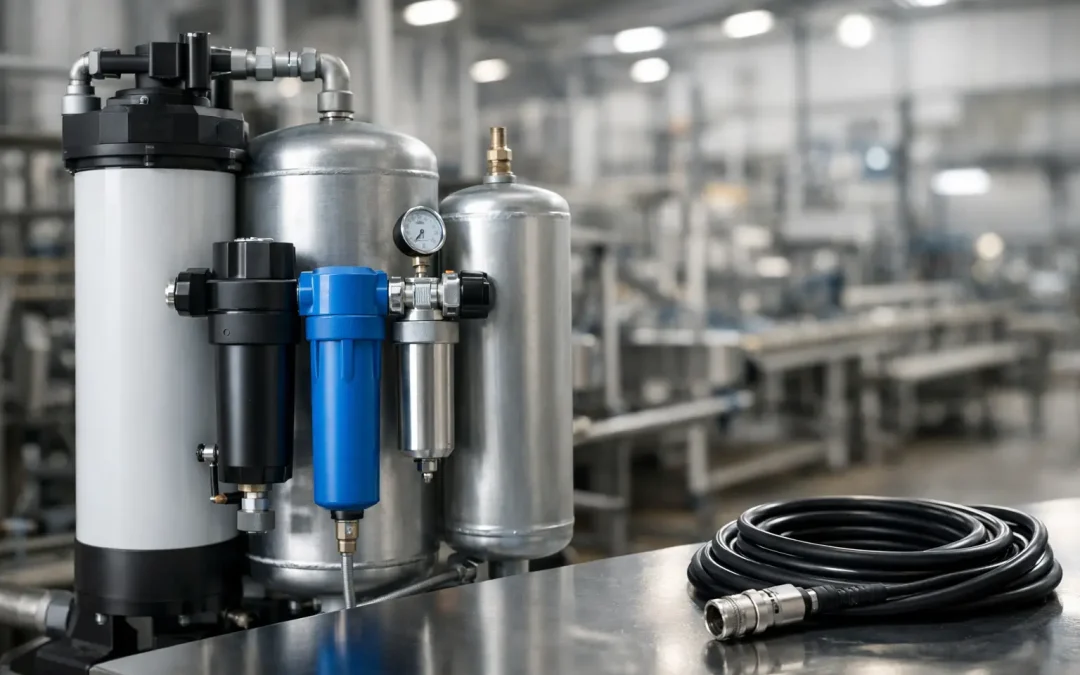
Most compressed air systems rely on a familiar chain: aftercooling, moisture separation, filtration, drying, pressure regulation, and in some cases lubrication. The order affects performance.
Right after compression, air is hot and saturated. As it cools, water condenses. That makes aftercoolers and separators useful early in the process because they remove bulk moisture before it reaches finer elements. If that moisture is allowed to travel deeper into the system, filters load faster and dryers work harder.
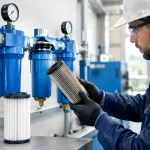
Next comes primary filtration. This stage typically targets larger particles and liquid carryover. It protects the dryer and reduces the contamination load on downstream elements. Then the dryer lowers moisture content to the dew point required by the application. After drying, finer coalescing or particulate filtration may be added to capture remaining aerosols and particulates before point-of-use equipment.
Regulation should be placed where stable pressure matters most. In many machine circuits, local regulators improve repeatability and reduce air consumption by preventing operators from running at unnecessarily high pressure. Lubrication, if used at all, belongs close to the device that needs it. Many modern valves, actuators, and controls are designed to run without added lubrication, and once oil is introduced into a branch, that branch usually has to stay lubricated.
Dryers are not interchangeable
Dryer selection is one of the most consequential decisions in air treatment because it affects moisture control, energy use, and fit for the environment.
Refrigerated dryers are often the right choice for general industrial plant air. They are cost-effective and suitable when pressure dew point requirements are moderate. For many automation systems, that is enough. But they are not ideal where ambient conditions, outdoor piping, or critical processes create a risk of condensation at lower temperatures.
Desiccant dryers serve applications that need a much lower dew point. They are common where instrument air must stay dry, where lines are exposed to cold environments, or where moisture-sensitive processes cannot tolerate variation. The trade-off is greater complexity, maintenance, and operating cost. If a plant installs desiccant drying for every branch without a clear need, it may solve one problem while creating another in service burden and purge-air consumption.
Membrane dryers can fit specific low-flow or point-of-use needs, but they are rarely the universal answer for a larger plant network. Their value is usually in compact machine-level protection rather than central treatment for high-flow systems.
Filtration mistakes that cause chronic failures
Many recurring pneumatic issues are filtration issues in disguise. The filter may be present, but the grade, placement, or flow capacity is wrong.
One common mistake is selecting by port size instead of flow performance. A filter that matches the pipe thread but introduces excessive pressure drop at actual demand can starve cylinders and slow valve response. This often shows up as inconsistent cycle time under peak load. Another mistake is relying on one fine filter to do every job. Fine elements are not efficient bulk water removers, and they load quickly when asked to catch contamination that should have been removed upstream.
Drain management is another weak point. Manual drains that never get opened are effectively plugs at the bottom of the bowl. Automatic drains that foul or leak can create either flooding or continuous air loss. In high-duty systems, drain reliability deserves as much attention as the filter element itself.
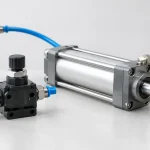
For point-of-use assemblies, the right air prep package often comes down to matching filtration level, regulator stability, bowl material, drain style, and mounting approach to the environment. In washdown or corrosive areas, material selection matters. Standard assemblies may not hold up where stainless air prep devices are the better long-term choice.
Pressure regulation is also an efficiency strategy
Plants often treat regulators as a basic accessory, but stable pressure is central to machine performance. Overpressure wastes air and increases wear. Underpressure causes sluggish motion, failed end-of-stroke events, and unreliable gripping or clamping force.
The better approach is to regulate by function. A machine may need one pressure level for a main actuator circuit, another for grippers, and a lower setting for blow-off or auxiliary functions. That kind of zoning improves consistency and lowers consumption without changing the compressor room.
This is especially relevant where OEMs and integrators are balancing performance with component life. Tight regulator control near sensitive valves or actuators can remove a lot of troubleshooting noise from the system.
Treatment decisions should match the risk profile
Not every line deserves instrument-grade air. Not every line can tolerate general-purpose air. The correct answer depends on the cost of failure and the sensitivity of the equipment.
For a straightforward material handling circuit, the goal may be dependable operation with economical maintenance. For a precision assembly cell, a small amount of oil aerosol or water carryover may create reject risk that far exceeds the cost of better treatment. For outdoor equipment or mobile systems, temperature swings may shift the entire dryer and drain strategy.
That is why a specification should be built around actual operating conditions, not copied from a previous project. Flow range, duty cycle, ambient temperature, piping layout, compressor type, and downstream component sensitivity all change the answer.
When to upgrade the treatment train
If maintenance is replacing valves, seals, and cylinders more often than expected, air quality should be one of the first checks. The same applies when a plant sees seasonal failures, visible bowl contamination, unexplained pressure loss across prep units, or water at end-use devices.
Upgrading may mean adding a separator ahead of existing filters, moving to a better dryer, splitting critical branches from the general header, or replacing undersized point-of-use assemblies with properly rated units. In some cases, the problem is not the absence of treatment but a mismatch between legacy components and current demand.
This is where factory-direct support can save time. Teams that can quickly source standard and configured air prep components from one supplier usually move faster from diagnosis to correction, especially when they need a combination of filtration, regulation, stainless options, fittings, and tubing to complete the fix.
Air treatment is one of those system choices that rarely gets credit when things run well. But when it is designed around the application, sized to actual demand, and maintained with the same discipline as valves and actuators, it pays back in longer component life, better repeatability, and fewer failures that start as “mystery” problems and end as contamination issues.