A robot cell can have accurate motion, a well-written program, and a fast cycle time on paper, then still miss its production target because the tool at the wrist is wrong for the work. The most consequential robotic end of arm tooling trends are therefore not about adding complexity for its own sake. They are about making the point of contact between robot and part more adaptable, more observable, and easier to service.
For OEMs, integrators, and plant teams, the practical question is not whether a tool is advanced. It is whether it holds the part consistently, confirms the result, survives the environment, and can be changed or repaired without turning a minor issue into hours of lost output.
Robotic End of Arm Tooling Trends That Matter on the Floor
Soft gripping is moving into production work
Soft robotic grippers have progressed beyond delicate product demonstrations. Food handling, consumer goods packaging, agricultural sorting, electronics, cosmetics, and irregular-part picking all benefit from compliant fingers that conform to variation rather than forcing every part into a tightly controlled fixture.
The advantage is not simply gentler handling. A compliant gripper can tolerate changes in part orientation, surface shape, and minor dimensional variation that would cause a rigid jaw tool to misgrip. This may reduce fixture costs upstream and simplify bin-picking or conveyor-picking applications.
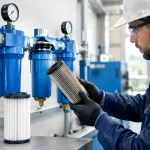
There is a trade-off. Soft grippers are not the default answer for high-payload metal parts, sharp castings, high-temperature surfaces, or operations requiring highly repeatable part location. Engineers should evaluate finger material, allowable pressure, cycle-life testing, washdown exposure, and the compressed-air quality needed to maintain predictable actuation. A soft tool that performs well with clean, regulated air may become inconsistent when moisture, oil carryover, or pressure drops enter the circuit.
Hybrid tooling is reducing the number of end effectors
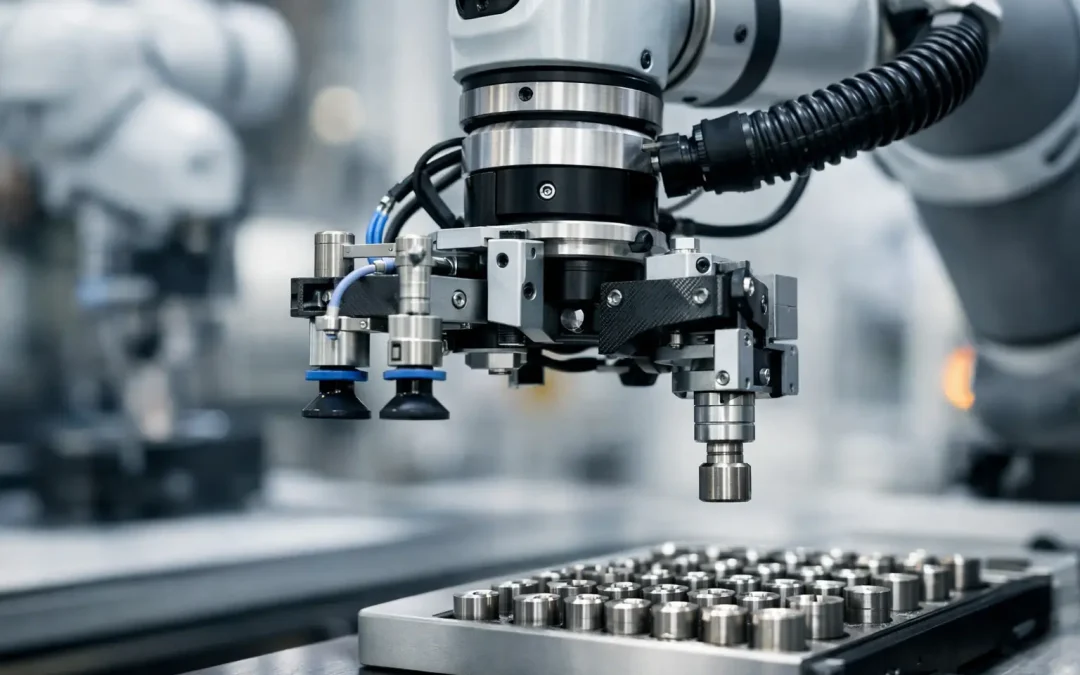
Many cells once used dedicated tools for gripping, vacuum pickup, part presence checks, and simple process tasks. Current designs increasingly combine these functions in one engineered assembly. A hybrid tool may use pneumatic parallel grippers for stable edge capture, vacuum cups for broad flat surfaces, and sensors to confirm both tool position and part retention.
This approach is particularly useful when product families share a robot but differ in geometry or packaging. Instead of installing multiple stations or accepting a large tool rack, an integrator can build a tool that addresses several common handling conditions. The result can be a smaller cell footprint and fewer robot movements between operations.
The engineering challenge is managing weight and inertia. Every sensor block, manifold, fitting, bracket, and cup adds mass at the wrist. A multifunction tool that exceeds the robot’s practical payload limits can reduce acceleration, lengthen the cycle, and increase wear on joints. Tooling decisions should start with a full mass and center-of-gravity calculation, not just the advertised payload capacity of the robot.
Sensing is becoming part of the gripping decision
Part-present sensors are no longer an optional refinement on higher-value cells. More end effectors are using magnetic cylinder sensing, vacuum pressure switches, proximity sensing, force feedback, and vision confirmation to determine whether a pick actually occurred.
That information matters because an open-loop robot program cannot distinguish between a successful grasp and an empty grip until the failure reaches the next station. A vacuum cup can touch a part without achieving sufficient seal. A parallel gripper can close on an edge, flash, or debris. A sensor signal tied to the tool’s actual gripping state gives the PLC or robot controller a chance to recover early.
The best sensing strategy depends on the failure mode. Vacuum pressure feedback is valuable when porous materials, warped parts, or changing surface finishes affect cup performance. Cylinder-position sensing helps verify jaw movement but does not always confirm that the part is securely held. Force or current monitoring can reveal contact conditions, yet it may require more tuning than a straightforward pneumatic confirmation circuit. Specify the sensor based on the failure you need to catch, not because a tool has room for another cable.
Faster Changeover Is a Tooling Requirement
High-mix production is pushing end-of-arm tooling toward modularity. Quick-change couplers, common pneumatic connection points, electrical pass-throughs, and standardized mounting plates allow a robot to move from one SKU or operation to another with less manual intervention.
Automatic tool changers provide the greatest flexibility where a robot must perform distinct tasks during the same cycle, such as picking a blank, loading a machine, and placing a finished part in packaging. However, they introduce cost, added stack height, connection interfaces, and another set of components that must be kept clean and aligned. For a product family that changes only once per shift, a manually changed, repeatable mounting plate may deliver better value.
The key is to design the utility interface as carefully as the mechanical interface. Pneumatic tubing should be protected from pinch points and repeated bending. Fittings must be accessible for troubleshooting. Vacuum and positive-pressure circuits should be clearly identified, especially where technicians must restore a tool after maintenance. A compact valve manifold mounted near the wrist can improve response time, but it also adds moving mass. In some applications, remote valve islands with well-routed lines are the more reliable choice.
Standardization makes custom tooling easier to maintain
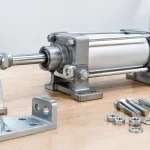
Custom tooling is often necessary. The mistake is treating custom as a reason to abandon common components. Standardizing cylinder bore sizes, sensor types, thread standards, tubing diameters, cup mounting patterns, and electrical connectors gives maintenance teams a faster path to replacement parts.
This is also where factory-direct component access matters. A cell may be designed around an exceptional custom gripper, but its uptime frequently depends on ordinary items: fittings, tubing, solenoid valves, filters, regulators, switches, and vacuum components. A practical bill of materials includes these service items and identifies acceptable alternates before the line goes live.
VidoAir supports this approach with pneumatic, vacuum, electro-pneumatic, and soft gripping components that can be selected for standard builds or configured around application requirements. The goal is not to make every tool identical. It is to prevent a simple pneumatic repair from becoming a sourcing delay.
Vacuum Tooling Is Getting More Selective
Vacuum remains one of the most efficient ways to handle sheet goods, cartons, sealed packages, and flat components. The trend is toward better zoning and better feedback rather than simply installing larger pumps or more cups.
Individually controlled zones allow a single vacuum tool to pick different package sizes while isolating unused cups that would otherwise leak. Flow-restriction devices can limit the effect of a missing or poorly sealed cup. Vacuum sensing identifies whether the picked load meets the required holding threshold before the robot begins a high-speed move.
Still, vacuum is sensitive to real factory conditions. Dust, corrugated debris, oil, moisture, and inconsistent surface texture all affect performance. A poor design often treats the vacuum generator as the problem when the actual issue is undersized tubing, clogged filters, poor cup selection, or pressure supply that falls during simultaneous actuator demand. Troubleshooting should begin by measuring vacuum at the cup during the actual cycle, not at the generator while the cell is idle.
For energy-sensitive applications, consider whether the system needs continuous vacuum or only a brief draw-down followed by a controlled hold. Air-saving circuits can reduce consumption, but they must retain adequate safety margin for load movement and surface leakage. The right answer changes with payload, acceleration, available air capacity, and the consequences of a dropped part.
Tooling Is Being Designed for Recovery, Not Just Normal Operation
The next level of end-effector performance is recoverability. Engineers are designing tools and control logic around what happens after a partial pick, a jam, a pressure loss, or a misoriented part. This is especially valuable in unattended shifts, where a cell that can recognize and reject a failed pick may prevent a downstream collision or extended line stoppage.
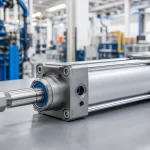
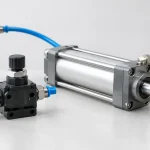
Mechanical compliance can protect the tool and part during minor misalignment. Guided cylinders and slide-table actuators can provide controlled secondary motion for insertion or positioning. Blow-off circuits can separate nested parts, clear dust from a pickup face, or release a vacuum-held part at the correct moment. These are not decorative additions. They are tools for controlling variation that would otherwise require operator intervention.
Recovery design should also consider maintenance access. If a technician needs to remove the full end effector to replace a cup, sensor, or fitting, the tool may be mechanically elegant but operationally expensive. Service points should be visible, labeled, and reachable with ordinary tools. For critical cells, keeping a preassembled spare tool or a service subassembly can reduce repair time substantially.
Specify the Tool Around the Actual Process
The strongest end-of-arm tooling choices begin with a disciplined view of the process: part range, required orientation, payload, acceleration, environmental exposure, allowable marking, failure consequences, air quality, and planned changeover frequency. That information leads naturally to the right balance of rigid gripping, compliance, vacuum, sensing, and modularity.
A tool does not need every new feature to be high-performance. It needs enough intelligence to verify the work, enough durability to run the planned duty cycle, and enough serviceability to keep production moving when conditions are less than perfect. Start with the failures your cell cannot afford, then build the end effector to detect, tolerate, or recover from them.