
In the world of high-performance automation, your production line is only as strong as its weakest component. Are inconsistent quality, frustratingly long lead times, and a lack of expert technical support from your current supplier creating bottlenecks and eating into your margins? These challenges are more than mere inconveniences; they directly threaten your operational efficiency and profitability. The solution lies in a strategic approach to procurement. Selecting the right OEM pneumatic components source is the single most critical decision for ensuring robust performance and supply chain stability.
This ultimate guide moves beyond simple vendor lists to provide a definitive framework for evaluation. You will master the essential criteria for identifying a true supply partner-one committed to delivering premium, meticulously engineered components, direct engineering support for custom configurations, and transparent, factory-direct pricing that reduces your total cost of ownership. Prepare to move beyond transactional supply, eliminate supply chain volatility, and forge a partnership that truly powers your success.
Key Takeaways
- Establish a clear evaluation framework to assess suppliers on technical capability and process maturity, ensuring you select a true engineering partner.
- Qualify your ideal OEM pneumatic components source with a detailed vetting checklist that verifies their capabilities beyond the initial sales pitch.
- Discover the significant cost, communication, and customization advantages of partnering directly with a component manufacturer for your supply chain.
- Redefine your supplier relationship as a strategic partnership focused on scalability, consistency, and long-term production line efficiency.
What Sourcing Pneumatic Components Means for an OEM
For an Original Equipment Manufacturer (OEM), sourcing pneumatic components is a foundational business decision, not a simple procurement task. It’s about forging a strategic partnership that supports your product from initial design through its entire lifecycle and into future iterations. This long-term approach stands in stark contrast to MRO (Maintenance, Repair, and Operations) purchasing, which focuses on replacing individual parts as they fail. A true OEM pneumatic components source integrates with your operations, ensuring scalability, unwavering consistency, and performance that powers your success.
Why Your Component Supplier Directly Impacts Your Brand
Every pneumatic cylinder, valve, and actuator inside your equipment is a direct reflection of your brand’s commitment to quality. The performance of these components in the field dictates customer satisfaction and your market reputation. A meticulously chosen supplier is your first line of defense against costly operational failures and brand damage.
For instance, in automated packaging lines, the reliability of these components is paramount. Companies that build sophisticated systems, like the open-mouth bagging machines from Choice Bagging Equipment, depend on high-cycle-life pneumatic parts to ensure their customers achieve consistent throughput and minimize downtime.
- Reputation at Stake: A single component failure can lead to equipment downtime for your customer, directly impacting their perception of your product’s reliability.
- Reduced Operational Costs: Consistent, high-performance components minimize warranty claims, service calls, and the associated labor costs, protecting your bottom line.
- Production Continuity: A dependable supply chain with robust inventory prevents assembly line delays, ensuring you meet production targets and customer deadlines without interruption.
The Core Challenge: Balancing Cost, Quality, and Innovation
The most common pitfall in sourcing is focusing solely on the per-unit price. A forward-thinking OEM looks beyond this to the Total Cost of Ownership (TCO), which accounts for service life, energy efficiency, and potential downtime. Understanding the fundamentals of how compressed air is used to generate force and motion, as detailed in this Introduction to Pneumatics, clarifies why component specifications are so critical. The challenge is to find a partner who delivers on this complete value proposition.
The right supplier must not only meet today’s performance specifications across every batch but also act as a collaborative partner, contributing to your R&D efforts. They become an extension of your engineering team, invested in helping you engineer the next generation of high-performance equipment.
Key Criteria for Evaluating a Pneumatic Component Supplier
Selecting the right OEM pneumatic components source is a strategic decision that impacts product performance, cost, and time-to-market. Before engaging with potential vendors, establish a clear evaluation framework that moves beyond marketing claims to scrutinize their core capabilities. This scorecard approach allows you to objectively compare suppliers across four critical areas: engineering, customization, supply chain, and support.
Engineering Excellence and Manufacturing Quality
The foundation of any reliable component is robust engineering and meticulous manufacturing. Demand evidence of quality, not just promises. Key evaluation points include:
- Material Integrity: Verify the specifications of materials used (e.g., aluminum alloys, seal compounds) and inquire about their durability and cycle life testing protocols.
- Process Control: Ask about manufacturing tolerances and the methods used to ensure batch-to-batch consistency for predictable performance.
- Certifications and Standards: A quality management certification like ISO 9001 is a baseline requirement. For true performance assurance, it’s crucial to explore their adherence to component-level standards. A deeper dive into Understanding ISO Standards for Pneumatics can clarify requirements for interchangeability and quality.
- Technical Documentation: High-quality, detailed datasheets and manuals are indicators of a supplier’s engineering discipline.
Customization and Application-Specific Solutions
Standard, off-the-shelf components rarely meet every unique design requirement. A true partner demonstrates flexibility. Assess their ability to modify standard products with different stroke lengths, port configurations, or mounting options. For more complex needs, determine if they offer co-engineering services for fully bespoke components, and be sure to clarify their prototyping process and typical lead times for samples.
Supply Chain Model: Distributor vs. Factory-Direct
The supplier’s business model directly impacts your costs, communication efficiency, and lead times. A multi-layered distribution network can add complexity and margin stacking, increasing your final price. In contrast, a factory-direct model provides a transparent, streamlined partnership. This approach eliminates intermediary markups and creates a direct line of communication with the engineers and production teams responsible for your components.
Technical Partnership and Post-Sale Support
A superior supplier acts as a technical partner, not just a parts vendor. Confirm you will have direct access to experienced application engineers for design-in support. The availability of 3D CAD models in multiple formats is essential for streamlining your design workflow. Finally, review the supplier’s warranty policy and return process to ensure they stand confidently behind their products and provide robust post-sale support.
The Factory-Direct Advantage for OEMs
In the competitive landscape of equipment manufacturing, every efficiency gain translates into a market advantage. Partnering with a factory-direct OEM pneumatic components source is a strategic decision that moves beyond simple procurement. This model eliminates the distributor layer, creating a direct conduit between your engineering team and the minds designing and producing your critical components. The result is a streamlined process that reduces costs, accelerates innovation, and builds a more resilient supply chain.
Significant Cost Reduction
The most immediate benefit of a factory-direct model is the impact on your bottom line. By removing intermediary markups, you gain access to more competitive per-unit pricing. This financial advantage is amplified through:
- Transparent Volume Discounts: Achieve greater savings with clear, scalable pricing structures as your production demands grow.
- Lower Total Cost of Ownership (TCO): Sourcing meticulously engineered, high-performance components directly from the manufacturer reduces the likelihood of premature failure, minimizing downtime and replacement costs.
Unparalleled Customization and Speed
When standard components don’t meet your exact specifications, direct access to the source becomes invaluable. You can collaborate directly with the application engineers who design the products, turning complex challenges into precision-engineered solutions. This direct partnership model is a core tenet of modern supplier selection criteria for innovation, transforming a simple transactional relationship into a strategic alliance. It enables faster turnaround times on custom prototypes and modifications, and your direct feedback can actively influence future product development, ensuring the component portfolio evolves with your needs.
Superior Supply Chain Transparency
A multi-step distribution channel often obscures visibility, leading to uncertainty. A factory-direct OEM pneumatic components source provides direct insight into production schedules and inventory levels. This transparency allows for more accurate lead time estimates and proactive planning, significantly reducing the risk of the supply disruptions that can plague complex supply chains. You gain the confidence that comes from knowing exactly where your components are and when they will arrive.
See how VidoAir’s factory-direct model can benefit your business.
Essential Pneumatic Component Categories for OEM Applications
A high-performance pneumatic system is an ecosystem of meticulously engineered parts working in unison. To power your automated machinery effectively, it’s critical to understand the core component categories and their functions. When evaluating an OEM pneumatic components source, their ability to provide a comprehensive product portfolio is a key indicator of their expertise and value. Sourcing system-wide solutions from a single, trusted partner ensures component compatibility, simplifies procurement, and streamlines engineering support.
A robust catalog should be built around three fundamental pillars of pneumatic automation:
Motion Control: Actuators and Grippers
This category translates compressed air power into precise, physical action. These are the components that push, pull, rotate, and grip, forming the muscle of your automated process. A complete offering includes:
- Linear and Rotary Actuators: The workhorses for generating straight-line or rotational force, essential for everything from conveyors to assembly presses.
- Specialty Actuators: Advanced solutions for unique challenges, including guided, compact, and rodless designs for space-constrained or high-precision applications.
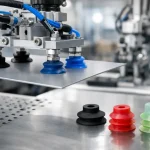
- End-of-Arm Tooling (EOAT): Components like pneumatic grippers that enable robots and machines to interact with and handle materials with accuracy and reliability.
System Control: Valves and Logic
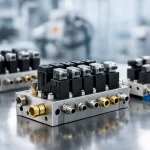
If actuators are the muscle, valves are the nervous system, directing the flow of compressed air to grant precise command over every movement. An ideal supplier provides a full range of control options to match any system logic, from simple manual operations to complex, high-speed automation. Key components include solenoid valves for seamless electrical integration and manual or mechanical valves for direct operator or machine-based control.
Air Preparation and Management
The foundation for a reliable and efficient pneumatic circuit is clean, properly pressurized air. Air preparation components protect sensitive equipment from contaminants and moisture, ensuring long service life and consistent performance. This critical category includes:
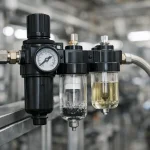
- Filter-Regulator-Lubricator (FRL) Units: Essential for conditioning compressed air to protect downstream components from damage and wear.
- Monitoring and Flow Controls: A suite of pressure gauges, sensors, and flow control valves that allow for fine-tuning and system monitoring to optimize efficiency and performance.
Partnering with an OEM pneumatic components source that demonstrates mastery across all three categories is paramount. It signifies a deep understanding of pneumatic systems as a whole, not just individual parts. Explore the VidoAir™ factory-direct portfolio to see how a complete, high-performance product line can power your success.
Your Vetting Checklist: How to Qualify a Potential Supplier
Selecting your supplier is a critical decision that impacts your product’s quality, supply chain stability, and bottom line. To move beyond the sales pitch and verify true capability, use this vetting framework. These questions are designed to help you identify a strategic partner, not just a parts provider, and make a confident, data-driven decision.
Initial Qualification Questions
Begin with high-level inquiries that establish a baseline for quality, credibility, and support. A transparent and well-structured partner will have direct, comprehensive answers.
- What is your documented process for quality control? Ask about their quality management system, ISO certifications, and how they ensure consistency from batch to batch.
- Can you provide case studies or references from similar OEMs? Proven success with companies facing similar challenges is a powerful indicator of capability and reliability.
- Who will be my dedicated technical point of contact? Direct access to an engineer or technical expert, rather than a general salesperson, is crucial for efficient problem-solving.
Technical and Engineering Due Diligence
Performance claims must be backed by empirical data. This phase is critical for verifying that the components will meet your exact specifications. A high-performance OEM pneumatic components source will welcome this level of scrutiny.
- Request material certifications and testing data. Ask for documentation like RoHS compliance, material specs, and cycle life test results for a relevant product.
- Ask for a sample component for in-house testing. The ultimate test is how a component performs within your own application and under your specific operating conditions.
- Confirm the availability of CAD models and technical drawings. Ensure they can provide models in formats compatible with your design software to streamline integration.
Logistics and Commercial Review
A technically superior component is only valuable if it is supported by a reliable supply chain and fair commercial terms. These questions assess operational efficiency and partnership potential.
- What are your standard lead times for stock and custom orders? Understand their inventory strategy and capacity for custom configurations to forecast your production timelines accurately.
- Describe your process for handling warranty claims or non-conforming parts. A clear, efficient, and fair return material authorization (RMA) process is a sign of a dependable partner.
- Can you provide a tiered pricing structure based on annual volume? A true partner will work with you to provide cost-effective solutions that scale with your growth.
Using this checklist will empower you to select a supplier that offers more than just parts; it will help you find a robust partner committed to your success. When you are ready to vet a supplier who answers these questions with confidence, start the conversation with our engineering team today.
Powering Your Success with the Right Pneumatic Partner
The success of your application hinges on the quality and reliability of its parts. As this guide has shown, a meticulous supplier evaluation and a clear understanding of the factory-direct advantage are non-negotiable for operational excellence. Choosing the right OEM pneumatic components source is a foundational decision that impacts everything from performance to profitability.
At VidoAir™, we are engineered to be that foundational partner. We eliminate supply chain complexity and deliver unmatched value through our factory-direct model. This commitment is backed by tangible benefits: Factory-Direct Pricing that protects your bottom line, Dedicated Engineering Support for your most complex challenges, and the assurance of a Comprehensive One-Year Warranty on all our meticulously engineered solutions.
Take the decisive next step in optimizing your sourcing strategy. Download the VidoAir Product Catalog to explore our complete range of high-performance solutions. Let us be the partner that powers your success.
Frequently Asked Questions
What is the typical lead time for custom OEM pneumatic components?
Lead times for custom components are project-specific, but our streamlined factory-direct model accelerates the process. Initial prototypes typically ship within 4-6 weeks after design approval. Full production run lead times are established once the design is finalized and material sourcing is complete. Our engineering team provides a detailed project timeline upfront, ensuring transparency and alignment with your production schedule. This efficiency is a key advantage of working directly with a dedicated OEM pneumatic components source like VidoAir™.
How does a factory-direct supplier like VidoAir handle warranties and returns?
VidoAir™ stands behind the quality of our meticulously engineered products with a comprehensive one-year warranty against manufacturing defects. As a factory-direct supplier, we manage the process efficiently. In the rare event of an issue, simply contact our dedicated technical support team to initiate a Return Merchandise Authorization (RMA). We prioritize swift resolution, whether through repair, replacement, or credit, to minimize any disruption to your operations and ensure your complete satisfaction with our high-performance solutions.
What order volume is typically required to receive OEM pricing?
OEM pricing is structured to provide maximum value for high-volume and recurring orders. While there isn’t a single universal minimum, eligibility is typically based on factors like the component’s complexity, required materials, and projected annual volume. We are committed to creating cost-effective partnerships. We encourage you to contact our team with your project specifications and volume forecasts to receive a detailed, competitive quote tailored to your specific manufacturing needs and long-term production goals.
Can I get 3D CAD models to integrate into my machine designs?
Absolutely. We understand that seamless integration is critical for efficient machine design. VidoAir™ provides 3D CAD models for our entire standard product line, available for download directly from our product pages in common formats like STEP and IGES. For custom-configured or fully bespoke components, our engineering team will provide detailed 3D models as a core part of the collaborative design and approval process, ensuring a perfect fit and function within your assembly.
How do you ensure consistent quality across high-volume production runs?
Our commitment to quality is unwavering. VidoAir™ ensures consistency through rigorous, multi-stage quality control protocols embedded in our ISO 9001-certified manufacturing process. This includes stringent raw material verification, in-process dimensional and functional checks at critical stages, and 100% end-of-line performance testing for every component. This meticulous attention to detail guarantees that every unit in a high-volume run meets the exact same standards of precision, reliability, and performance.
What level of technical support can I expect during the design-in process?
As your partner in innovation, VidoAir™ provides comprehensive, engineer-to-engineer technical support throughout the design-in phase. Our application specialists work directly with your team to assist with component selection, performance calculations, and customization options to optimize your design for efficiency and reliability. We are a true OEM pneumatic components source, offering collaborative expertise to solve complex automation challenges and ensure your final product achieves its performance goals from the very start.