
In industrial automation, selecting the right actuator is a critical decision with significant consequences. A miscalculation can lead to budget overruns from over-specified electric systems, unexpected downtime from component failure in harsh environments, or frustrating integration challenges with your existing controls. These are not minor setbacks; they are costly obstacles to efficiency and performance. The fundamental question of what actuator to specify-pneumatic or electric, linear or rotary-demands a clear, methodical approach grounded in precision engineering.
This 2026 Industrial Selection Guide is engineered to provide that clarity. We will move beyond simple specifications to deliver a robust framework for your decision-making process. You will master the fundamentals of sizing for force, bore, and stroke, and gain a definitive understanding of when to leverage the cost-effective power of pneumatics versus the precision of electric systems. Our goal is to empower you with the technical proficiency to select high-performance components confidently, ensuring system reliability and maximizing value by sourcing directly from a trusted factory partner.
Key Takeaways
- Understand the critical performance differences between pneumatic, electric, and hydraulic actuators to select the optimal power source for your application.
- Learn to accurately calculate force requirements and determine the precise stroke length needed to ensure optimal performance and equipment longevity.
- Determine what actuator mechanism is right for your design by comparing the advantages of standard ISO cylinders versus specialized compact models.
- Discover how a factory-direct sourcing model can significantly lower your bill of materials (BOM) cost without compromising on engineering quality.
Defining the Actuator: The Muscle of Modern Automation
In any high-performance automation system, the actuator serves as the indispensable muscle, executing the critical physical work. At its core, an actuator is a meticulously engineered component that converts a source of energy-typically pneumatic, hydraulic, or electric-into controlled mechanical motion. Understanding what actuator to select is the first step in designing a system that delivers precision and power. This device is the final link in the automation chain, translating control signals into tangible action. For a foundational overview of its operational principles, Wikipedia offers a comprehensive resource on what is an actuator and its various forms.
The role of the actuator is direct and decisive. It receives a command, often from a control valve or an electrical signal, and performs a specific task. This motion can be one of two primary types: linear (providing push/pull force in a straight line) or rotary (providing turning or twisting force). The selection of the correct actuator is not merely a component choice; it is a strategic decision that dictates the overall efficiency, speed, and reliability of your entire pneumatic system. An undersized or mismatched actuator leads to wasted energy and suboptimal performance, while the right choice powers success.
The Core Components of an Industrial Actuator
Every industrial-grade actuator is built from several key elements designed for durability and precision in demanding factory environments. These robust components work in unison to deliver reliable force and motion.
- The Power Source: This is the energy that drives the actuator. In pneumatic systems, this is compressed air, but it can also be hydraulic fluid or electricity for other actuator types.
- The Housing and Seal: A robust body, often made of aluminum or stainless steel, protects the internal mechanics. High-performance seals are critical for preventing leaks and ensuring a long operational life.
- The Output Mechanism: This component transfers the generated force to the workpiece. Common mechanisms include piston rods, shafts, gears, or belts that deliver the final physical output.
Linear vs. Rotary Motion: Which Does Your Application Require?
The intended task dictates the type of motion required. While both are fundamental to automation, their applications are distinct. Choosing the correct motion profile is essential for achieving operational objectives with maximum efficiency.
- Linear Actuators: These devices provide straight-line motion and are ideal for applications requiring push, pull, lift, press, or clamping actions. They are the go-to solution for tasks like material sorting, part ejection, and press-fitting.
- Rotary Actuators: Best for tasks that require controlled turning or twisting, these actuators are fundamental for valve automation, positioning components on an indexing table, and operating robotic joints.
- Hybrid Solutions: For more complex automation challenges, multi-axis configurations can combine linear and rotary actuators to achieve sophisticated, multi-dimensional movements.
Pneumatic vs. Electric vs. Hydraulic: Choosing Your Power Source
The core of any automated system is its actuator, and the choice between pneumatic, electric, and hydraulic power is a critical engineering decision that impacts performance, cost, and operational efficiency. Understanding the fundamental differences between these technologies is the first step in determining what actuator is right for your application. Each system offers a distinct balance of force, speed, precision, and resilience, making the selection process vital for optimizing your machinery.
The Case for Pneumatic Actuators
For high-speed, high-force linear motion, pneumatic actuators deliver unmatched value and a superior power-to-weight ratio, providing significant force from a compact and lightweight package. This efficiency makes them a robust and cost-effective solution for a vast range of industrial automation tasks, from clamping and pressing to sorting and positioning. VidoAir™ pneumatic cylinders are meticulously engineered for:
- Environmental Resilience: Inherently safe for explosive atmospheres (ATEX compliant) and built to withstand harsh, high-moisture wash-down environments where electric systems would fail.
- High Performance at Low Cost: Achieve rapid cycle times and high force output at a fraction of the initial acquisition cost of electric servo systems.
- Simplified Maintenance: Designed for exceptional reliability and longevity, with factory-direct replacement parts readily available to minimize operational downtime.
When to Consider Electric or Hydraulic Alternatives
While pneumatics excel in power and simplicity, certain applications demand different capabilities. The decision of what actuator to deploy often comes down to a trade-off between raw power, cost, and control complexity.
Choose an electric actuator when your application requires complex motion profiles, multi-point positioning, and extreme precision. Tasks like robotic assembly or CNC machining, where exact speed and position control are non-negotiable, are ideal for electric servo motors.
For applications demanding massive force, hydraulic actuators are the undisputed leader. Think heavy-duty equipment like industrial presses and construction machinery, where force requirements far exceed the practical limits of pneumatics. For a hybrid solution, electro-pneumatic controls merge the high force of pneumatics with the precise control of electric solenoids, offering advanced automation without the full cost of an all-electric system.
Key Selection Criteria: Sizing Your Actuator for Performance
Selecting the correct pneumatic cylinder is a process of precision engineering. To determine what actuator is optimal for your application, you must balance four critical performance metrics: force, stroke length, bore size, and speed. A meticulously calculated approach ensures your system operates with maximum efficiency, reliability, and longevity, directly contributing to your operational success.
The foundation of actuator sizing is calculating the required output force. This isn’t just about moving the load; you must also account for frictional forces and build in a safety margin (typically 25-50%) to handle unexpected variables. The force an actuator delivers is a direct function of its bore size and the system’s air pressure (PSI/Bar). A larger bore or higher pressure yields greater force. Simultaneously, the stroke length must be specified to provide the exact travel needed-too short and the task is incomplete, too long and you risk mechanical damage or wasted cycle time. For high-frequency tasks, consider the cycle rate, as rapid actuation generates heat that can degrade seals and impact performance over time.
Environmental and Safety Factors
Your operating environment dictates material and design choices. Extreme temperatures require specialized seal materials like Viton® to prevent failure. For washdown areas or corrosive atmospheres, robust stainless steel actuators are essential to prevent degradation. Furthermore, safety-critical applications demand fail-safe mechanisms. A spring-return (single-acting) cylinder automatically retracts or extends upon loss of air pressure, providing a predictable safe state, whereas a double-acting cylinder remains in its last position.
Integration and Control Compatibility
A high-performance actuator is only as effective as the system controlling it. Seamless integration is non-negotiable for achieving the precision your automation requires. Key compatibility points include:
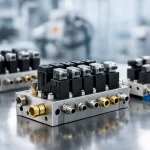
- Solenoid Valves: Match your actuator with correctly sized solenoid valves to ensure the proper air flow rate for responsive and accurate timing.
- Position Feedback: Integrate sensors like magnetic reed switches or more advanced encoders to provide real-time position feedback to your control system.
- Mounting Styles: VidoAir™ offers a comprehensive range of mounting options-including foot mounts, flange mounts, and clevis mounts-to ensure secure and stable integration into your existing machinery.
Specialized Actuator Types: Linear, Rotary, and Beyond
Once you’ve calculated basic force and stroke, the next step is selecting the right component. While standard cylinders handle many jobs, complex automation challenges demand specialized solutions. Understanding what actuator is best suited for the task is crucial for optimizing performance, minimizing footprint, and ensuring system longevity. VidoAir™ offers a comprehensive portfolio of high-performance pneumatic actuators engineered for precision and reliability across diverse applications.
Beyond the standard tie-rod cylinder, the world of pneumatics offers a diverse range of components designed for specific operational challenges:
- Standard ISO Cylinders: The robust workhorses of industrial automation. Their standardized dimensions ensure global interchangeability, making them a reliable and cost-effective choice for general-purpose linear motion.
- Compact Actuators: When machine space is at a premium, compact actuators deliver significant force in a reduced-length body. They are meticulously engineered for short-stroke tasks like clamping and positioning in tight enclosures.
- Rodless Actuators: For long-stroke applications, rodless actuators are the superior solution. By eliminating the piston rod, they prevent buckling and cut the required installation length nearly in half compared to traditional designs.
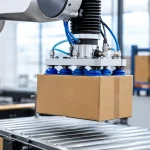
- Grippers and End-of-Arm Tooling (EOAT): These are the critical interface between your system and the workpiece, defining how your machine interacts with objects to perform its task.
Innovative Solutions: Soft Fingers and Vacuum Grippers
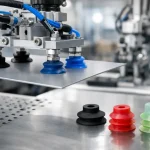
VidoAir™ is at the forefront of EOAT innovation. Our cutting-edge Soft Fingers™ are redefining how robots handle delicate or irregularly shaped objects with human-like dexterity. For high-speed pick-and-place operations, our range of vacuum components, including suction cups and generators, provides unmatched speed and reliability. We also deliver custom configured solutions for unique OEM requirements, POWERING SUCCESS in any application.
Rotary and Specialty Motion
Linear motion isn’t always the answer. For rotational tasks, you must decide what actuator fits the torque and space profile: a high-torque rack and pinion unit or a compact vane-type actuator. When applications involve high side-loads, guided actuators with integrated ball bearings provide the necessary stability and precision. For more complex sequences, multi-stroke and position-holding cylinders offer advanced control over motion profiles.
Why Factory-Direct VidoAir™ Actuators Power Industrial Success
Once you have calculated the required force, stroke, and dimensions, the final step is sourcing your component. Choosing the right partner is as critical as the calculations themselves. When your team debates what actuator will provide the best long-term value and reliability, the answer lies in a model that combines engineering excellence with business intelligence. VidoAir™ delivers on both fronts through our factory-direct approach.
By eliminating the distribution middleman, we provide direct access to premium pneumatic components at a significantly lower Bill of Materials (BOM) cost. This direct pipeline ensures you aren’t paying for unnecessary markups, allowing you to invest more into your core innovation. But value is more than just price. Our philosophy of Perceptive Engineering means every VidoAir™ actuator is meticulously designed for maximum durability and minimal energy consumption, reducing your total cost of ownership over the component’s entire lifecycle.
We understand that in manufacturing, downtime is the enemy of profitability. That’s why we’ve built a robust supply chain to support your operations:
- Vast Inventory: A comprehensive stock of ready-to-ship standard cylinders and components ensures immediate availability.
- Rapid Fulfillment: Efficient door-to-door shipping protocols get the right parts to your facility quickly, keeping your production lines moving.
- Transparent Partnership: From initial design consultation to post-installation support, our dedicated technical experts are your partners in success, ensuring you have the right solution, right on time.
Custom Configurations for OEMs
For original equipment manufacturers, standard-issue components are rarely the perfect fit. VidoAir™ excels at creating tailored pneumatic solutions, prototyping and producing small batches for innovative startups and configuring bore, stroke, and mounting options to integrate seamlessly into your machinery. Every custom component is built with the same meticulously engineered parts as our standard line and backed by our comprehensive one-year warranty, guaranteeing quality and performance.
The VidoAir™ Commitment to Excellence
Our mission is a relentless pursuit of industrial efficiency and precision. We empower global manufacturing leaders by providing high-performance pneumatic solutions that drive productivity and innovation. When you partner with VidoAir™, the question of what actuator to choose becomes a strategic decision for long-term success. Let our team demonstrate the difference that a factory-direct partnership can make. Contact VidoAir™ for a custom actuator quote and start building a more efficient future today.
Powering Your Final Decision: The Right Actuator for Your Application
Selecting the right actuator is a critical decision that directly impacts the efficiency, reliability, and longevity of your automated systems. This guide has provided a comprehensive framework, from contrasting pneumatic, electric, and hydraulic power sources to detailing the essential performance criteria for proper sizing. Armed with this knowledge, you can move beyond uncertainty and confidently answer the question of what actuator your application truly needs to excel. This strategic approach ensures you invest in a component that is not just functional, but perfectly optimized for the task at hand.
Now, translate your precise requirements into a high-performance solution with VidoAir™. We eliminate the guesswork by providing meticulously engineered, premium ISO-standard actuators. Our factory-direct model is our commitment to unmatched value, ensuring you receive the highest quality components with our best-cost pricing guarantee. With door-to-door global shipping, the industry’s leading pneumatic solutions are always within reach, ready to drive your project forward.
Take the definitive next step in your project. Explore the VidoAir™ Actuator Catalog today and start powering your success.
Frequently Asked Questions
How do I know what size actuator I need for my load?
To determine the correct actuator size, calculate the required force by multiplying the system’s air pressure (PSI) by the cylinder’s effective piston area. We recommend applying a safety factor of at least 25% to account for system friction and other variables. This ensures robust, reliable performance and prevents undersizing. For complex applications, our dedicated technical support team can provide expert guidance to ensure optimal component selection for maximum efficiency and operational longevity.
Can I use a pneumatic actuator for precise positioning?
While standard pneumatic actuators excel at rapid, end-to-end motion, achieving precise mid-stroke positioning requires specialized components. For high-precision applications, consider servo-pneumatic systems that incorporate proportional valves and feedback sensors. Alternatively, mechanical hard stops or advanced multi-position cylinders can provide repeatable and accurate intermediate positioning. VidoAir™ offers a range of cutting-edge solutions engineered for applications demanding superior control and accuracy, ensuring your automation goals are met with precision.
What is the difference between a single-acting and double-acting actuator?
The primary difference lies in the method of actuation. A single-acting actuator uses compressed air for motion in one direction and an internal spring to return the piston to its original position. This design is simple and efficient for applications like clamping. In contrast, a double-acting actuator uses compressed air to power both the extension and retraction strokes, providing greater force and control in both directions, making it ideal for more demanding industrial automation tasks.
How long do pneumatic actuators typically last in a factory setting?
The operational lifespan of a pneumatic actuator is influenced by factors such as load, cycle rate, air quality, and maintenance. Meticulously engineered VidoAir™ actuators are constructed from premium, robust materials designed for high-cycle industrial environments. With proper installation and adherence to maintenance schedules, our cylinders are rated for millions of cycles, delivering consistent, high-performance operation and unmatched value over the long term. This durability is a cornerstone of our commitment to POWERING SUCCESS.
Is it cheaper to use electric or pneumatic actuators for simple motion?
For simple, point-to-point motion, pneumatic actuators typically offer a significantly lower initial acquisition cost compared to their electric counterparts. The components are simpler, more robust, and less expensive to replace. While electric actuators can offer higher energy efficiency in certain scenarios, the upfront investment is substantially greater. VidoAir’s factory direct model further enhances the cost-effectiveness of our high-performance pneumatic solutions, providing the best cost pricing for straightforward automation tasks.
What maintenance is required for industrial actuators?
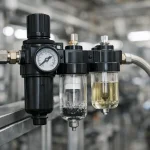
Proper maintenance is critical for maximizing the lifespan and performance of industrial actuators. The most vital step is ensuring a clean, dry, and lubricated air supply, typically managed by a Filter-Regulator-Lubricator (FRL) unit. Regularly inspect rod seals and tube seals for air leaks, as these can compromise efficiency. Also, periodically check that all mounting hardware is secure to prevent misalignment and premature wear. These simple procedures ensure your system operates at peak performance.
Are VidoAir™ actuators compatible with other pneumatic brands?
Yes, a significant portion of the VidoAir™ actuator portfolio is meticulously engineered to meet or exceed ISO standards, such as ISO 15552. This adherence to global specifications ensures our cylinders are dimensionally interchangeable with comparable products from other major pneumatic brands. This allows for seamless integration into existing systems and provides a high-performance, cost-effective alternative for replacement or upgrade, backed by our dedicated technical support and one-year warranty.
How does temperature affect actuator performance?
Temperature extremes directly impact actuator performance and longevity. In low temperatures, seals can become brittle and less effective, leading to potential leaks, while lubricant viscosity increases, slowing response times. When deciding what actuator to specify, it is critical to consider the operating temperature range. High temperatures can cause seals to swell or degrade prematurely and thin lubricants, reducing their effectiveness. Selecting appropriate seal materials for the environment is essential for reliable, long-term performance.