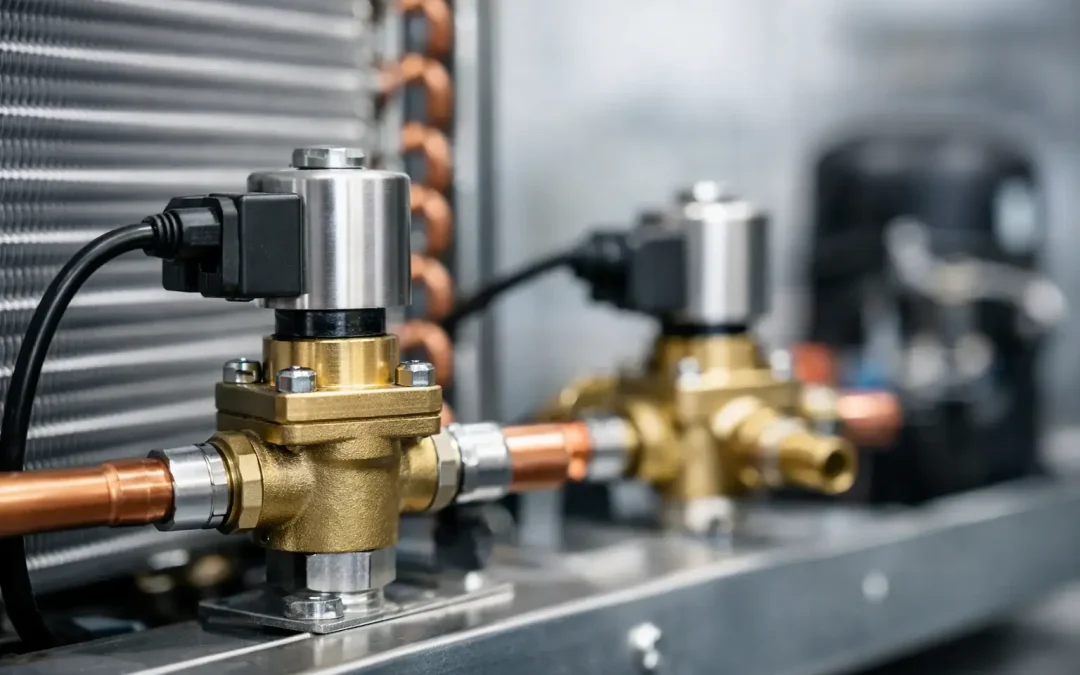
A walk-in freezer that will not pull down often gets blamed on the compressor, expansion valve, or refrigerant charge. Yet a failed or incorrectly specified solenoid can create the same symptom while leaving technicians chasing the wrong component. Refrigeration coil control solenoids determine when liquid refrigerant is allowed to reach an evaporator, and their performance directly affects temperature control, pump-down operation, defrost recovery, and compressor protection.
For OEMs, refrigeration contractors, and plant maintenance teams, the component is small but the selection process is not. A solenoid valve must match the refrigerant, line size, pressure differential, capacity range, electrical supply, ambient conditions, and control strategy. A valve that opens slowly, leaks internally, or cannot overcome system differential pressure becomes an uptime problem long before it becomes an obvious failed part.
Where refrigeration coil control solenoids affect system performance
In most liquid-line applications, a normally closed solenoid valve opens on a call for cooling and closes when the thermostat, controller, or defrost sequence removes power. That simple action supports several essential functions. It isolates idle evaporators, prevents refrigerant migration, enables pump-down control, and keeps refrigerant from feeding a coil during defrost or off cycles.
The coil is the electrical actuator. When energized, it creates the magnetic force needed to lift or move the valve’s plunger. The valve body handles refrigerant flow, while the coil must reliably deliver enough force under the actual electrical and thermal conditions at the installation. Treating these as separate considerations is useful because a damaged coil may be replaceable without changing the valve body, but a mismatched coil can compromise an otherwise correct valve selection.
On multi-evaporator racks, the consequences become more visible. One valve that leaks through can keep an inactive coil cold, drive unwanted frost accumulation, interfere with suction pressure control, or create uneven product temperatures. In a pump-down system, a valve that does not seat can allow pressure to equalize after shutdown, causing repeat starts or defeating the intended compressor protection sequence.
Size the valve for operating conditions, not pipe diameter
Line size is a starting point, not a selection method. Refrigeration solenoid valves should be sized for the required refrigerant capacity at the available pressure drop and the system’s expected minimum pressure differential. Oversizing is not automatically safer. A valve that is too large can have poor low-load control characteristics and may cost more without improving operation. Undersizing, however, creates excessive pressure drop, starves the evaporator, and reduces capacity when the system needs it most.
Direct-acting and pilot-operated designs require different attention. A direct-acting valve can open without relying on line pressure differential, making it useful for lower-capacity circuits, low differential applications, or duties where pressures may equalize. Pilot-operated valves are commonly used for larger capacities, but they need sufficient differential pressure to open and remain open correctly. A technician may find a pilot-operated valve humming and energized yet still not flowing because the system cannot provide the differential pressure the design requires.
Capacity calculations must reflect the actual refrigerant and operating point. R-448A, R-449A, R-454A, R-404A, R-134a, CO2, and ammonia systems do not share the same pressure, density, material compatibility, or capacity characteristics. Refrigerant transitions also create a common field mistake: retaining valve selections based on legacy refrigerant tables after changing the refrigerant or operating envelope. Verify the valve’s published rating for the refrigerant and the entering-liquid condition rather than assuming an older selection remains adequate.
Pressure ratings need margin, but not guesswork
Maximum working pressure must cover more than normal condensing pressure. Consider standstill conditions, hot ambient exposure, pressure equalization, heat reclaim operation, and any abnormal but credible operating state. Transcritical CO2 applications deserve particular scrutiny because pressure requirements can exceed those of conventional HFC or HFO systems by a wide margin.
Material selection follows the same discipline. The body, seals, and internal components must be rated for the refrigerant and lubricant in use. For corrosive environments, food processing areas, outdoor condensing units, or washdown exposure, the coil enclosure and connector arrangement can be just as significant as the wetted materials.
Match the coil to the electrical environment
Many solenoid failures are electrical failures disguised as valve failures. Confirm voltage, AC or DC current type, frequency where applicable, connector style, wattage, insulation class, and duty rating before installing a replacement coil. A 24 VAC coil, for example, is not interchangeable with a 24 VDC coil simply because the nominal voltage number looks similar.
Voltage drop deserves attention on long control runs and in older facilities. If voltage at the energized coil falls below its operating requirement, the plunger may not pull in completely. The result can be buzzing, overheating, intermittent opening, or rapid coil burnout. Measuring voltage only at the control transformer is not enough. Measure at the coil terminals while the circuit is energized and under normal load.
Heat is the second major coil stressor. Solenoid coils naturally run warm, particularly on continuously energized valves. But excessive temperature points to a problem such as low voltage, a partially moving plunger, high ambient temperature, incorrect coil selection, or restricted heat dissipation. A coil that is too hot to approach should not be diagnosed by touch alone. Use a temperature measurement method, compare the result with the coil specification, and inspect the electrical circuit before replacing parts.
For demanding installations, specify coils with appropriate environmental protection and a proven duty rating. A panel-mounted control circuit in a conditioned machine room has different exposure than a rooftop condensing unit, a humid produce cooler, or a washdown food plant. Connector sealing, cable strain relief, corrosion resistance, and enclosure protection prevent moisture intrusion that can turn a minor maintenance issue into an unplanned shutdown.
Troubleshoot the valve and coil as one control point
A disciplined test sequence avoids unnecessary refrigerant work. Start with the command signal: does the controller actually call for the valve to open or close? Then verify voltage at the coil, coil resistance against the manufacturer’s expected range, and continuity through the connector and wiring. A burned coil is usually straightforward to identify, but a coil with normal resistance can still lack sufficient magnetic force because of low applied voltage or mechanical interference.
If the coil is energized and the valve does not pass refrigerant, check the pressure differential requirement, valve orientation, debris, and internal sticking. Contamination is especially common after field piping work, compressor failure, or inadequate evacuation and cleanup. A small amount of scale, brazing residue, or desiccant debris can prevent a plunger from seating or moving freely.
If the valve appears to close but the evaporator continues feeding, distinguish internal leakage from another refrigerant path. Check whether the valve is installed in the correct flow direction and whether pressure is actually dropping across it. A leaking solenoid may produce frost downstream, unstable superheat, compressor cycling issues, or pressure equalization that occurs faster than the system design allows.
Common failure patterns are worth documenting because they speed future repairs:
- A humming AC coil with low terminal voltage often indicates a control-power or wiring issue rather than a defective valve body.
- A repeatedly burned coil may point to incorrect voltage, excessive ambient heat, or a plunger that cannot fully seat.
- A valve that works during normal load but fails during pull-down may be undersized or operating outside its differential-pressure range.
- A valve that passes flow when de-energized may have debris on the seat, worn internals, or damage from improper service procedures.
Design for serviceability and predictable uptime
Selection should account for the next service event, not only initial installation. Standardizing coil voltages and connector types across similar equipment reduces spare-part inventory and lowers the chance of a rushed, incorrect replacement. Where system design permits, accessible valve locations and adequate clearance around coils make diagnostics faster and safer.
For OEMs and integrators, configured component sourcing can also reduce mismatch risk. A refrigeration solenoid should arrive with a body rating, connection type, coil specification, and environmental suitability that all align with the equipment bill of materials. VidoAir supports industrial buyers who need that level of practical component clarity, whether the requirement is a standard replacement or a configured control solution for a specialized machine.
Do not wait for a failed pull-down test to evaluate a suspect valve. Record coil voltage, temperature, pressure conditions, and observed valve response during scheduled maintenance. Those few readings establish a useful baseline, help identify a developing control issue, and give the refrigeration team a better path to replacement before product temperature, energy use, or production uptime is put at risk.