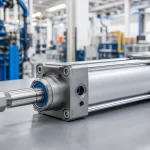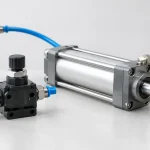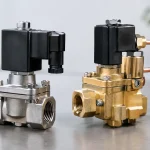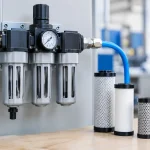
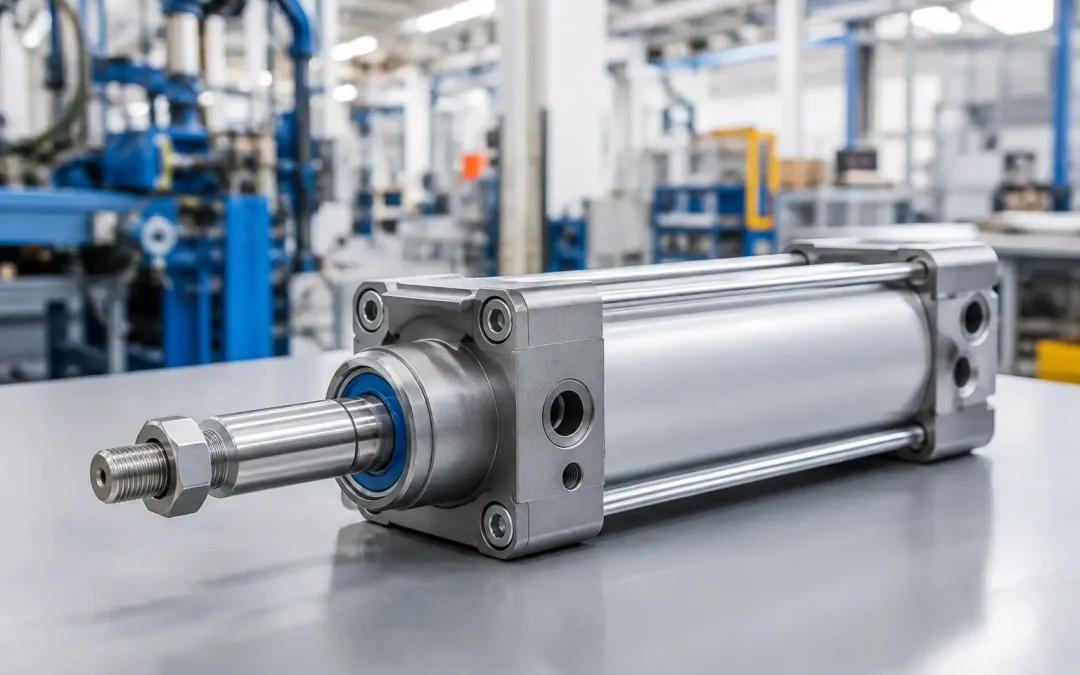
A cylinder rarely fails at a convenient time. It begins with a faint rod-side leak, a slower return stroke, or a machine axis that no longer repeats position at the end of a long shift. A useful pneumatic cylinder durability review looks beyond catalog bore size and stroke. It asks what will happen after millions of cycles, under real air quality, side loading, washdown, vibration, and operator-driven adjustments.
For production equipment, durability is not a single material specification. It is the combined result of cylinder design, application alignment, compressed-air condition, mounting accuracy, and maintenance discipline. A low-cost actuator that needs frequent replacement is expensive when it stops a packaging line, delays a changeover, or damages a fixture.
What Durability Actually Means in a Pneumatic Cylinder
Cylinder life is often reduced to seal life, but seals are only one part of the wear system. A durable cylinder must retain force, speed control, and repeatable end-of-stroke behavior while its rod, bushing, tube, piston assembly, and mounting hardware absorb the application’s mechanical demands.
For a high-cycle automation cell, durability may mean maintaining reliable motion through tens of millions of low-load cycles. In a heavy fixture or material-handling station, it may mean resisting rod bending, shock loads, and vibration without developing looseness. In food, chemical, or outdoor equipment, corrosion resistance and washdown compatibility may matter more than raw cycle count.
The right durability standard therefore depends on the failure cost. A simple clamp cylinder that can be changed in five minutes needs a different review than an inaccessible actuator inside an OEM machine sold to customers across the country.
The Wear Points That Deserve the Closest Review
Rod and rod seal condition
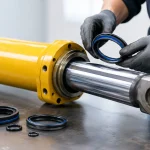
The piston rod is the cylinder’s most exposed precision surface. Pitting, scoring, or embedded contamination damages the rod seal with every stroke. Once leakage starts, friction and stick-slip can increase, especially at low speeds or near the end of travel.
Chrome-plated rods work well in many indoor industrial applications, but they are not a universal answer. Stainless steel rods are often the better choice where washdown, humidity, corrosive atmospheres, or frequent cleaning chemicals are present. The trade-off is cost, but replacement labor and unplanned downtime usually outweigh the initial material premium in harsh environments.
Inspect the rod with the cylinder extended and depressurized. A polished wear track can be normal. Grooves, rust spots, plating flake, or dark residue near the gland are not. If the rod is damaged, replacing seals alone may provide only a short-term fix.
Bearings, guides, and side load
Standard pneumatic cylinders are designed primarily for axial force. They are not intended to carry a cantilevered tooling plate, absorb a misaligned linkage, or guide a moving load across a long unsupported stroke. Side load transfers directly to the rod bearing and piston assembly, accelerating wear and eventually causing seal failure or rod scoring.
This is one of the most common reasons a cylinder that appears correctly sized fails early. The bore may provide sufficient push force, yet the motion design is mechanically wrong.
Use external linear guides when the load must be supported or constrained. For compact equipment, a guided cylinder, slide table actuator, or rodless actuator can be a better long-life solution because it separates guiding duties from the cylinder rod. The correct selection depends on load moment, stroke, travel speed, and required positional stability.
Cushioning and impact energy
A cylinder that slams at full stroke is converting moving mass into repeated impact. Adjustable pneumatic cushions reduce that impact near the end cap, but they have limits. A large payload, high speed, or short deceleration distance can exceed their capacity even when the cushion screws are fully adjusted.
External shock absorbers, flow controls, or a revised motion profile may be required. Avoid solving end-of-stroke impact by simply reducing supply pressure. Lower pressure can reduce impact, but it also reduces available force and can create inconsistent cycle time as friction and load conditions change.
Tube, piston, and end-cap construction
In routine factory service, cylinder tube damage is less common than seal or bearing damage. Still, tube quality matters where high cycle counts, pressure fluctuation, contamination, or poor alignment are involved. Examine used cylinders for internal scoring, loose end caps, damaged ports, and signs that tie rods or mounting threads have loosened under vibration.
For demanding applications, choose a cylinder series with construction appropriate to the duty. Repairable tie-rod cylinders can be advantageous when plant maintenance teams need to rebuild large-bore units. Compact cylinders may save space in tightly packed automation, but their shorter bearing length can make application alignment even more critical.
Air Quality Is a Durability Requirement, Not an Accessory
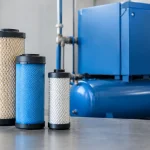
A clean-looking cylinder can still be operating on damaging air. Water, compressor oil carryover, pipe scale, rust, and fitting debris attack seals and contaminate valve spools. Excessive lubrication can also be a problem if the selected seals and valve components are intended for non-lubricated service.
The practical goal is not to add every possible air-preparation device. It is to match filtration, water separation, regulation, and dryer capacity to the application and facility air system. A cylinder in a dry electronics assembly cell has different needs than one operating near a wet machining process or outdoors in seasonal temperature swings.
Pressure stability matters as much as cleanliness. Undersized regulators, restricted fittings, long tubing runs, and shared high-demand circuits can produce pressure drop during motion. The cylinder may then stall, slow down, or hit the end of stroke differently from cycle to cycle. These symptoms are often blamed on actuator wear when the root cause is air delivery.
How to Run a Pneumatic Cylinder Durability Review
Begin with the failed or questionable cylinder, but do not stop there. Record the bore, stroke, operating pressure, cycle rate, load, mounting style, and environment. Then inspect the rod, seals, mount hardware, air lines, and associated valve. The evidence should point to a failure mechanism rather than a generic conclusion that the cylinder “wore out.”
If the rod is scored on one side and the bearing is loose, investigate side load or misalignment. If multiple cylinders show swollen or cracked seals, inspect air contamination, chemical exposure, and lubricant compatibility. If cushions are damaged or mounts are working loose, calculate the moving load and impact energy rather than replacing the same part with the same settings.
Pay close attention to mounting geometry. Pivot mounts must remain aligned with the load path. Rigid mounts require the driven mechanism to travel without forcing the rod sideways. Flexible tubing should be supported so its movement does not pull on ports or fittings during every cycle.
A simple maintenance record has real value here. Track installation date, cycles if available, failure mode, air pressure, and replacement parts used. After several events, patterns become visible. That information helps engineering standardize the right cylinder family instead of treating each replacement as an isolated purchasing decision.
Selection Decisions That Increase Service Life
Durability begins before installation. Size bore diameter from the required force with an appropriate operating margin, then verify that available pressure remains adequate during peak demand. Select stroke only as long as necessary. Longer strokes can increase rod deflection risk and make alignment less forgiving.
Specify materials for the actual environment, not the best-case environment. If operators wash equipment with chemicals, select compatible seals and corrosion-resistant materials. If the actuator is near welding spatter, abrasive dust, or cutting fluid, consider rod protection and shielding. If position feedback is essential, use sensing hardware designed for the cylinder profile and cable routing conditions.
VidoAir supports this decision process with factory-direct pneumatic cylinders, guided motion options, air-preparation components, and configured solutions for production equipment that cannot afford repeated actuator failures. The benefit of sourcing the motion and air-management components together is not convenience alone. It makes it easier to address the system causes behind premature wear.
When Replacement Is Better Than Rebuild
Rebuilding is often sensible for serviceable, larger cylinders with sound rods, tubes, and end caps. It can restore performance quickly when the wear is limited to seals and normal bearing components. However, rebuild kits cannot correct bent rods, deeply scored bores, distorted mounts, or an actuator that was fundamentally mismatched to the load.
Replacement is the better engineering decision when corrosion has compromised sealing surfaces, repeated failures point to inadequate guidance, or downtime exposure is high enough to justify an upgraded design. A guided actuator or revised mounting arrangement may cost more than a seal kit, but it can eliminate the condition that consumed the original cylinder.
Treat every early cylinder failure as a mechanical diagnostic opportunity. The actuator is often reporting a problem in the air system, load path, or machine design before that problem becomes a larger production interruption.