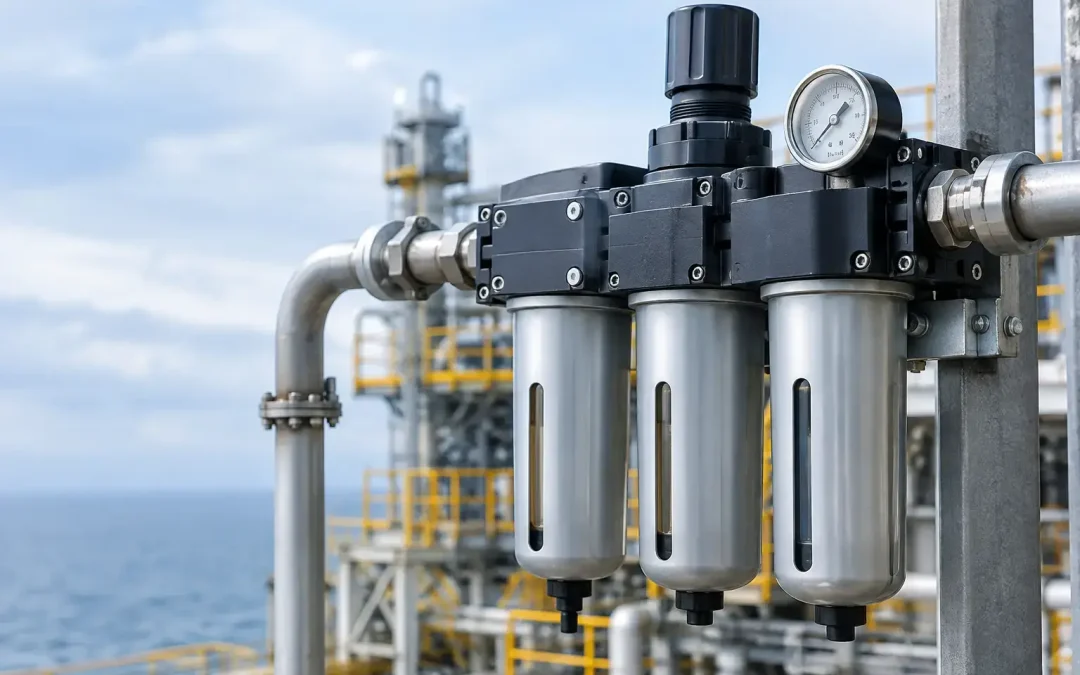
A pneumatic system can hold pressure perfectly during startup and still fail months early because its air preparation hardware was specified for a clean, dry cabinet rather than the environment around it. Washdown water collects in bowls, salt air attacks fittings, and chemical vapor gradually damages surfaces that appear acceptable on day one. Corrosion resistant air prep is the practical answer when standard painted or plated assemblies cannot survive the application long enough to protect downstream valves, cylinders, and controls.
For engineers and maintenance teams, the issue is not simply whether a filter-regulator-lubricator assembly looks corroded. Surface damage can turn into seized adjustment knobs, leaking drain threads, unreadable gauges, weakened mounting points, and contamination entering a pneumatic circuit. The cost is usually felt as inconsistent machine motion, emergency replacement work, and production interruptions that could have been avoided at the specification stage.
Where standard air prep fails first
Corrosion rarely attacks every component at the same rate. The weakest material, coating defect, threaded interface, or water-trapping area often determines the service life of the entire assembly. That is why a regulator with a protected body may still become a maintenance problem if its gauge connection, bowl guard, fasteners, or mounting hardware are not suited to the environment.
Washdown lines are a common example. Food processing, packaging, and sanitary equipment may be exposed to frequent water spray, foam, and cleaning chemicals. Even when the air preparation unit is not directly sprayed, moisture can enter through cabinet gaps and settle during temperature changes. A conventional assembly mounted near the floor or beside a washdown zone is especially vulnerable.
Marine, coastal, and transportation applications present a different pattern. Salt-laden air can reach components without visible water exposure, then concentrate in crevices and on threaded joints. Outdoor equipment adds UV exposure, temperature cycling, dust, and rain. In chemical processing and battery-related operations, airborne vapors can be more damaging than water alone. The correct material selection depends on the actual contaminants, their concentration, cleaning process, operating temperature, and exposure frequency.
What corrosion resistant air prep should protect
A corrosion-resistant selection is a system decision, not a housing material decision. Stainless steel bodies are a strong starting point, but every wetted and exposed component needs review. The goal is to preserve pressure control and air quality while preventing the assembly itself from becoming a point of failure.
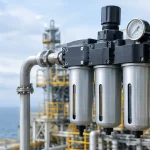
Start with the filter body, regulator body, and lubricator body where applicable. Stainless steel construction is typically preferred for demanding washdown, salt, and chemical environments because it resists corrosion better than standard aluminum or zinc-based components. The grade matters. Type 304 stainless can perform well in many general wet environments, while Type 316 stainless offers stronger resistance in chloride-heavy locations such as coastal plants and salt-exposed equipment. Neither is immune to every chemical, so compatibility remains essential.
Then examine the components around the main body. A well-specified assembly should account for bowl material, bowl guard, drain, adjustment screw, gauge, mounting bracket, fittings, and fasteners. Polymer bowls may be suitable in some settings, but cleaning chemistry, temperature, impact risk, and UV exposure can limit their service life. Metal bowls can improve mechanical protection, yet they also need the correct alloy and seals. Automatic drains deserve particular attention because they are exposed to accumulated condensate, oil carryover, and whatever contaminants enter the compressed-air supply.
Seal selection is equally important. Nitrile is common in pneumatic service, but it is not the automatic answer for every cleaner, solvent, or temperature range. Fluoroelastomer and other specialized seal materials may be required where chemical compatibility is more demanding. Specify seals based on the actual cleaning agents and process fluids, not a generic description such as “chemical resistant.”
Do not overlook the gauge
Pressure gauges are frequently the first visible casualty in corrosive areas. A gauge with an unsuitable case, bezel, connection, or internal mechanism can corrode even when the regulator remains functional. Select a gauge designed for the exposure level, verify the connection material, and consider whether remote pressure monitoring would reduce exposure and improve visibility for operators.
Specify for the air supply and the environment
Material resistance does not replace proper air treatment. A stainless air prep assembly can withstand external corrosion while still delivering poor pneumatic performance if it is undersized or equipped with the wrong filter element. Engineers should establish flow requirements at the minimum acceptable downstream pressure, not only at nominal compressor output. A regulator that creates excessive pressure drop during actuator cycling can cause sluggish cylinder speed, valve shifting problems, and inconsistent force.
Filtration should reflect the risk to downstream components. General particulate filtration may be sufficient for standard valves and cylinders supplied by a clean compressor system. Coalescing filtration is appropriate when oil aerosols threaten sensitive instrumentation, paint processes, pneumatic controls, or product-contact areas. Fine filtration normally creates more pressure drop and requires disciplined element replacement, so it should be applied where it solves a defined contamination problem.
Moisture management also matters. Filters remove liquid water that has already condensed, but they do not eliminate water vapor. If the piping temperature drops downstream, vapor can condense again inside distribution lines and equipment. Refrigerated or desiccant dryers, correctly sloped piping, drip legs, and point-of-use separation all have roles depending on the dew point target and plant conditions. Corrosion resistant air prep protects the point of use, but it should not be used to compensate for a poorly designed compressed-air system.
Installation details that decide service life
The best component can still fail early when installed in a water trap. Mount air prep equipment where operators can inspect the bowl and gauge without removing guards or reaching across moving equipment. Keep it away from direct spray when possible, but do not hide it inside an unventilated enclosure that holds moisture after washdown.
Use compatible fittings and hardware. Mixing dissimilar metals can accelerate corrosion in wet or salt-exposed locations, particularly when deposits and standing water bridge materials. Thread sealant should suit the process environment and should not contaminate pneumatic passages. Support the assembly so pipe loads and hose movement are not carried by regulator ports or bowl connections.
Drain routing is another practical detail. If condensate is drained onto a machine frame, floor, or electrical equipment, maintenance teams may bypass the drain or delay service. Route discharge to an appropriate collection point where required, and verify that the drain can be accessed and function-tested during routine inspections.
For critical equipment, standardize an inspection record that checks these conditions:
- Bowl clarity or contamination level, drain operation, and filter differential pressure
- Regulated pressure stability during the highest expected air demand
- Corrosion at gauges, threads, brackets, fittings, and mounting hardware
- Seal condition and leakage around bowls, drains, and adjustment mechanisms
- Evidence of direct washdown, chemical pooling, or salt deposit accumulation
Common specification mistakes
The first mistake is choosing stainless steel solely because the plant uses water. Water quality changes the answer. Chlorides, acidic cleaners, caustic detergents, and elevated temperatures can each shift the preferred material and seal combination. Obtain the cleaner safety data and identify both concentration and rinse practice before approving the assembly.
The second is overbuilding the housing while under-specifying serviceability. A corrosion-resistant unit with an impractical bowl change process may remain in service long after its element is loaded. Select bowl size, drain style, mounting orientation, and clearance with the maintenance procedure in mind.
The third is assuming that all stainless units offer the same protection. Compare material grades, drain construction, bowl configuration, gauge design, port sizes, pressure range, flow capacity, and available filter ratings. A catalog description is a starting point, not a complete application review.
For OEMs building equipment for variable environments, configured assemblies can reduce those gaps. A supplier such as VidoAir can help align stainless air preparation hardware, fittings, tubing, and downstream pneumatic controls so the interface materials and operating ranges are considered together rather than purchased as unrelated parts.
When the added cost pays back
Corrosion-resistant air prep costs more than a basic indoor FRL assembly, and it is not justified for every dry, protected machine. In a controlled enclosure with clean air and routine maintenance access, standard components may deliver the best value. The economics change quickly when a failure requires sanitation downtime, a field-service visit, replacement of damaged downstream valves, or a production delay.
The strongest justification is usually not appearance or material preference. It is predictable pressure control, cleaner air at the point of use, fewer emergency repairs, and a maintenance interval that matches the equipment’s operating reality. Specify the assembly around the harshest credible exposure, then make its inspection simple enough that the protection stays effective long after commissioning.