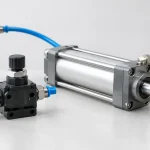
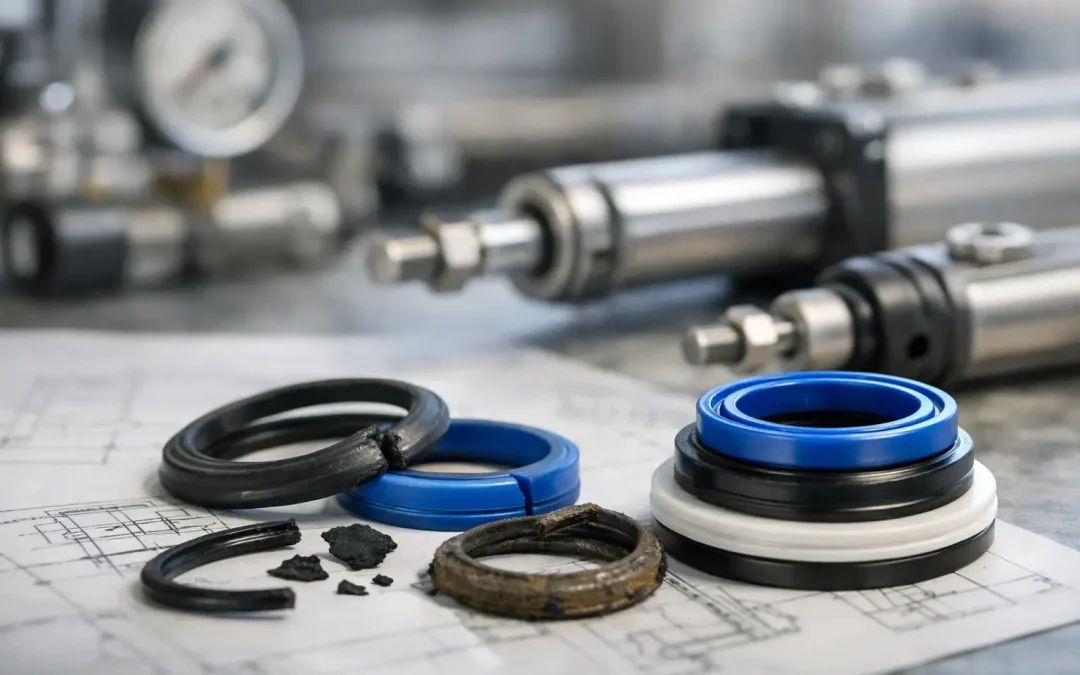
A pneumatic cylinder that begins leaking is rarely dealing with a seal problem alone. The seal is usually the first visible casualty of an air-quality issue, incorrect cylinder sizing, side loading, excessive speed, or a repair practice that introduced damage during assembly. For maintenance teams trying to protect uptime, understanding what causes pneumatic seal failure means tracing the operating condition behind the leak rather than simply replacing the worn component.
Seal failures show up as external leakage around the rod, reduced holding force, slow or inconsistent stroke speed, air escaping from exhaust ports, or a cylinder that can no longer reach its end position. Each symptom narrows the field, but the full diagnosis should consider the cylinder, valve, air preparation equipment, mounting arrangement, and load together.
What Causes Pneumatic Seal Failure in Industrial Cylinders?
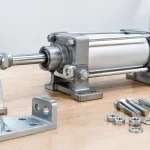
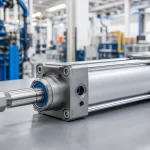
Pneumatic seals must maintain contact with moving or stationary surfaces while managing pressure, friction, temperature, and contamination. Rod seals prevent air loss along the piston rod. Piston seals separate pressure chambers inside the bore. Wipers keep contamination from entering during rod retraction. When any of these parts wears prematurely, the root cause often falls into one or more of eight operating conditions.
1. Contaminated compressed air
Water, pipe scale, rust, compressor oil carryover, and airborne particulate can cut, abrade, swell, or harden elastomer seals. Fine contamination is especially destructive because it can pass through a poorly maintained filter and become trapped between a seal lip and the rod or bore surface. Every stroke then turns that particle into an abrasive.
Moisture adds another failure path. It can corrode cylinder bores, rods, fittings, and valve components. A small corrosion pit may look harmless, but it creates a sharp interrupted surface that tears a seal lip over repeated cycles. In washdown, food-processing, outdoor, and humid applications, drainage and air drying deserve the same attention as filtration.
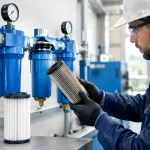
A properly specified filter-regulator-lubricator assembly, or a dry, filtered air-prep system where lubrication is not required, protects more than the cylinder. It also reduces sticking and wear in valves, grippers, and other downstream pneumatic hardware.
2. Incorrect lubrication or incompatible lubricant
Some pneumatic cylinders are designed for pre-lubricated or non-lubricated service. Adding lubricator oil to a system built for dry operation is not automatically beneficial. An incompatible lubricant can change seal dimensions, soften the compound, remove factory grease, or collect contamination.
The reverse is also true. If an application uses cylinders that require a compatible air-line lubricant, intermittent lubrication can leave seals exposed to high friction and heat. Once a lubricator is introduced, it generally needs to remain consistently supplied at the manufacturer-recommended rate. Switching back and forth creates an unstable operating condition that shortens seal life.
Seal material matters here. Nitrile, polyurethane, fluorocarbon, and specialty compounds respond differently to oils, solvents, temperature, and process chemicals. Confirm compatibility when cylinders operate near chemical mist, cutting fluid, refrigerants, aggressive cleaners, or unusual atmospheric conditions.
3. Side loading and rod misalignment
A pneumatic cylinder is built to produce linear force, not to compensate for a poorly guided load. When a rod is connected directly to a load that shifts, binds, or travels off-axis, side force is transmitted into the rod seal and bearing. The rod can flex slightly with every cycle, causing uneven seal contact and localized wear.
This is common on long-stroke cylinders, door mechanisms, transfer stations, and assemblies with loose pivots or worn brackets. The cylinder may still cycle, but rod-seal leakage becomes persistent and replacement seals fail faster each time.
Use external guides, slide tables, guided actuators, clevis mounts, trunnion mounts, or spherical rod-end connections where the motion demands them. A guided actuator costs more than a basic profile cylinder, but it may remove the side load that is consuming seals and rods. For high-cycle automation, that trade-off is usually favorable.
4. Damaged rod or bore surfaces
A new seal cannot compensate for a scored rod, a corroded bore, or a bent piston rod. Scratches, dents, plating damage, weld spatter, and burrs act like cutting tools against the sealing surface. Even a small defect can cause a leak path under pressure.
Inspect the rod through its full travel, not only where it extends beyond the cylinder at rest. Look for longitudinal scratches, chrome flaking, discoloration from overheating, and contamination embedded in the surface. For internal bypass concerns, inspect the bore for scoring and measure it when accuracy is critical. Rebuilding a cylinder with damaged hardware may create a brief improvement, not a dependable repair.
5. Excessive pressure, speed, or cushioning impact
Operating pressure above the cylinder rating can extrude seals into clearances, deform seal lips, and increase friction. Pressure spikes are often more damaging than a stable gauge reading suggests. Fast-switching directional valves, sudden load changes, and poor flow-control placement can produce transient conditions that are easy to miss during routine checks.
High piston velocity introduces another problem: heat. A seal that runs hot can harden, lose elasticity, or wear rapidly. At the end of stroke, insufficient cushioning allows the piston to strike the end cap with repeated impact. That impact can damage piston seals, loosen hardware, and create internal wear debris.
Set flow controls to manage both extension and retraction based on the load and motion profile. In many applications, meter-out control provides more stable speed control because it resists an overrunning load. That is not universal, however. Vertical loads, vacuum conditions, and special circuit requirements may call for a different design. Verify the machine’s motion behavior before changing flow-control strategy.
6. Temperature extremes and environmental exposure
Standard seal compounds have practical temperature limits. High heat can cause hardening, shrinkage, and loss of lubricity. Low temperatures can make elastomers stiff enough to crack or leak during startup. Thermal cycling also changes clearances between metal components and seals, which can accelerate fatigue.
External exposure matters as much as process temperature. UV, ozone, weld fumes, dust, salt spray, abrasive media, and washdown chemicals can degrade exposed rod seals and wipers. Stainless steel air-preparation devices and corrosion-resistant cylinder options are often justified in environments where standard components fail from corrosion before normal wear.
7. Improper installation or seal replacement
Seal damage often begins during maintenance. A seal can be nicked on a thread, rolled in its groove, installed backward, stretched beyond its limit, or contaminated on the workbench before the cylinder returns to service. For rod seals, forcing the seal across sharp rod threads or keyways is a common and preventable error.
Use clean tools, protect sharp edges with an installation sleeve or tape, and verify the seal orientation against the cylinder design. Apply only approved assembly lubricant. Inspect gland surfaces, wear bands, piston hardware, and fastener torque while the unit is apart. Replacing one visible seal while ignoring worn bearings or a damaged wiper commonly leads to another shutdown.
8. Cylinder selection that does not match the duty cycle
A cylinder may be correctly installed and still be wrong for the application. Undersized bores run at elevated pressure. Long unsupported rods experience more deflection. Standard seals may not tolerate the cycle rate, temperature, chemicals, or required service life. A basic cylinder handling a guided payload can develop seal failure because the application needs a slide table or guided actuator instead.
Calculate force with real operating pressure and account for friction, dynamic loads, back pressure, and safety margin. Then evaluate stroke length, mounting geometry, cycle rate, ambient conditions, and load guidance. This upfront work prevents the costly pattern of treating recurring seal failure as a maintenance-only issue.
Diagnosing the Failure Pattern Before Ordering Parts
The location and timing of leakage provide useful evidence. Air escaping at the rod points toward a rod seal, wiper, rod condition, or alignment issue. Air passing from one cylinder port to the other indicates internal piston-seal bypass. Leakage only at high speed or at one end of travel may point to pressure spikes, poor cushioning, or localized rod and bore damage.
Before rebuilding, isolate the actuator and document supply pressure, stroke speed, cycle count, air-prep condition, load arrangement, and environment. Check the rod for side movement and confirm that mounting hardware has not loosened. If several cylinders on one machine fail within a short period, start upstream with compressor condition, filters, dryers, lubrication practice, and valve behavior rather than treating each actuator as an isolated event.
Preventing Repeat Pneumatic Seal Failures
The strongest prevention plan combines clean, correctly conditioned air with sound mechanical design. Maintain filters and drains on schedule, use dryer capacity appropriate for the facility, and monitor pressure at the point of use. Align loads, guide externally loaded mechanisms, adjust cushioning and flow controls, and specify seal compounds for the actual temperature and chemical exposure.
For critical equipment, keep a record of failure mode rather than recording only that a cylinder was replaced. A short note such as “rod seal cut, chrome scored at mid-stroke” or “piston bypass after high-speed impact” turns the next repair into an engineering decision. VidoAir supports this approach with application-focused pneumatic components and technical guidance for standard replacements and configured motion systems. The best seal repair is the one that removes the condition that damaged the original seal.