A motion system can look efficient on a machine layout and still create recurring downtime on the plant floor. A cylinder that is oversized, a valve island with limited diagnostics, contaminated air, or controls that cannot expose a developing fault will eventually show up as lost cycles and maintenance hours. The most consequential industrial motion control trends are therefore not about replacing every pneumatic axis with a newer technology. They are about making each axis more visible, controllable, efficient, and easier to support.
For OEMs, integrators, and maintenance teams, the right direction depends on cycle rate, load profile, positioning tolerance, environmental conditions, utility costs, and the cost of a stopped machine. The following trends are shaping specification decisions in demanding industrial applications.
Industrial Motion Control Trends Are Becoming Application-Specific
The old comparison of pneumatic versus electric motion is too simple for current machine design. Electric actuators continue to gain ground where repeatable multi-position control, force profiling, electronic gearing, or detailed process data justify their added controller, drive, and commissioning requirements. Packaging changeovers, precision assembly, inspection fixtures, and robotic end effectors are common examples.
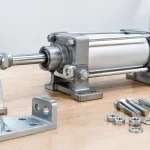
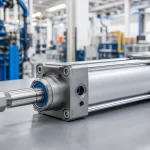
Pneumatic motion remains the practical choice for high-speed end-of-stroke operation, simple clamp-and-release functions, hazardous environments, washdown-capable equipment, and applications where a lightweight actuator with high force density is required. A guided slide table actuator, for example, may be a better engineering decision than a servo axis when the movement is short, the positions are fixed, and the environment is harsh.
The trend is toward hybrid machines. A system may use electric motion for a critical recipe-driven adjustment, pneumatic cylinders for repetitive handling, vacuum components for pick-and-place, and soft robotic grippers for variable or delicate products. This approach avoids paying for precision where the process does not need it while preserving control where it creates measurable value.
Specify performance at the axis level
Instead of standardizing on one motion technology, define the requirement for each axis. Start with the actual force needed at operating pressure, expected side load, required cycle life, speed, stopping behavior, position tolerance, and allowable recovery time after a fault. Then account for real installation factors such as tube length, fitting restrictions, pressure drop, moisture exposure, and contamination.
This matters because many apparent actuator problems begin upstream. A slow cylinder is not always undersized. Restricted flow, a poorly selected speed controller, inadequate supply capacity, or a regulator that cannot maintain pressure during simultaneous motion can produce the same symptom.
Smarter Pneumatics Are Moving Beyond Basic On-Off Control
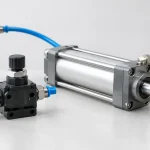
Pneumatic systems are becoming more connected without losing the simplicity that makes them valuable. Valve manifolds and electro-pneumatic controls increasingly support fieldbus connectivity, distributed I/O, integrated pressure sensing, and per-station diagnostics. For engineering teams, this means fewer hardwired connections, cleaner panel layouts, and faster visibility into what the machine is doing.
The operational value is strongest when diagnostic signals are used with purpose. A pressure switch that only triggers a generic alarm does little to reduce troubleshooting time. A control strategy that distinguishes low main pressure, a localized pressure loss, a valve command that did not produce movement, and a vacuum level that failed to reach its setpoint gives maintenance teams a usable starting point.
PLC logic is also taking on more motion oversight. It can monitor extend and retract times, compare cycle times against a baseline, count abnormal retries, and identify a station that is gradually slowing down. These are not advanced analytics projects. In many cases, a few well-selected sensors and practical alarm thresholds can reveal problems before they turn into missed production.
There is a trade-off. More instrumentation creates more wiring, I/O mapping, parameter management, and potential failure points. Add sensing where it protects a high-cost process, a safety-critical action, a quality check, or an actuator that is difficult to access. For a low-risk utility cylinder, basic end-of-stroke confirmation may be sufficient.
Air Quality Is Being Treated as a Motion-Control Variable
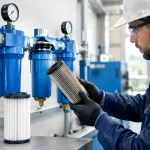
Compressed air quality is no longer a maintenance detail separate from machine performance. Water, particulate, oil carryover, and pressure instability directly affect solenoids, seals, regulators, vacuum generators, and actuator consistency. As plants pursue higher throughput with fewer unplanned stops, properly configured air preparation is becoming a core part of motion design.
A common failure pattern is a machine that performs well after installation but develops inconsistent response over time. The immediate reaction is often to replace the cylinder or solenoid. Yet contaminated internals, sticking valve spools, drain failures, cracked tubing, or excessive pressure drop may be the underlying cause.
For demanding applications, air preparation should match the environment and the component requirements rather than follow a generic filter-regulator-lubricator arrangement. Stainless steel air prep devices may be appropriate in corrosive or washdown areas. Refrigerated or process-specific applications can require solenoids and seals selected for the actual media and temperature range. Where oil-free air is required, do not introduce lubrication simply because it is familiar.
Pressure monitoring near high-demand machine zones is especially useful. A pressure reading at the compressor room does not confirm that an actuator sees adequate pressure at the moment multiple valves shift. Local measurement exposes distribution losses that can otherwise be mistaken for a controls issue.
Energy Management Is Becoming a Design Requirement
Compressed air is a productive utility, but it is also expensive when leaks, excessive pressure, and poor circuit design go unaddressed. The energy trend is not simply to reduce air use. It is to use air deliberately, at the pressure and volume the motion task actually needs.
Machine builders are increasingly reviewing whether a cylinder bore is larger than necessary, whether supply pressure has been set higher than required, and whether blow-off circuits run longer than the process demands. In some cases, a lower-pressure circuit with a properly sized actuator reduces consumption without compromising cycle time. In others, reducing pressure too aggressively causes inconsistent operation and forces the machine to wait for recovery.
Leak detection belongs in this discussion, but it should be approached with production realities in mind. Audible leaks are easy targets. Smaller leaks across a large installed base may be harder to identify, yet they create continuous cost and can lower available pressure during peak demand. Flow monitoring, pressure decay testing during idle periods, and maintenance inspections of tubing and fittings can establish a practical baseline.
Vacuum systems deserve the same scrutiny. A vacuum cup that is oversized, worn, or operating against a leaky fixture can drive unnecessary air consumption. Confirm cup condition, material compatibility, line length, generator placement, and actual vacuum level before increasing supply pressure to compensate.
Safety and Controlled Recovery Are More Closely Linked
Motion safety is increasingly evaluated alongside restart behavior. A safe state must protect people, but it also needs to leave the machine in a predictable condition for fault recovery. Pneumatic circuits may require monitored exhaust, controlled pressure release, rod-locking arrangements, load-holding measures, or defined actuator positions depending on the hazard and machine design.
The critical question is what happens after air is removed, power is lost, or an emergency stop is initiated. Gravity, stored energy, trapped pressure, and external loads can create motion that is not obvious from the schematic. Engineers should verify the real behavior of vertical axes, clamping functions, vacuum-held products, and tooling with the machine under representative loads.
Recovery logic matters as much as the safety hardware. A machine should not immediately drive every actuator to home after pressure returns. Controlled sequencing, position confirmation, and operator awareness reduce the chance that a recovery event creates a new problem. This is particularly relevant in automated cells where pneumatic handling and electric axes share the same work envelope.
Component Availability Is Part of Motion Strategy
Lead times and serviceability are influencing design choices more directly. A technically ideal component can become a liability if a replacement is difficult to source or requires extensive rework when it fails. Engineers are favoring architectures with standardized porting, accessible manifolds, documented electrical connections, and practical interchangeability where performance allows.
That does not mean selecting purely on catalog dimensions. The replacement part still needs the correct bore, stroke, cushioning, mounting, seal material, flow capacity, voltage, ingress protection, and duty rating. But designing with maintainable component families and available spares reduces exposure when a machine needs to return to service quickly.
Factory-direct suppliers such as VidoAir can be valuable when a project needs both standard pneumatic hardware and configured components without splitting technical responsibility across multiple sources. The strongest result comes from providing the application details early: pressure range, media, cycle rate, load, temperature, mounting constraints, control voltage, and any environmental requirement.
What to Review Before the Next Machine Build
The best industrial motion control trends are useful only when they improve a real production constraint. Before committing to a new architecture, review the axes that create the most downtime, consume the most air, require the longest fault recovery, or cause the most variation in product quality. Those are the areas where sensors, better air preparation, a different actuator style, or more capable controls are most likely to pay back.
Build the motion system around measured conditions rather than assumptions. A pressure reading at the actuator, a logged cycle-time change, and a close look at the actual load often provide a clearer design direction than a broad technology preference. That discipline keeps motion control focused on its real job: repeatable production, predictable maintenance, and equipment that is ready when the line needs it.