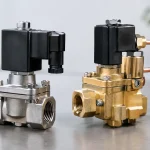
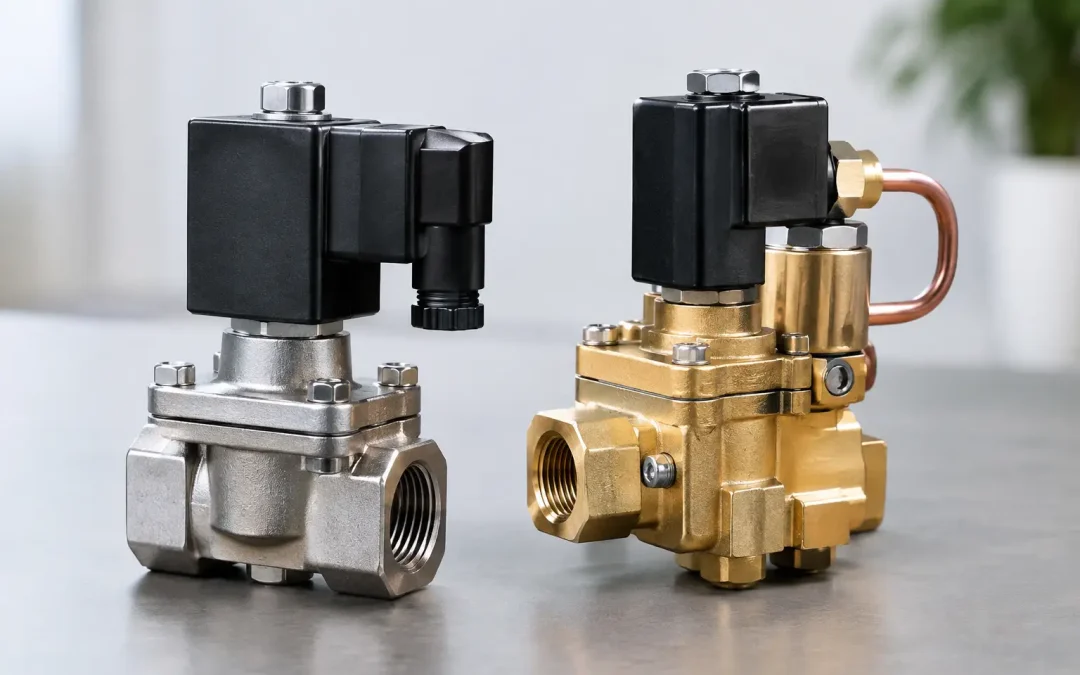
A valve that works perfectly on a bench can become a production problem once flow demand, pressure differential, or contamination enters the picture. The decision between direct acting versus pilot valves is not simply a matter of selecting the lowest-cost solenoid. It determines whether a circuit opens at zero pressure, how much flow it can pass, how quickly it responds, and what happens when supply conditions drift from their intended range.
For OEMs, machine builders, and maintenance teams, the correct choice starts with the load on the valve seat. A direct-acting design uses electromagnetic force to move the sealing element. A pilot-operated design uses the solenoid to control a small pilot passage, then uses line pressure to move the main valve element. That difference drives nearly every application trade-off.
Direct Acting Versus Pilot Valves Under Load
A direct-acting solenoid valve opens or closes its main flow path directly with the plunger, armature, or poppet connected to the solenoid. When the coil is energized, it produces enough force to overcome the spring force and pressure force acting on the seal. In a normally closed configuration, energizing the coil lifts the seal from the orifice. In a normally open configuration, it moves the seal into position.
Because the solenoid does the mechanical work directly, these valves can operate with zero differential pressure. That makes them a practical choice for vacuum service, low-pressure pneumatic circuits, gravity-fed liquids, and systems where upstream and downstream pressure may equalize before actuation. They are also often selected where fail-safe behavior must remain predictable during low-pressure startup or pressure loss.
The limitation is force. As orifice diameter and pressure rise, the force required to open the seat rises sharply. A larger direct-acting valve may need a larger coil, consume more power, generate more heat, or be limited in its maximum operating pressure. It can be the right answer for a small critical line, but an inefficient answer for a high-flow process line.
Pilot-operated valves address that limitation. The solenoid opens or closes a pilot orifice rather than directly moving the main seal. Pressure above or below a diaphragm, piston, or main poppet changes, and the resulting pressure imbalance moves the main valve. A relatively small coil can therefore control a much larger flow path.
This is why pilot-operated valves are common where high flow capacity matters: compressed-air manifolds, water control, process equipment, refrigeration circuits, and large pneumatic functions. The design can provide high flow in a compact package, often with lower coil power than an equivalently sized direct-acting valve.
The Minimum Pressure Differential Question
The first specification question should be simple: Will the valve always have sufficient pressure differential to operate?
Many internally piloted valves require a minimum pressure differential between inlet and outlet. The actual requirement depends on the construction, but the principle stays the same. If line pressure cannot create enough force across the diaphragm or piston, the main valve may not open fully, may chatter, or may remain closed even though the coil is energized.
That failure mode is routinely misdiagnosed as a bad coil. A technician hears the solenoid click, sees correct voltage at the connector, and assumes the valve should flow. If the pressure differential is below the valve’s stated minimum, the pilot stage may be functioning correctly while the main stage never shifts.
This is especially relevant in these conditions:
- A compressed-air tank is filling from zero pressure and the downstream circuit is open.
- A valve is installed in a low-pressure vacuum or suction application.
- Upstream and downstream pressures equalize during a stopped machine condition.
- The valve is oversized for the actual system pressure or installed with flow direction reversed.
If any of those conditions are normal rather than exceptional, a direct-acting valve, assisted-lift valve, or externally piloted design may be the better engineering choice. Do not assume a pilot-operated valve will behave like a direct-acting valve at startup.
Flow Capacity Is More Than Port Size
A common selection error is choosing by connection size alone. A 1/2-inch port does not guarantee that two valves will have the same effective flow capacity. Internal orifice size, seat geometry, diaphragm travel, Cv rating, pressure drop, and media density all affect real performance.
Direct-acting valves generally have smaller orifices relative to their body size because the coil must overcome the load at the seat. They are well suited to precise shutoff and modest flow demands. Pilot-operated valves can use larger main orifices, allowing substantially higher flow with comparable port sizes.
For pneumatic equipment, calculate demand at the required pressure, not at free-air conditions alone. Consider cylinder bore, stroke, cycle rate, concurrent motion, line volume, and allowable pressure drop at the actuator. A valve that appears adequate on a catalog flow figure can still slow a machine if it cannot replenish downstream volume fast enough during peak demand.
For liquid and refrigeration service, account for viscosity, temperature, flashing risk, and pressure conditions across the valve. A pilot design may offer the necessary capacity, but media cleanliness and differential pressure behavior remain part of the decision.
Response Time and Cycle Behavior
Direct-acting valves typically offer straightforward, repeatable response because the solenoid moves the main sealing element without waiting for pressure to redistribute through pilot passages. They are often preferred for short pulses, low-volume dosing, vacuum switching, and compact automation functions where response consistency is more valuable than high flow.
Pilot-operated valves can be fast, but their response includes the time required to establish the pressure imbalance that moves the main element. Tubing volume, restriction in pilot passages, supply pressure, and exhaust conditions can all influence actual cycle time. In high-speed equipment, validate dynamic performance at operating pressure rather than relying only on a nominal response-time value.
Cycle frequency also affects heat. A coil held energized for long periods must be rated for continuous duty and installed where ambient heat can dissipate. Frequent cycling increases wear on moving elements and can expose contamination problems faster, particularly in pilot passages with very small flow areas.
Failure Modes That Point to the Wrong Valve Type
When a valve performs inconsistently, the failure pattern often reveals whether the selected operating principle matches the circuit.
A pilot-operated valve that will not open at low pressure, but functions once pressure rises, points toward insufficient differential pressure or a restricted pilot path. A pilot valve that opens slowly may have contamination in the pilot orifice, restricted exhaust, weak supply pressure, or excessive downstream backpressure. A valve that hums or chatters can also indicate unstable pressure differential, voltage issues, or a damaged diaphragm.
A direct-acting valve that fails to open against elevated pressure may be outside its maximum operating pressure differential rating. Excessive coil heat can indicate that the valve is being asked to lift a load beyond its design range, that the coil voltage is incorrect, or that the plunger is binding due to contamination or corrosion.
Media compatibility matters in both designs. Compressed air should be clean and properly prepared for the required component life. Water, condensate, refrigerants, oils, aggressive chemicals, and elevated temperatures demand the correct seal materials and body construction. Stainless steel bodies and application-specific elastomers are not cosmetic upgrades when corrosion, washdown, or incompatible media are present.
A Practical Selection Method
Start with the conditions at the valve, not the conditions at the compressor, pump, or supply header. Record the minimum and maximum inlet pressure, expected outlet pressure, pressure differential during startup and normal operation, required flow, media, temperature, duty cycle, and required default position.
Then decide whether zero-differential operation is required. If it is, direct acting is usually the clearest choice, provided flow and pressure remain within the valve’s ratings. If the application has stable available pressure differential and needs higher flow, a pilot-operated valve can deliver a more compact, efficient solution.
Next, review the consequences of a blocked pilot passage or lost supply pressure. In a machine safety function, an uncontrolled process, or a critical refrigeration circuit, the valve’s normal state and failure behavior are as important as its Cv. Confirm whether normally closed, normally open, or a more specialized architecture best supports the operating sequence.
Finally, specify the complete assembly. Coil voltage, AC or DC power, connector style, ingress protection, mounting orientation, filtration level, fittings, tubing, and service access all affect field reliability. The valve is only one part of the control point.
VidoAir supports both standard and configured pneumatic control requirements, but a product selection should always be tied to verified operating data. A short review of differential pressure and actual flow demand before ordering can prevent a much longer interruption after installation.