
A line stops because a replacement valve has the wrong coil voltage. A cylinder arrives with an incompatible port thread. A new machine design is delayed while engineering tries to source tubing, fittings, air preparation, and motion hardware from four separate vendors. These are not minor purchasing inconveniences. They are avoidable integration failures – and the automation components supplier you choose has a direct effect on whether they happen.
For OEMs, integrators, maintenance teams, and production facilities, the right supplier is more than a source of part numbers. It is a technical resource that helps keep pneumatic circuits stable, motion repeatable, and replacement decisions fast enough to protect production. Price matters, but the lowest unit cost can become expensive when it introduces long lead times, poor component matching, or field failures.
What an Automation Components Supplier Must Solve
Industrial automation systems are assemblies, not isolated products. A pneumatic actuator depends on correctly sized valves, adequate air flow, stable supply pressure, clean and dry compressed air, compatible fittings, and control hardware that responds as expected. If any one of those elements is underspecified, the machine may still cycle, but it will not necessarily cycle reliably.
That is why component selection should begin with the application failure mode. Is a cylinder moving too slowly at the end of a long air line? Is a solenoid valve overheating in a high-duty-cycle application? Are contaminants causing sticking, leakage, or inconsistent vacuum pickup? Is an operator waiting days for a standard replacement part? The useful supplier is the one that can address the system around the failed component, not merely cross-reference a catalog number.
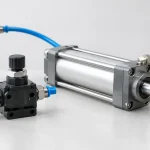
A factory-direct supplier with a broad portfolio can reduce those gaps. When actuators, solenoids, air preparation units, tubing, fittings, vacuum hardware, PLCs, and specialty motion products are available through one technical source, the purchasing process becomes easier to control. More importantly, the component interfaces can be reviewed together before they create problems on the floor.
Start with operating conditions, not a part number
A legacy part number is a helpful starting point, but it is not a full specification. Before selecting a replacement or designing a new circuit, confirm the working pressure range, ambient temperature, media, duty cycle, mounting envelope, port size, thread standard, electrical requirements, and required cycle time.
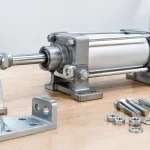
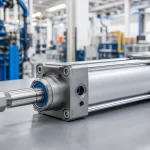
For pneumatic cylinders, include load direction, breakaway force, side loading, stroke length, speed, cushioning needs, and available air pressure. A cylinder sized only for theoretical thrust may stall under friction, pressure drop, or load variation. For valves, evaluate flow capacity, response time, spool or poppet design, voltage, ingress protection, and whether the valve will operate in a manifold or as a standalone device.
The same discipline applies to air preparation. An undersized filter-regulator can create a pressure drop that appears to be a cylinder or valve problem. A lubricator may be unnecessary or even unsuitable for components designed for non-lubricated air. In wet, corrosive, or washdown environments, stainless steel air preparation devices can be the better long-term choice, even when their initial cost is higher.
Evaluate Technical Fit Before Comparing Price
Price comparisons are valid only when the components are genuinely equivalent. Two 5/2 solenoid valves may share a port size and voltage, yet differ significantly in flow, pressure rating, coil insulation, switching performance, seal material, and expected service life. Those differences show up when the machine is operating at full speed, not when the part is sitting on a receiving dock.
Ask for the performance data that affects the specific application. For valves, that usually includes flow coefficient or rated flow, operating pressure range, internal and external pilot requirements, coil power, and temperature limits. For actuators, look beyond bore and stroke to rod diameter, mounting style, magnetic piston availability, cushioning adjustment, and allowable side load.
Vacuum systems demand the same level of attention. A vacuum cup that grips a flat carton may fail on textured packaging, oily sheet metal, or irregular molded parts. The vacuum generator, cup material, hose diameter, line length, and part porosity all influence pickup reliability. A supplier that understands those interactions can help prevent a robotic end-of-arm tool from becoming the limiting factor in a high-speed cell.
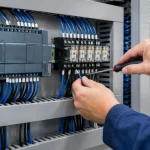
For electro-pneumatic applications, electrical compatibility must be verified early. Confirm control voltage, connector style, output type, current draw, PLC interface requirements, and diagnostic needs. A valve island may simplify wiring and reduce panel space, but it needs to match the controls architecture and maintenance strategy. In a machine built for fast field service, individual replaceable valves may be preferable. It depends on the footprint, complexity, and cost of downtime.
Availability Should Include the Supporting Parts
Fast shipping is valuable when it covers the entire repair or build package. A replacement actuator is not much help if the correct fittings, sensors, mounting brackets, tubing, and valve connectors are unavailable. Likewise, a refrigeration solenoid requires proper coil selection and media compatibility, not just the right body size.
A capable supplier maintains useful depth in standard components while offering configured-to-order options where the application requires them. That balance matters. Standardized hardware supports faster replacement and lower inventory complexity. Configured assemblies can reduce installation time, eliminate adaptation work, and improve consistency across repeat machine builds.
For maintenance teams, availability also means traceable specifications. The replacement part must be identifiable by its dimensions, ports, electrical characteristics, and application fit. Clear catalog data helps technicians verify compatibility before installation rather than discovering a mismatch after a machine has been opened up.
Use Custom Configuration Where It Removes Risk
Custom does not always mean complicated. In many cases, it means ordering an actuator with the right stroke, mounting, sensor option, rod thread, and cushioning from the start instead of modifying a standard unit in-house. That can reduce assembly variation and prevent errors that surface during commissioning.
Specialty actuators and slide table actuators are good examples. A compact slide table may provide the guided motion and repeatable positioning that a conventional rod cylinder cannot deliver on its own. Soft robotic grippers may be better suited than rigid mechanical grippers for fragile, irregular, or variable products. The right motion component can remove downstream complexity from the tooling design.
Configuration should be driven by measurable needs, not by the assumption that every application requires a custom solution. If a standard component meets the load, speed, environment, and mounting requirements, standardization is usually the practical choice. Customization earns its place when it improves fit, reliability, installation time, or machine performance.
Measure Supplier Value by Downtime Avoided
The purchase price of a pneumatic component is visible. The cost of a poorly matched component is usually hidden in troubleshooting hours, scrap, missed shipment dates, repeat maintenance, and expedited freight. For critical equipment, a supplier should help buyers think in terms of total operating impact.
A useful evaluation process includes four questions:
- Can the supplier verify technical compatibility before the order is placed?
- Are common replacement parts and related accessories available without unnecessary delays?
- Can the supplier support configured solutions for OEM builds and unusual operating conditions?
- Is technical assistance accessible when a system problem involves more than one component?
VidoAir is positioned around that practical requirement: premium pneumatic and automation hardware delivered direct, with broad product availability and support for both standard parts and application-specific configurations. For buyers managing demanding equipment, the advantage is not simply having more products to choose from. It is having fewer handoffs between the specification, the order, and the installed system.
Build a Better Supplier Relationship Before the Emergency
The best time to qualify an automation components supplier is before a production-critical valve fails or a new build reaches its commissioning deadline. Establish approved component families, document key specifications, identify interchangeable replacements, and keep the components with the highest downtime exposure visible to both engineering and purchasing.
When a supplier understands your machine platforms, operating environments, and stocking priorities, replacement decisions become faster and more consistent. That preparation gives technicians a clearer path during a breakdown and gives engineers a stronger foundation for the next design revision. In industrial automation, that kind of readiness is often what keeps a small component issue from becoming a full production event.