A carton flap that misses by a quarter inch, a pouch jaw that closes late, or a case pusher that stalls under a changing load can stop an otherwise productive line. The best actuators for packaging machines are not defined by bore size or catalog price alone. They are selected around the real motion at each station: load, side loading, cycle rate, available space, sanitation exposure, control requirements, and the cost of a missed cycle.
For most packaging OEMs and plant teams, pneumatic actuators remain the practical first choice for fast, repeatable point-to-point motion. But a standard cylinder is not automatically the right cylinder. Packaging equipment combines light, rapid motions with shock loads, product variation, and frequent changeovers. The actuator must fit the mechanism, not simply generate enough theoretical force.
Where Packaging Actuators Fail First
Actuator problems on packaging lines are often blamed on air pressure, when the actual issue is mechanical alignment or poor load definition. A cylinder that performs well during commissioning can begin binding after guide wear, accumulated contamination, or a format change shifts the load path. If the rod is carrying a lateral load, the cylinder seal and bearing package become the unintended guide system. That shortens service life and creates inconsistent end-of-stroke position.
Speed is another common source of trouble. Oversizing a cylinder to gain force can create a high-air-consumption, high-impact motion. At high cycle rates, the piston reaches the end cap with more energy than the cushioning can control. External shock absorbers, properly sized flow controls, and a motion profile matched to the payload are often more effective than increasing bore size.
Packaging operations also expose a gap between calculated and usable force. Pneumatic force depends on actual pressure at the cylinder, not just compressor discharge pressure. Undersized tubing, restrictive valves, contaminated filters, and several actuators firing simultaneously can reduce pressure at the point of use. Size the actuator using the minimum expected operating pressure and include a sensible margin for friction, acceleration, and product variation.
Best Actuators for Packaging Machines by Station
The right actuator type depends on the motion being produced. A vertical carton press has different requirements than a high-speed reject gate or a long-stroke pouch-transfer assembly.
Compact pneumatic cylinders for short, fast strokes
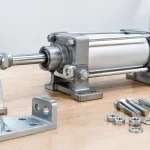
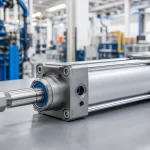
Compact cylinders are a strong fit for package clamping, flap folding, gate actuation, light pressing, labeler mechanisms, and short-stroke stops. Their small envelope lets designers place force close to the work area, which reduces linkage complexity and lost motion.
For these applications, choose a bore based on required force at minimum pressure, then verify that the retracted and extended dimensions clear guards, sensors, and change parts. Double-acting cylinders give controlled powered motion in both directions and are usually the better choice where return speed and repeatability matter. Spring-return designs can make sense for simple fail-position functions, but their return force varies through the stroke and should not be treated as equivalent to a powered return.
Magnetic piston sensing is particularly valuable on packaging equipment. Reed or solid-state sensors provide confirmation that a pusher retracted before the next infeed arrives, or that a clamp has closed before a sealing cycle begins. For high-cycle machinery, sensor mounting and cable routing deserve the same attention as cylinder sizing. A loose sensor bracket or unprotected cable can create intermittent faults that look like a PLC issue.
Guided cylinders and slide tables for side-loaded tooling
If the actuator moves a sealing jaw, cutting head, gripper, or tooling plate, guided motion should be designed into the assembly. Guided cylinders and slide table actuators carry off-center loads through internal guide rods or linear bearings, protecting the piston rod from bending forces.
This is a better approach than adding a large cylinder to compensate for a weak mechanism. The guide system should be evaluated for moment capacity in all directions, not just the vertical payload. A lightweight tool mounted far from the centerline may generate a substantial moment during acceleration and deceleration.
Slide tables are especially effective where installation space is limited and motion must stay precise over a short travel. They are commonly used for small pick-and-place functions, transfer positioning, date-code head movement, and indexing operations. The trade-off is that high-precision guided assemblies require clean installation and careful alignment. Misaligned external rails can fight the actuator’s internal guides and reduce bearing life.
Rodless actuators for long travel in confined frames
Rodless pneumatic actuators are often the most efficient choice for long-stroke carton transfer, lane shifting, collating, and pusher applications. Because the carriage travels along the cylinder body, the total installed length is much shorter than a conventional rod cylinder with the same stroke.
Their main advantage is packaging-machine layout efficiency. A 24-inch transfer stroke does not require an additional 24 inches of rod extension beyond the cylinder body. That can simplify guarding and leave room for conveyor components, sensors, and operator access.
Rodless designs must be matched carefully to contamination conditions and carriage loading. A belt-driven or mechanically coupled rodless design may suit different speed, sealing, and maintenance needs than a magnetically coupled unit. For a high-speed pusher, assess carriage load, moment capacity, deceleration method, and the consequences of a product jam. The actuator should not be expected to absorb every abnormal impact without external protection.
Electric actuators for programmable positions
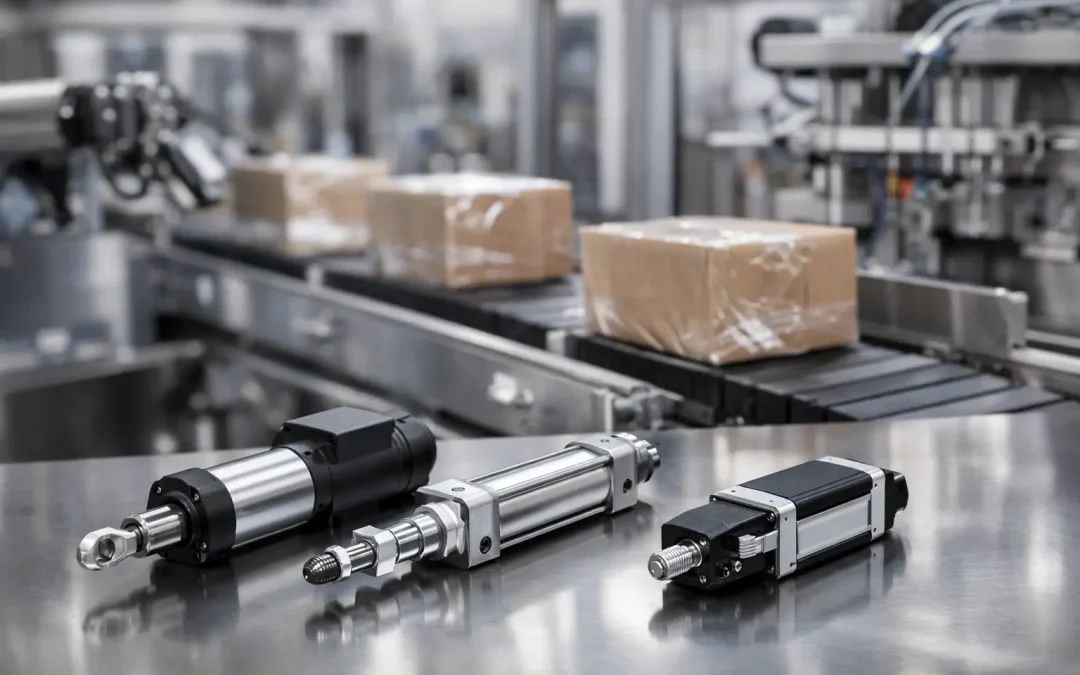
Electric actuators earn their place when a packaging station needs multiple programmed positions, controlled acceleration, servo synchronization, or frequent recipe-driven format changes. Examples include adjustable guides, multi-position infeed stops, variable carton handling, and precise product placement.
The trade-off is cost and system complexity. Electric motion requires a motor, drive, controls integration, wiring, and suitable protection against washdown or airborne debris. Pneumatics can still be the lower-cost, higher-speed solution for simple two-position actions. The strongest machine designs use electric actuation where position control creates real production value and pneumatic motion where fast repeatable end-to-end travel is all that is required.
Specialty actuators for demanding environments
Food, beverage, pharmaceutical, and wet-process packaging lines often need more than standard aluminum-body cylinders. Stainless steel construction, corrosion-resistant hardware, appropriate seals, and washdown-compatible sensor arrangements can reduce premature replacement in aggressive cleaning environments.
Vacuum grippers and soft robotic grippers also extend what an actuator system can handle. Vacuum is efficient for flat cartons, films, lids, and products with reliable pickup surfaces. Soft grippers are useful where product shape varies or compression damage is unacceptable. Neither is a universal replacement for mechanical tooling. Porous packaging, wet surfaces, irregular products, and rapid orientation changes can require a different gripping strategy.
Size the Motion, Not Just the Cylinder
A useful actuator specification starts with the mechanism. Define payload mass, friction, stroke, cycle time, orientation, desired acceleration, external forces, and the number of operations per shift. Then calculate required force using actual line pressure at the valve and include a margin that reflects the application. A smooth horizontal slide may need a modest margin. A vertical lifting or intermittent-impact application needs more.
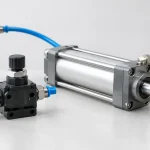
Valve selection is part of actuator performance. A large-bore cylinder fed through an undersized valve or long narrow tubing will respond slowly even at adequate supply pressure. Place valves close to high-speed actuators when possible, select adequate flow capacity, and use exhaust flow controls to tune speed without starving the advancing stroke.
Cushion adjustment should be treated as a commissioning step, not a set-and-forget setting. Set the motion under normal production load, then test realistic operating extremes such as the lightest and heaviest package, the fastest approved rate, and the expected supply-pressure range. If acceptable deceleration depends on nearly closed flow controls, reconsider the actuator bore, stroke speed, load guidance, or external shock absorption.
Air Quality Is an Actuator Reliability Decision
High-performance pneumatic motion starts upstream. Water, compressor oil carryover, scale, and particulate contamination damage seals, restrict valve passages, and make small flow controls inconsistent. This is especially visible on packaging lines with frequent starts and stops, where sticky valves and seal drag can show up as random timing errors.
Use properly sized filtration and regulation near the machine, drain condensate consistently, and verify that lubricated or non-lubricated components are specified as a system. Do not add lubricator oil to a line simply because a cylinder is moving slowly. Many modern pneumatic components are designed for non-lubricated service, and changing lubrication practices without checking seal and valve requirements can create maintenance problems rather than solve them.
Build for Maintenance Access and Changeover
The best actuator arrangement is one technicians can inspect, adjust, and replace without dismantling half the machine. Keep sensor indicators visible, make flow controls accessible, protect tubing at moving points, and standardize mounting styles and seal kits across similar stations. For OEMs, standardization also simplifies spare-parts planning across an installed base.
When a packaging process requires a configured stroke, mounting pattern, rod-end treatment, sensor package, or environmental material, a factory-direct supplier can help prevent costly field modifications. VidoAir supports standard pneumatic components and configured solutions for machine builders and operations teams that need dependable motion delivered direct.
Before releasing the design or approving a replacement, run the actuator through the conditions that cause actual downtime: low air pressure, maximum production speed, product jams, washdown exposure, and repeated changeovers. The component that survives those conditions is the one that keeps the packaging line moving when production has no room for missed cycles.