
by | Oct 18, 2026 | Pneumatic Power
A clogged coalescing filter rarely announces itself with a shutdown alarm. More often, it shows up as a cylinder that has lost speed, a valve bank that responds inconsistently, rising compressor energy use, or moisture reaching equipment that normally runs dry....

by | Oct 16, 2026 | Pneumatic Power
A pneumatic valve bank that shifts correctly during bench testing can still create costly production faults once it is connected to a PLC panel. A mismatched output type, a shared common wired incorrectly, or an unprotected DC coil can produce erratic motion, damaged...
by | Oct 14, 2026 | Pneumatic Power
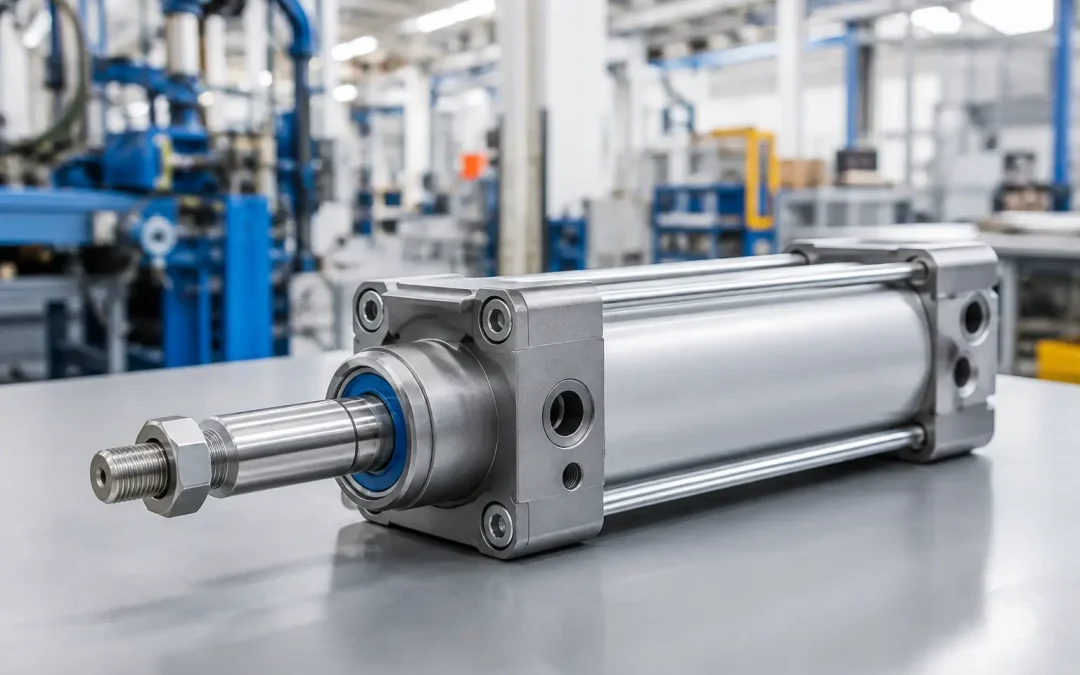
A cylinder rarely fails at a convenient time. It begins with a faint rod-side leak, a slower return stroke, or a machine axis that no longer repeats position at the end of a long shift. A useful pneumatic cylinder durability review looks beyond catalog bore size and...
by | Oct 12, 2026 | Pneumatic Power
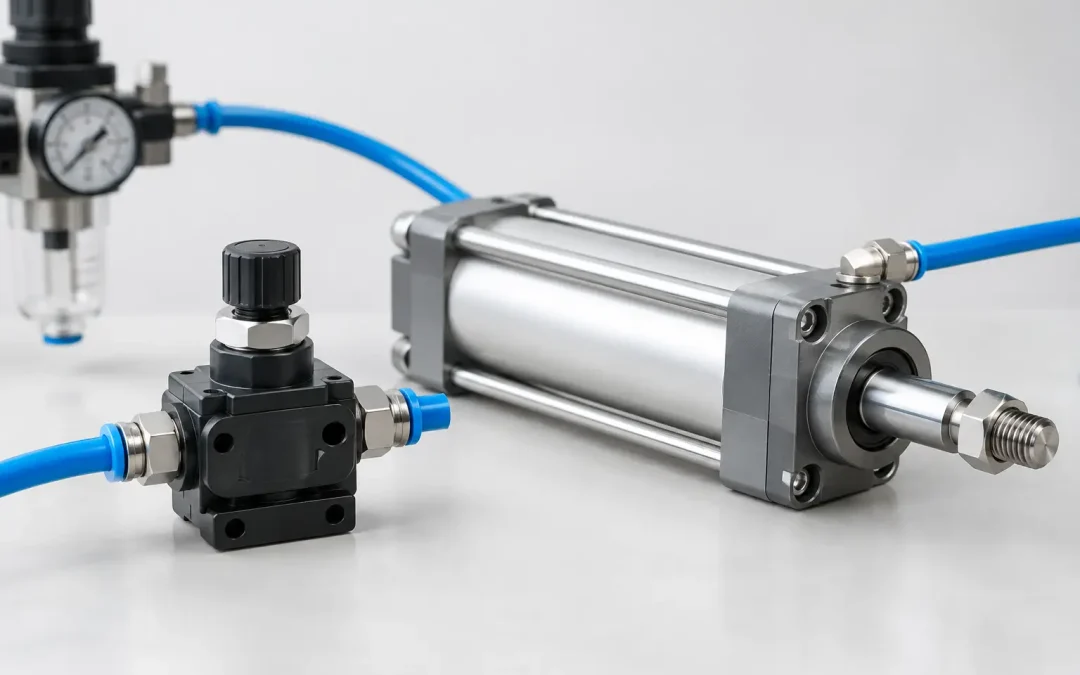
A cylinder that slams at the end of stroke is rarely a cylinder problem. It is usually an air-management problem. When technicians ask, which valve controls cylinder speed, the direct answer is a flow control valve. In most industrial pneumatic circuits, that means a...

by | Oct 10, 2026 | Pneumatic Power
A PLC panel that works perfectly during commissioning can still become a costly service problem six months later. Heat buildup, noisy analog signals, inaccessible terminals, and unlabeled field wiring all tend to originate in one place: the PLC panel layout. For OEMs,...

by | Oct 8, 2026 | Pneumatic Power
A cylinder that begins taking 150 milliseconds longer to extend can be the first warning before a missed pick, a jammed station, or a line stoppage. The most valuable pneumatic predictive maintenance trends focus on catching those small performance changes while there...

 Pneumatic cylinder bore sizing guide for calculating force, accounting for pressure loss and friction, and choosing dependable actuator capacity safely.
 Select rotary actuators that hold torque, hit repeatable angles, and stay reliable in demanding pneumatic automation, indexing, and clamping systems daily.
 Pneumatic leak detection methods that cut air loss, protect cycle performance, and help maintenance teams prioritize repairs by verified system impact.
 Industrial PLC cybersecurity trends are reshaping plant design. Learn where risks are growing and how to protect uptime without slowing production at scale.
 See a PLC migration project example that protects uptime, validates field devices, and modernizes pneumatic control without adding production risk safely.
 Vacuum loss prevention protects cycle time, part handling, and uptime. Learn now how to find leaks, size circuits, and design reliable vacuum systems.
 Make air dryer selection based on dew point, flow, pressure, ambient heat, and contaminants to protect pneumatic equipment, product quality, and uptime.
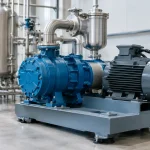 A vacuum pump performance review helps engineers verify flow, ultimate vacuum, energy use, and reliability before downtime affects production output at scale